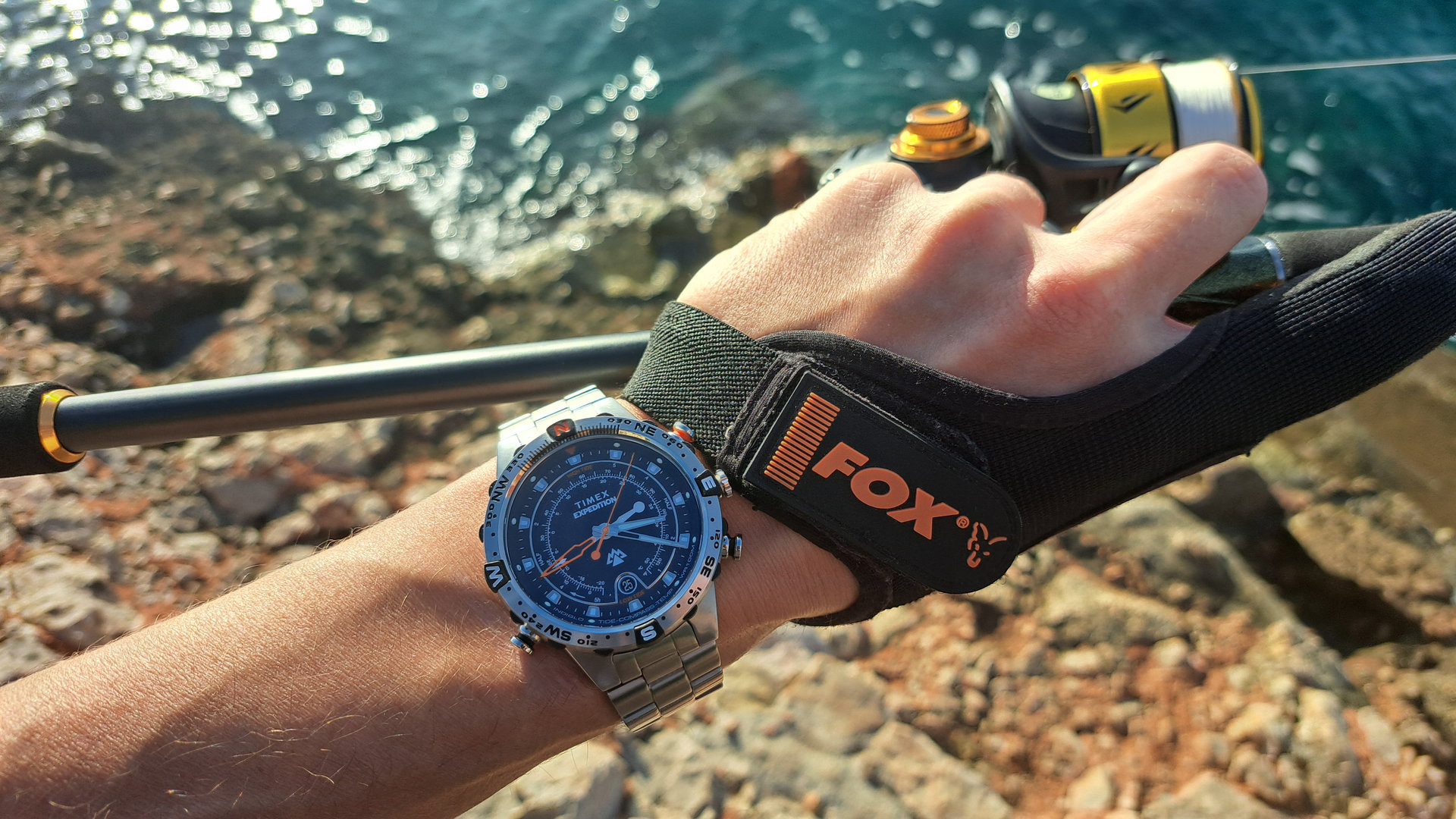
I remember one quiet morning on the Greek coast, parked just above a low rock ledge with the van facing the sea. The wind was light, the swell looked friendly, and I felt like I’d timed it perfectly. Two hours later I was back at the sliding door with wet shoes and that familiar empty-handed shrug.
The next day I fished the exact same stretch, same lures, same “nice looking” conditions, but I arrived later. In forty minutes I had two proper takes and one fish that shook the hook right at my feet.
That was the moment I stopped obsessing over where and started taking timing seriously. The best fishing times aren’t a secret. They’re just the hours when the sea is doing something and fish have a reason to move within casting range. From shore, timing is often the difference between “I think there are fish here” and “I can actually reach them.”
Best Fishing Times: What Actually Matters from Shore
For a long time, I fished whenever I had time. Midday, slack tide, blazing sun – if I was there, I cast. Sometimes I caught fish, but most sessions felt slow and random. After enough seasons along different coasts (Portugal, Italy, Norway, Greece), patterns became hard to ignore.
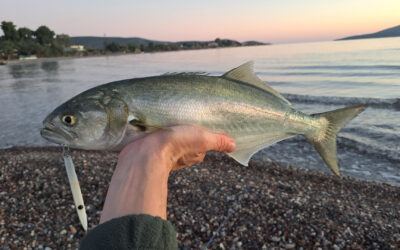
For me, the best fishing times usually come down to two things: movement and comfort. Movement means current, changing light, a little swell, or all of that combined. Comfort means fish feel safe enough to feed shallow, which often happens at low light, in broken water, or when pressure is low. The same pattern is something I often see when I catch bluefish, especially when they suddenly push bait into skinny water.
You don’t need to memorize complicated tables. You just need a simple system that works, especially when you don’t know every rock by heart yet. That’s what I use now: tides for movement, light for confidence, and spot type to decide which window matters most.
Tide Timing: My Most Reliable Fishing Windows
Tides are the biggest single factor for me, not the absolute water height, but the change. When water moves, bait moves. When bait moves, predators start behaving like predators.
These are the windows that have worked best for me from shore:
- 1–2 hours before high tide: Water pushes in, bait gets swept closer, and fish often follow into shallower edges. On rock plates and beaches, this can be the most “alive” part of the day.
- First 2–3 hours after low tide: Current starts running again. Channels, harbor mouths, and points often switch on here.
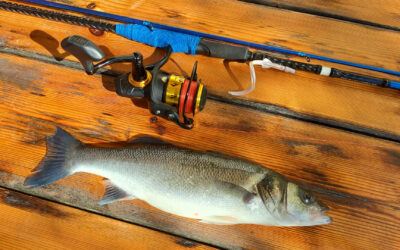
I’ve caught sea bass in just 2–5 meters of water during this phase, right when everything finally started to move again. - Avoid full slack water: The 30–60 minutes around dead high or dead low are often slow for me. I still fish it sometimes, but I treat it like a bonus session, not the main plan.
What I actually check on a tide chart is simple: time of high and low, how big the range is, and how steep the curve looks. If the range is tiny (anything under about 0.5 m often feels weak to me), I rely more on light and wind. If the curve is steep, I expect current.
Safety matters more as tides get stronger. Moving water can create nasty pulls around rocks and harbor entrances. If I can’t clearly see where the water would take me if I slipped, I don’t fish that edge. No timing advantage is worth getting dragged.
Time of Day: Light Changes Beat the Clock
If I had to keep one rule and throw out everything else, it would be this: fish around light changes.
- Dawn: From first light until about one hour after sunrise is consistently good. Fish often move shallow, bait becomes active, and there’s usually less human pressure. I’ll happily fish a tight 45–90 minute window here.
- Dusk: The last hour before sunset and the first 30 minutes after are classic for a reason. On breakwaters and harbor walls, predators often patrol tight along the edge.
- Midday: Midday can work, but I need help: wind chop, clouds, depth, or a strong tide. In bright, clear conditions I often fish deeper (around 5–10 m) or I simply accept that it might be a slow grind.
Night fishing can be excellent in some places, especially around harbor lights, but it’s also where I’m strict. I only fish at night if access is safe, I know the spot, and I’m not fighting swell. Headlamp, stable footing, and a clear exit route matter more than any lure.
Moon phase plays a role too. I prefer nights with some natural light, like a bright half or full moon, because I can see water movement and structure better. Completely black nights can work, but I move slower and stay closer to familiar ground. If the moon, swell, and access don’t line up, I don’t force it.
Best Fishing Times by Spot Type
I used to treat “best fishing times” like a universal rule that worked everywhere. That idea didn’t last long. A beach, a rocky point, and a harbor can all fish best at completely different times, even on the same day. Once I stopped thinking in general rules and started thinking in spot types, planning sessions became much clearer because the timing depends on the place, not the calendar.
- Rocky points and headlands: These spots reward moving water more than anything else. When current runs along a point, bait gets pushed into lanes and predators can sit comfortably on the edge. I’ve done best when I arrive as the tide starts to build and the water begins to “pull” around structure, often in 2–6 m of water. In full slack, the same place can look perfect and still fish dead.
- Beaches: On beaches, timing is often about light and food being forced close. I’m usually hunting spots like troughs and seams rather than “deep water.” A lot of my beach fish come from surprisingly skinny water, often 1–3 m, when the tide is just starting to cover those features. If the water is already high and flat, fish can spread out and it turns into a long, quiet walk.
- Harbors and breakwaters: Harbors have their own rhythm: low light, predictable lanes, and often less wave noise. I’ve had strong sessions here early in the morning and around dusk, even when the tide range wasn’t impressive. In winter, harbors really come alive at night for squid fishing. Harbor lights stack bait, and squid often sit right on the edge of the light cone.
- Shallow flats: Flats can be amazing but they’re short-window spots. I don’t treat them like “all-day areas.” I fish them when water is just starting to flood or just before it drains off again, because fish are forced through tighter lanes. When there’s too much water, everything spreads out and from shore it becomes guesswork.
Best Fishing Times: Final Thoughts
If I had to sum this up in one sentence, it would be this: timing creates opportunities, but it’s still your job to make use of them. Across different coasts, the patterns that held up for me were simple and repeatable. I focus on moving water instead of perfect tide heights, fish around dawn and dusk whenever I can, and match my timing to the spot type rather than the calendar. I don’t expect much from full slack water, and I plan every session around safety first, not just bites.
Once timing and location line up, the last piece is execution. That’s where my best saltwater lures guide comes in, because lure choice is what often turns a short window into an actual chance from shore.
Safety is never optional. Rising swell, greasy rocks, or sketchy night access are reasons to walk away. The best fishing times only matter if I can fish them calmly and get back in one piece. When I stick to this approach, sessions feel less random, and when a fish finally commits, it feels earned rather than lucky.