When I first started traveling along the European coastline in my van, I made the classic mistake of buying lures because they looked beautiful in the tackle shop. I filled my boxes with hyper-realistic patterns and delicate finishes that looked great in my hand but were completely useless in a 20-knot headwind on the Atlantic coast. It took losing a lot of money and missing a lot of fish before I realized that saltwater demands a completely different set of criteria than freshwater fishing.
Finding the best saltwater lures isn’t about brand loyalty or buying the most expensive item on the shelf. It is about understanding the physics of the ocean. You need tools that can handle corrosion, cast into stiff breezes, and withstand the hydraulic pressure of currents. Whether you are fishing from a harbor wall in the Mediterranean or a surf beach in the Atlantic, understanding the specific job each lure type performs is the only way to build a reliable tackle box.
Understanding Saltwater Fishing Lures
The ocean is a harsh environment. The primary difference between fresh and saltwater gear is durability and castability. Saltwater is denser, the fish are generally faster and stronger, and the environment is far more corrosive.
In my own sessions, I noticed that freshwater lures would often rust at the split rings within 24 hours of exposure to sea air, even if I rinsed them. Furthermore, shore fishing often requires casting distances of 50 to 80 meters to reach the feeding zones. Light, bulky lures simply won’t reach the target. A good saltwater lure needs internal weight transfer systems for casting, heavy-duty hardware that won’t bend under the pressure of a seabass or amberjack, and a finish that can survive impact with granite rocks.
Key Types and When to Use Which Saltwater Fishing Lure
To cover the majority of scenarios you will face on the coast, you generally need to carry four main categories of artificial baits.
Minnows and Hardbaits
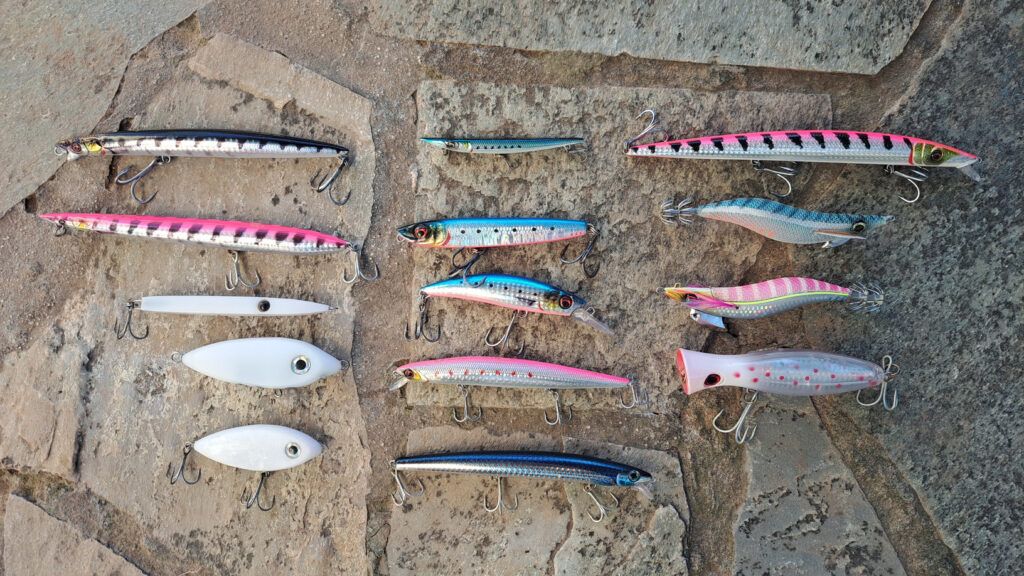
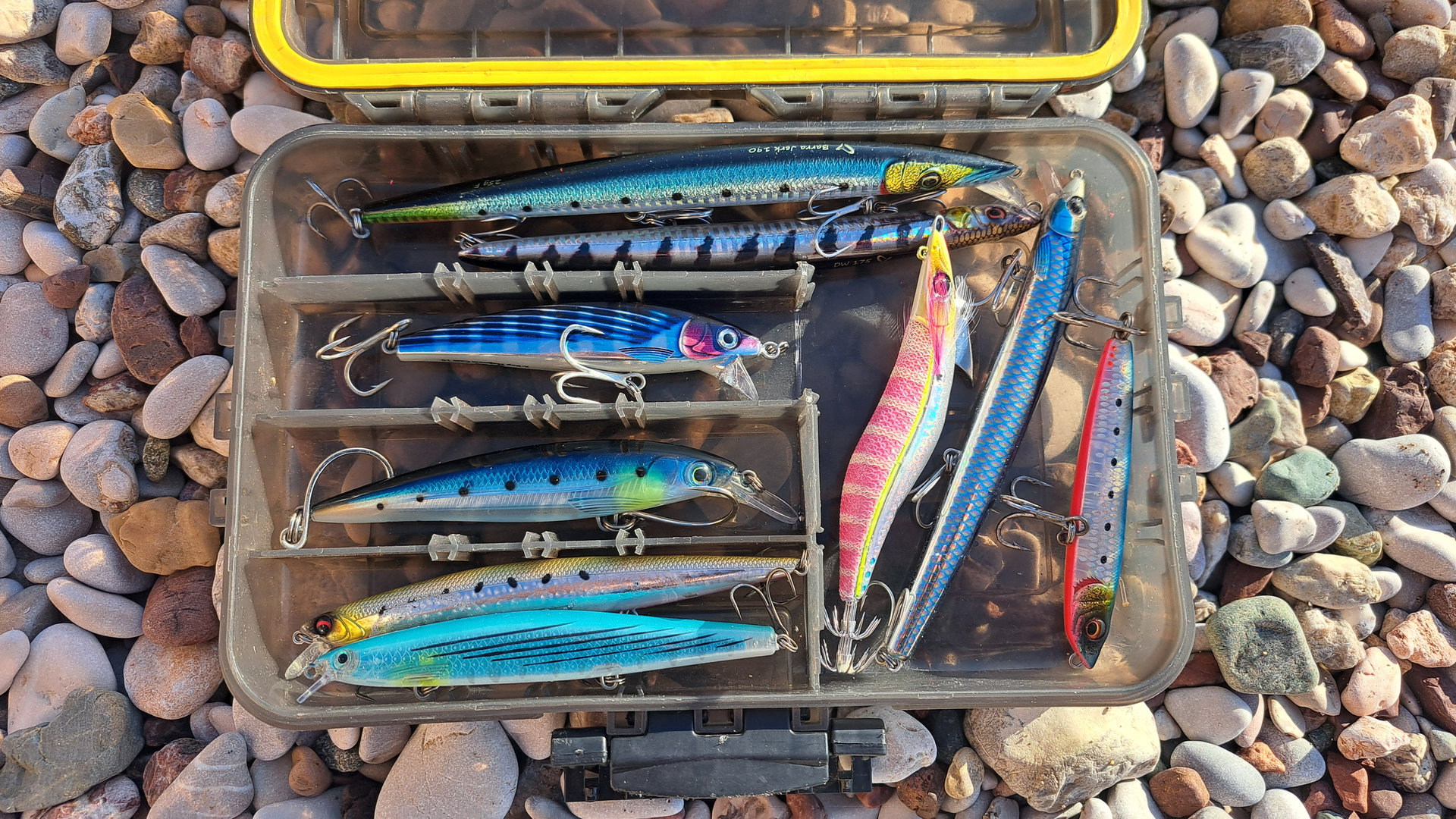
The hard plastic minnow (or jerkbait) is the workhorse of saltwater spinning. These are generally long, slender plugs ranging from 90mm to 175mm in length. They come in floating, suspending, and sinking varieties. The lip (bib) at the front determines how deep they dive and how aggressively they wiggle.
These are essential for covering large areas of water when the sea is relatively calm to moderate. A shallow-diving minnow that swims at depths of 0.5 to 1.5 meters is perfect for fishing over submerged rocks where predators like European seabass hunt. The main trade-off is aerodynamics; if the wind is blowing directly in your face, a large plastic minnow can tumble in the air, killing your casting distance.
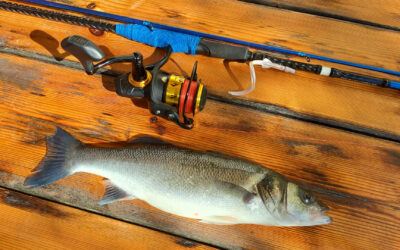
If you want to see how I actually fish these plugs from shore, I’ve broken it down step by step in my guide on how to catch sea bass.
Jigging Lures for Saltwater
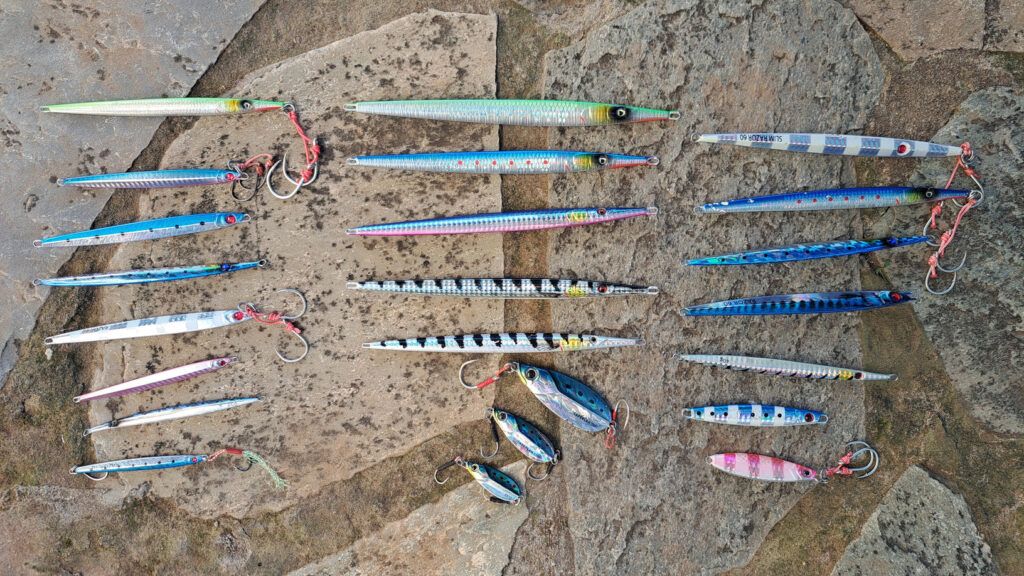
When the wind picks up or you need to reach deep water, metal jigs are the superior choice. These are essentially shaped pieces of lead or zinc, usually weighing between 20g and 60g for standard shore setups. Because they are dense and compact, they fly like bullets.
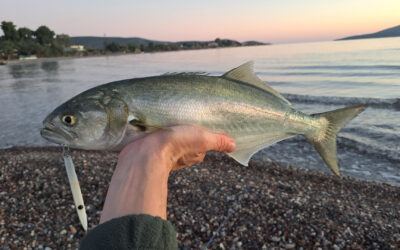
Metal jigs allow you to fish the entire water column. You can let them sink to the bottom to target groupers or snappers, or retrieve them fast near the surface for mackerel and bluefish. I explain the speed and retrieve patterns in more detail in my guide on how to catch bluefish. I rely on these heavily when I’m parked up at a steep cliff or a breakwater where the water is 10 to 20 meters deep. They are inexpensive, effective, and durable, making them indispensable for the traveling angler.
Soft Plastics for Versatility
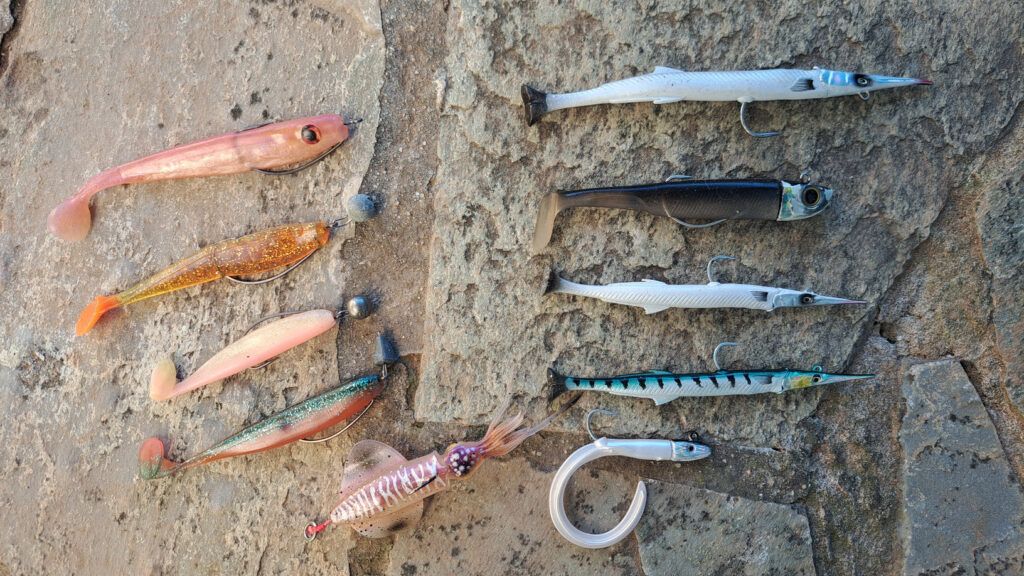
Soft plastic lures—shads, worms, or creature baits mounted on a jig head—offer a more subtle approach. They feel natural to the fish and can be rigged “weedless” (with the hook point buried in the plastic) to fish right inside heavy kelp or rock structures without snagging.
They are generally the most affordable option, but they suffer from durability issues. A toothy fish like a bluefish or barracuda can chop a soft plastic in half in a single bite. And when fish are completely ignoring traditional predator lures, switching the mindset toward squid fishing with slower, more controlled presentations can sometimes save the session entirely.
Saltwater Topwater Lures
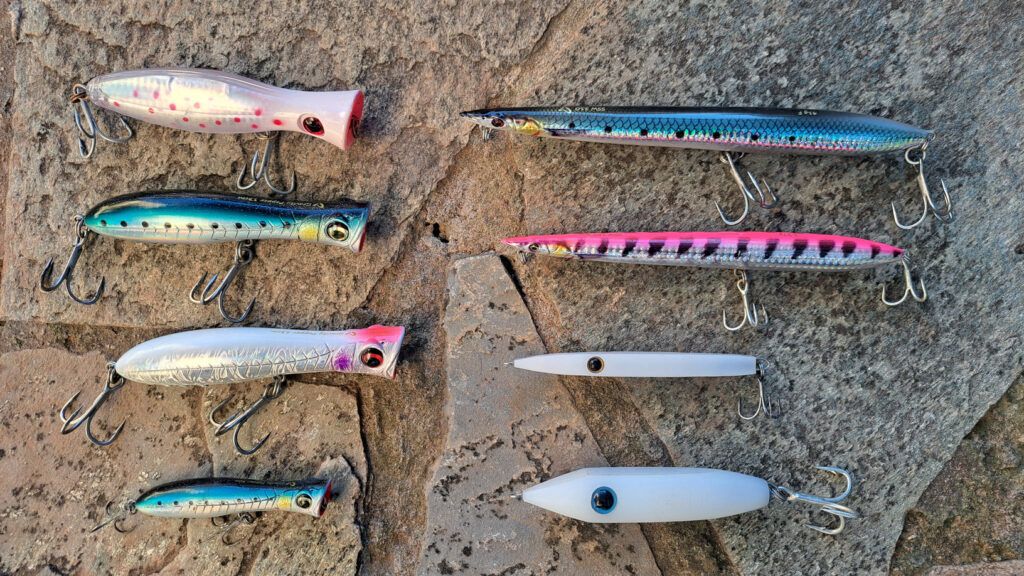
There is nothing quite as visual as fishing with topwater lures. These float on the surface and are designed to splash, pop, or “walk” side-to-side when you twitch the rod tip. They mimic a wounded baitfish struggling on the surface.
Top water lures for saltwater are most effective in low light conditions—dawn, dusk, or heavily overcast days—and generally require calmer seas. If the swell is huge, the fish simply won’t see the surface commotion. While they have a lower hook-up rate than subsurface lures, they tend to attract aggressive, active predators.
Important Features and Specs to Look At
When you are staring at a wall of tackle, you need to ignore the flashy packaging and look at the specifications. The first thing to check is the weight relative to your rod’s casting rating. For general shore spinning, most anglers use rods rated for 15–42g or 20–60g. Using a lure that is too light means you lose contact with it in the wind; too heavy, and you risk snapping your rod.
The internal construction matters immensely. High-quality saltwater fishing lures often feature a “weight transfer system.” This is usually a tungsten ball or cylinder inside the lure that slides to the tail during the cast (changing the center of gravity for better flight) and rolls back to the belly during the retrieve (for stability). This feature alone can add 10 to 15 meters to your cast.
Pay close attention to the hardware. The hooks and split rings must be rated for saltwater use. Look for “tinned” or coated hooks (often silver or matte grey) rather than standard bronzed hooks. I also check the wire construction. For heavy-duty fishing, “through-wire” construction—where the internal wire runs from the nose eyelet directly to the tail hook—ensures that even if the plastic body shatters on a rock, you stay connected to the fish.
How to Choose the Best Option for Your Situation
Choosing the right lure is a process of elimination based on where you are standing and what the water is doing.
Selecting Beach Fishing Lures
If you are standing on a vast sandy beach with crashing waves, your main enemy is the surf and the distance. You need beach fishing lures that sink quickly and hold their position in the turbulence. Sinking pencils and heavy sinking minnows are excellent here. They cast far enough to reach past the first breaker line and are heavy enough not to be washed onto the sand instantly by the whitewash. A standard floating minnow is often useless here as the waves will toss it around, breaking its swimming action.
Best Saltwater Lures for Inshore and Harbors
Inside harbors, estuaries, or calm bays, the fish are often more pressured and spooky. Here, you should downsize. The best saltwater lures for inshore fishing are often smaller soft plastics (70mm to 100mm) or smaller hardbaits. Silence is often better than rattles in these environments. You don’t need extreme casting distance, so you can prioritize natural movement and realistic finishes over aerodynamics.
Rocky Coasts and Deep Water
If the water is deep (over 5 meters), metal jigs are the most efficient way to find fish. This is especially true when fast-moving pelagic species such as Atlantic Bonito or Little Tunny suddenly appear within casting range. In those short surface-feeding windows, casting distance and sink rate matter more than subtle action. If you are fishing shallow reef patches, use a floating minnow that dives no deeper than 50cm to avoid losing expensive gear to the rocks.
Real-World Use Tips for Saltwater Fishing Lures
Saltwater is relentless. It will corrode gear that sits in a box untouched. I learned this the hard way when I opened a tackle box after a month of driving to find a solid rusted lump of metal where my hooks used to be.
If you use a lure in the ocean, never put it back wet into the box with dry lures. The saltwater on the used lure will evaporate, creating a salty humidity that rusts everything in the compartment. I keep a small “day box” or a bucket in the van. Used lures go in there. At the end of the day, I rinse them with fresh water and let them air dry completely before returning them to main storage.
Safety is also a major factor with lures. Saltwater predators thrash violently. Unhooking a fish on slippery rocks while waves are washing over your boots is dangerous. I crush the barbs on my treble hooks. It makes unhooking the fish faster and safer for both the fish and my hands. If a barbless hook ends up in your finger or your jacket, it slides out easily. A barbed treble hook in the hand while you are alone on a remote cliff is a medical emergency.
Common Mistakes and How to Avoid Them for More Fish
- The most frequent mistake I see is using a lure that is too light for the conditions. If there is a 15-knot side wind and you are trying to cast a 10g minnow, you will have a massive bow in your line. You won’t feel bites, and you won’t control the lure. Don’t be afraid to step up to 30g or 40g lures just to maintain contact.
- Another error is ignoring the hook size. Many factory lures come with hooks that are too weak for big saltwater fish. If you hook a large barracuda or bonito, standard wire hooks can straighten out. Conversely, putting massive heavy-duty hooks on a small lure will kill its action, making it sink like a stone. You have to find the balance.
- Finally, people often fish too fast. While some pelagic species like speed, many predators strike on the pause. With saltwater topwater lures, the stop is often when the explosion happens. With metal jigs, the strike usually comes when the lure is fluttering downwards on a slack line. If you just wind continuously, you are missing out on the lure’s most attractive phase.
Best Saltwater Lures 2026: Final Thoughts
Building a collection of the best lures for saltwater fishing takes time and experience. It is not about owning every color under the sun. It is about having a logical selection: a few metal jigs for distance and depth, some hard minnows for the shallows, soft plastics for finesse, and topwater lures for those perfect calm mornings.
If you focus on quality hardware that resists corrosion, choose weights that match your rod and the wind conditions, and learn to present them naturally, your gear will stop being the weak point in your sessions. The ocean is unpredictable enough; your lures shouldn’t be.