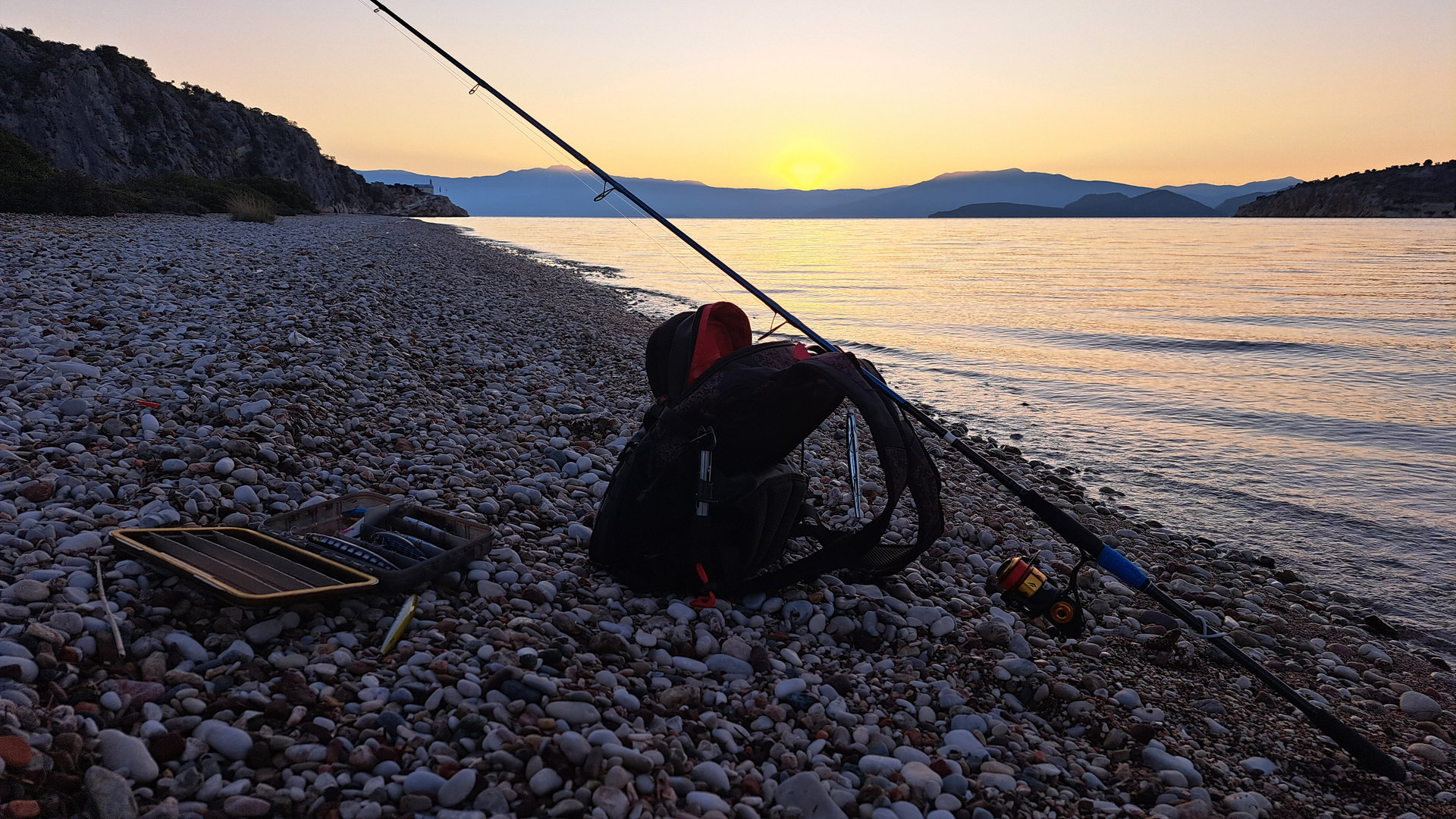
The first time I took my spinning rod down to a rocky point in Portugal, I honestly had no idea what I was doing. The swell was pushing in from the side, my 40-gram jig felt like a brick on the end of a noodle, and every second cast ended on the bottom instead of in a fish.
In the backpack I also had a simple bottom rig and a clear casting bubble, the same kind of water-filled casting bubble I used as a kid in France, but I stubbornly stuck to the lure because I thought “proper” saltwater fishing had to be spinning.
By the time the sun came up I had one scraped knee, three lost jigs and nothing to show for it. Walking back to the van I finally admitted to myself: this isn’t about being a “spinning guy” or a “bait guy”. It’s about choosing the simplest method that fits the spot, the conditions and what the fish are doing and using saltwater fishing rods that actually match those conditions.
That’s what I mean when I talk about saltwater fishing basics. It’s not just how to throw lures in the ocean. It’s a basic toolkit of shore methods – spinning, bottom rigs, floats and water-filled casting bubbles – that you can actually use from normal beaches, rocks and harbor walls.
What “Saltwater Fishing Basics” Really Means from the Shore
When people say “saltwater fishing basics” or “how to saltwater fish”, it often sounds like a huge topic that covers everything from deep sea boats to tropical flats. For me as a shore-based angler living out of a van, the basics are much more down to earth.
I think in three simple questions:
- Where can I safely stand and reach fish from the bank?
- What gear can I carry in one backpack and rod tube?
- Which technique – lure, bottom, float or water-filled casting bubble – gives me the best chance to catch a fish today?
Once I started to see saltwater fishing this way, ocean fishing suddenly became less mysterious. If there’s a lot of wind and strong current in deeper water, I’ll usually reach for a metal jig and work it down where the fish sit. If the surface is flat and calm, I might switch gears completely and try for bream with a water-filled casting bubble and a small bait behind it.
Minnow hardbaits are my tools for shallower water in pretty much any condition. And if I’m on an open beach and it’s completely calm, I’d actually recommend a simple bottom rig – even though I only fish that way once or twice a year myself, because I generally prefer more active fishing.
In this guide I’ll walk you through a simple approach that covers all of that: a basic shore setup, the main spot types, and practical saltwater fishing techniques – spinning, bottom fishing, float fishing and casting bubble rigs – that fit real sessions.
A Simple All-round Shore Fishing Gear Setup
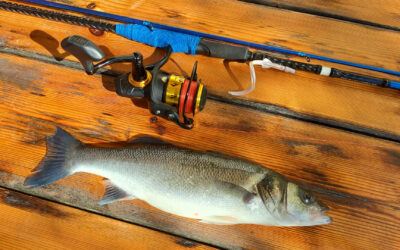
You don’t need four different rods in the van to cover salt water fishing if you choose a versatile saltwater fishing rod for shore use. When I trimmed my gear down, I realised one main combo plus a bit of terminal tackle can handle most shore fishing situations in Europe.
Rod and Reel for Salt Water Fishing
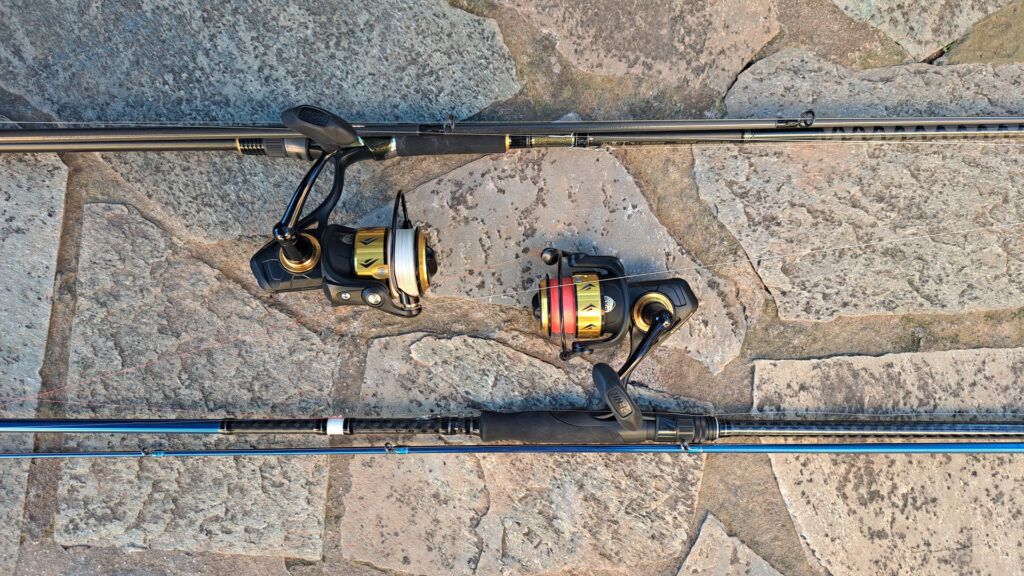
For general shore work – lures, light bottom rigs and even a float – I like:
- A spinning rod around 2.4–3 m (8–10 ft), medium or medium-heavy, with a casting weight in the 10–40 g or 15–50 g range.
- A 3500–4000-size saltwater spinning reel with a decent drag and corrosion-resistant parts.
This length gives me enough reach on beaches and rocks but is still manageable on tight harbor walls. It will throw a 30-gram metal jig, a small casting bubble or a 60-gram running sinker on a gentle lob without feeling completely wrong.
If I know I’ll fish heavy surf with bigger leads, I do have stronger gear for that – 3 m rods rated 30–70 g and even 30–100 g, paired with larger 4500–6500-size saltwater spinning reels. But for most shore sessions I still think a 10–40 g or 15–50 g rod with a 3500–4000-size reel is the better all-round choice.
Fishing Line, Leader, and Hooks
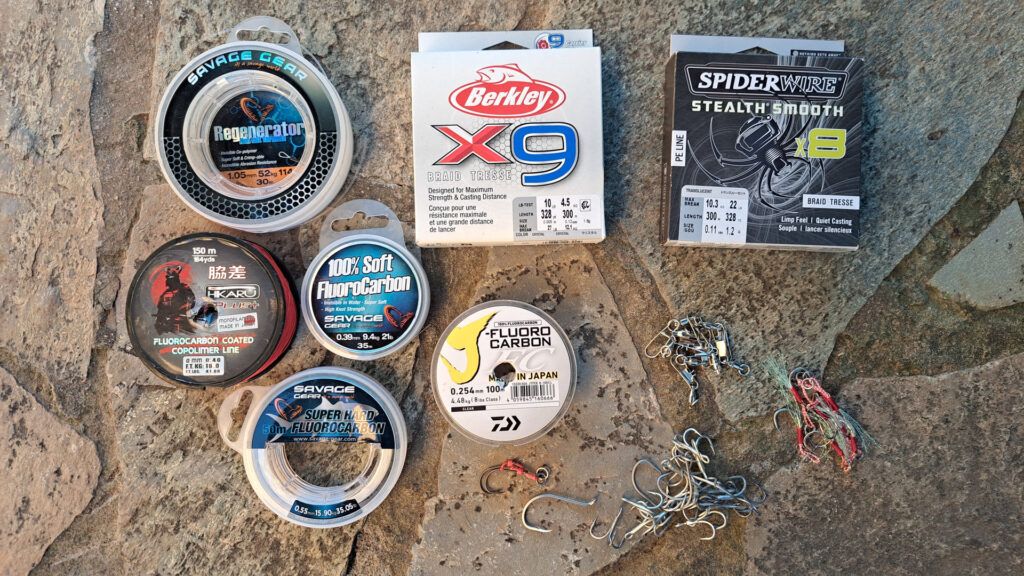
On the spool I mostly use braided line because it casts well and lets me feel what’s happening down there. These days I like 8-12 strand braid in the 0.11–0.15 mm range; it’s thin enough for good distance but still strong enough for most shore fishing with lures, floats and medium bottom rigs.
In front of that I tie a leader that’s roughly as long as the rod, usually between 0.32 and 0.40 mm fluorocarbon or tough mono. If the ground is really brutal or I’m specifically targeting bigger fish, I go up to around 0.55 mm. I keep my knots simple and reliable: one braid-to-leader knot I can tie half asleep, and one basic knot for lures and hooks.
For bottom fishing I mostly use single hooks in sizes 6, 4, 2 and 1/0, choosing finer wire for small baits and slightly heavier hooks for strips of squid or fish. For float fishing I dip into the same size range, matching the hook to the bait and the species I’m after.
Lures, Bait, and bubbles: Fishing Gear that Actually Catches Fish
Standing on a cliff with the whole ocean in front of you, it’s easy to overcomplicate things. In practice, I keep my shore fishing box surprisingly small. It holds a mix of lures and bait gear that covers most “fishing ocean from shore” situations.
Saltwater Fishing for Beginners: Core Spinning Lures
If I focus on spinning, I like to have:
Metal Jigs in the 20–40 g Range
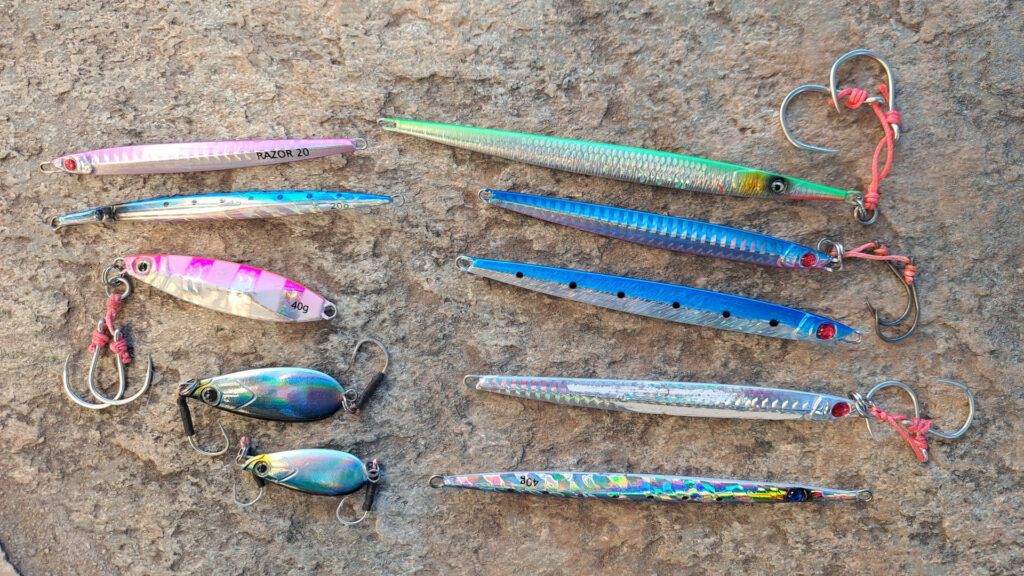
They cast like bullets, cut through wind and let me fish anywhere from maybe 3 m to over 30 m of water just by changing sink time and retrieve. I use them over sand, around reefs and off deep harbor walls.
Minnows between 10 and 15 cm and about 12–35 g
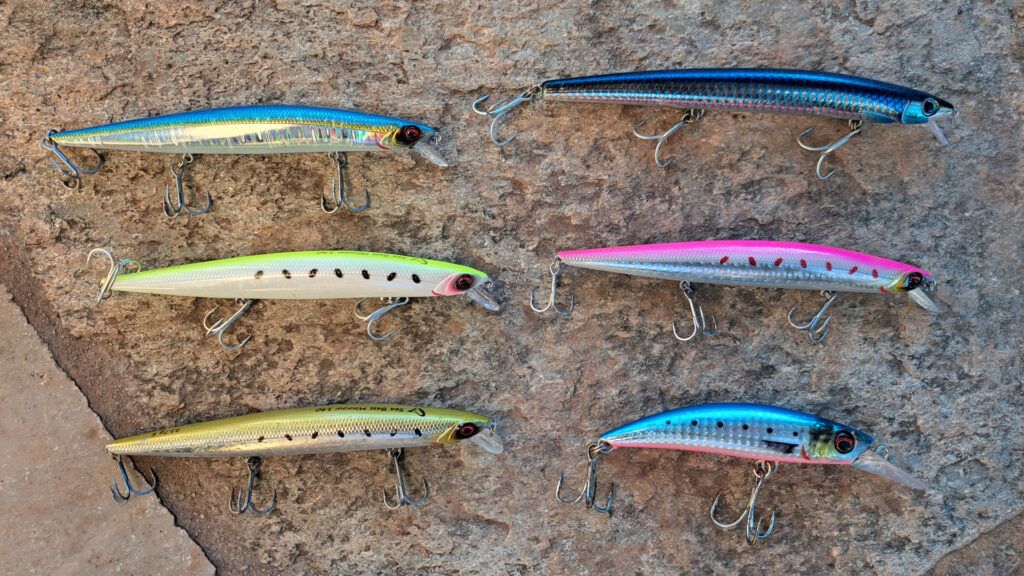
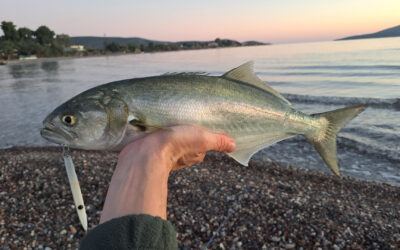
These are my go-to for catching sea bass, bluefish, and similar predators along rocky points and surf beaches. I usually fish them at dawn, dusk or on overcast days, sweeping them across channels and along edges where waves break.
Soft Plastics from 7–13 cm (3–5 inches)
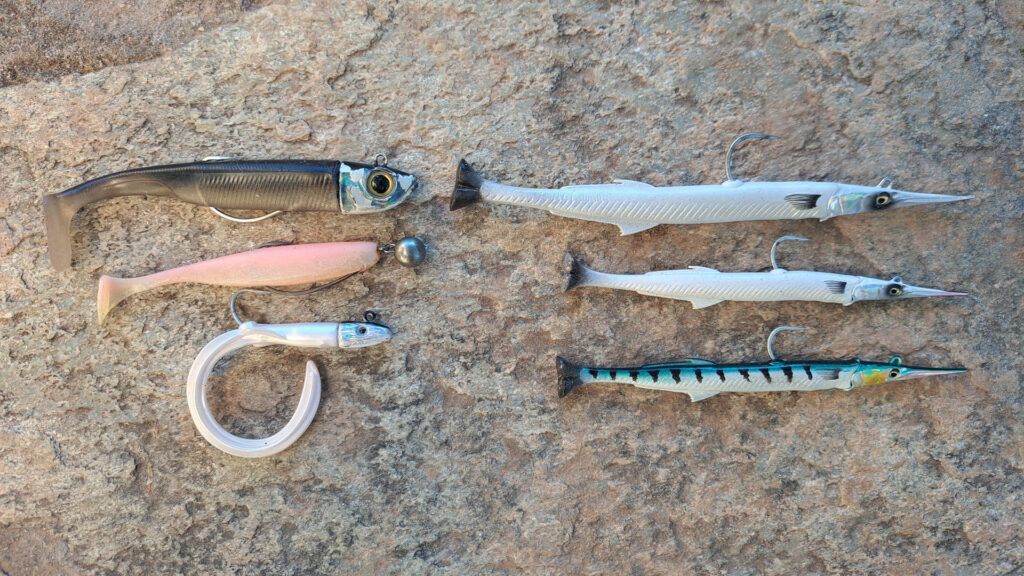
If they are mounted on 10, 15 or 20 g jig heads, they are slower and subtler than metal jigs. I fish them along the bottom on mixed sand and stone, or near harbor structures where fish can follow without seeing the angler.
Tip: They don’t cast particularly well, especially into the wind, so I use them a bit less and usually prefer the two lure types above when it’s breezy.
Surf Fishing, Beach Fishing, or Pier Fishing: Bottom Rigs for Simple, Steady Bites
Bottom fishing is not as glamorous as firing lures into the sunset, but if you want to put fish on the board, it’s a powerful basic. I personally only fish this way once or twice a year, usually when the sea is calm and I’m on an open beach, but it’s still a method I trust when I really want a simple, steady chance at bites.
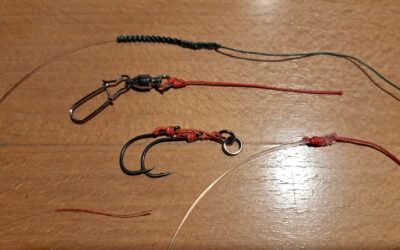
My simple starting point is a sliding running rig:
- On the main line I slide a 30–80 g lead, then a bead, then tie into a small swivel.
- To the swivel I attach a 50–70 cm leader with a single hook in size 6, 4, 2 or 1/0.
- I bait the hook with shrimp, squid strips or pieces of fish (bonito works well).
With this I can fish from beaches, piers and calm rock marks. I cast just beyond the breaking waves on a beach, or along the base of a harbor wall where food naturally collects. I keep the line tight enough to feel bites but not so tight that the rod gets dragged off the rest.
Floats for Ocean Fishing
Float or “posing” rigs are great when you want to keep your bait just above the bottom or around visible structure. In harbors or calm coves, I often set up a sliding float that lets the bait hang at, for example, 2–3 m in 4–5 m of water.
This is perfect for:
- Fishing along pilings and ladders in a port.
- Presenting small fish baits for predators at night around lights.
- Keeping delicate baits away from crabs on rough ground.
I adjust the stopper knot so the bait rides slightly above where I think the fish are holding and watch the float like I did as a kid in France, only now with slightly better hooks.
Water-Filled Casting Bubble: My Favorite Hybrid Tool
The water-filled casting bubble is a piece of plastic that never really left my life. Like the name indeed, it’s filled partly with water. The weight of the bubble is high enough to cast a small lure or bait a long way on light line. I use it when:
- Fish are feeding on the surface.
- I want to present a small soft plastic or fly-style lure subtly but still reach 30–40 m.
- Over shallow reefs in 2–5 m of water.
I usually fish the bubble as a fixed rig so I can just clip it straight into the snap on my spinning rod without retying. The 1.5–2 m leaders with a small hook or tiny lure are pre-tied and wrapped on little foam spools in my bag. That way I can switch from spinning to a casting bubble in under a minute.
Reading the Coast: Beaches, Rocks, and Harbor Walls
Before I pick up any rod, I try to understand the spot. Saltwater fishing techniques only make sense if they match the structure and the sea on that day.
Beach Fishing
On open beaches I look for: darker patches of water that hint at deeper channels, lines of white water that show sandbars, and any little cut, river mouth or point that breaks the straight shoreline. Those features concentrate current and food, and predators follow.
If the surf is moderate, I might start with a 20–30 g metal jig or minnow on my 9-ft rod, casting into the channels and working the lure back just above the sand. If the waves are messy and strong, I’m more likely to fish a 50–80 g bottom rig with bait just behind the first bar, letting the surf wash the scent around.
Rock Marks and Ledges
Rocks are my favourite classroom. They also demand the most respect. When I park the van above a headland, I check the swell height and direction, watch a full set cycle – at least 10–15 minutes – and make sure there’s an easy escape route a couple of steps behind me.
On deeper points where the water drops from shallow rock into maybe 5–10 m, spinning with metal jigs or minnows makes sense. I cast across the drop-off and retrieve so the lure crosses that line where baitfish often travel. On more broken ground or in small coves, I might instead drop a baited bottom rig into a sandy pocket between rocks and let it sit.
Fishing Piers, Harbor Walls, and other Man-Made Structures
Harbors, piers, and breakwaters are perfect for learning saltwater fishing basics. They offer stable footing, predictable structure and often some shelter from the wind.
In daylight I like to walk slowly along a wall, peering down with polarized glasses to see how it drops. Then I choose: work a soft plastic or jig along the edge, hang a float beside a ladder or piling, or drop a bottom rig into any little pocket where rubbish and food collect.
At night, when lights pull in small fish, I often fish a water-filled casting bubble with a small soft plastic or natural bait behind it, keeping it just on the edge of the light cone. That mix of visibility and darkness is where predators like to sit.
Saltwater Fishing Guide 2026: Simple Techniques
You don’t need complicated rod movements to catch fish. The fish don’t care what the method is called; they care about how easy it is to eat whatever you’re offering.
Spinning: Casting Patterns and Retrieves
When I spin, I still try to be systematic. I fan my casts like a clock in front of me instead of hammering the same line all morning. I vary the distance, a few casts close, a few mid-range, a few long, and I count the sink: if a jig hits bottom at “five” on a calm day, I know that staying at “three or four” should keep me just above the rocks.
Most of the time I stick to three retrieves: a steady medium retrieve for minnows, steady medium-fast-fast jigging for jigs and soft plastics where I pause one or two seconds to let them fall, and a lift-and-drop along the bottom with the rod moving maybe 30–50 cm each time. When I get a follow or a hit, I try to repeat the exact depth and speed instead of changing everything, which is what I did in my early, overexcited days.
Bottom Fishing: Set It and Think About Where
With bottom rigs, the “technique” is mostly about choosing where to place the bait and how tight to hold the line. On beaches, I aim for channels or the backside of sandbars, not just maximum distance. On rocks and harbors, I try to find a mix of depth and nearby structure, the edge of a drop, a step in the wall, or a corner where rubbish collects.
Once the lead is down, I keep a gentle curve in the line so I can see or feel bites but still let the bait move a little. I check the bait every 10–15 minutes; in busy areas, crabs or small fish can strip it clean faster than you think.
Float and Casting Bubble: Watch the Drift
With a float or water-filled casting bubble, I pay attention to how wind and current push the rig. I try to start upstream or upwind of the place I think the fish are, so the bait or lure drifts naturally through that zone rather than being dragged away from it.
I like to rig the bubble fixed so I can snap it straight onto my spinning setup without tying any new knots. My 1.5–2.5 m leaders with a small hook or tiny lure are already tied and stored on little foam winders, so changing from a normal lure to a casting bubble setup is basically a one-minute job on the rocks.
The nice thing about floats and bubbles is that they force you to slow down and really watch the water. It’s a very different rhythm from mechanical spinning, but it teaches you a lot about how your spot actually works in terms of currents.
Saltwater Fishing Basics 2025: Final thoughts
Looking back at my own journey, from that clueless rock session in Portugal to all the quiet mornings since, the main lessons are simple. You don’t need fancy gear, but you do need suitable gear. You don’t need every technique, but you should be comfortable with at least three: spinning, bottom rigs, and some sort of float or casting bubble. And you don’t need hero stories; you need a safe, honest way to stand in front of the ocean and feel like you have a plan.
If you keep your setup simple, read the structure in front of you, choose the method that fits the day, and respect both the sea and the rules, your saltwater fishing will start to feel less like gambling and more like a craft you’re slowly learning. And if you’re lucky enough to bring a fish home, knowing how to keep fresh saltwater fish on ice is just as much a part of the craft as the cast itself. That, for me, is where the real satisfaction lives.