The Little Tunny is one of the most powerful pelagic fish regularly encountered close to European shorelines. It looks familiar, almost ordinary at first glance, yet it behaves very differently from most coastal species. For shore anglers, it represents speed, unpredictability, and raw power compressed into a relatively compact body.
This profile breaks down where the Little Tunny occurs in Europe, how it behaves, what habitats it prefers, and why it so often feels “absent” until it suddenly isn’t. I’ve crossed paths with this fish from the Atlantic to the Mediterranean, usually without warning, and it always leaves a strong impression.
Species Overview: Identification and Little Tunny Fish Size
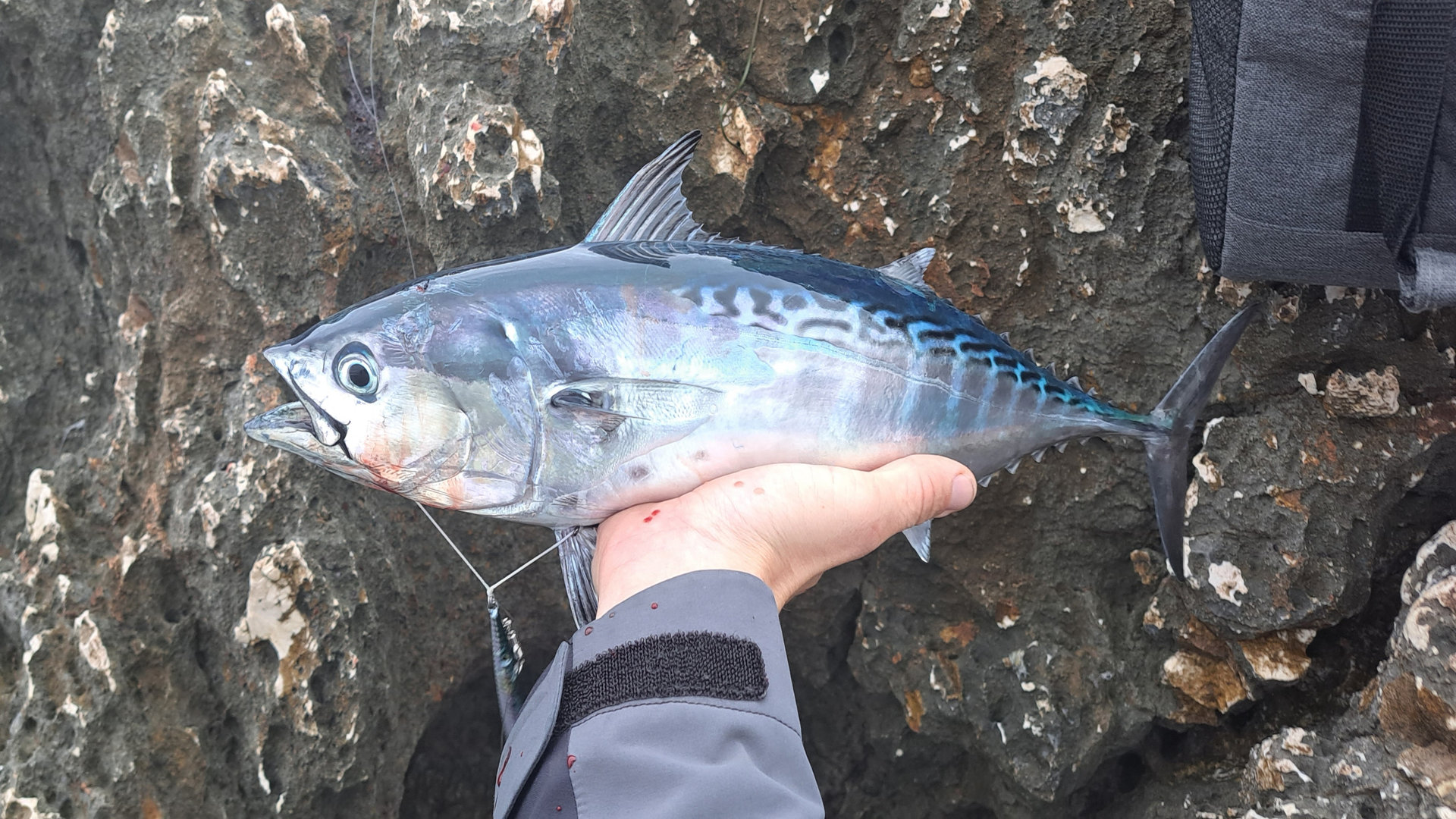
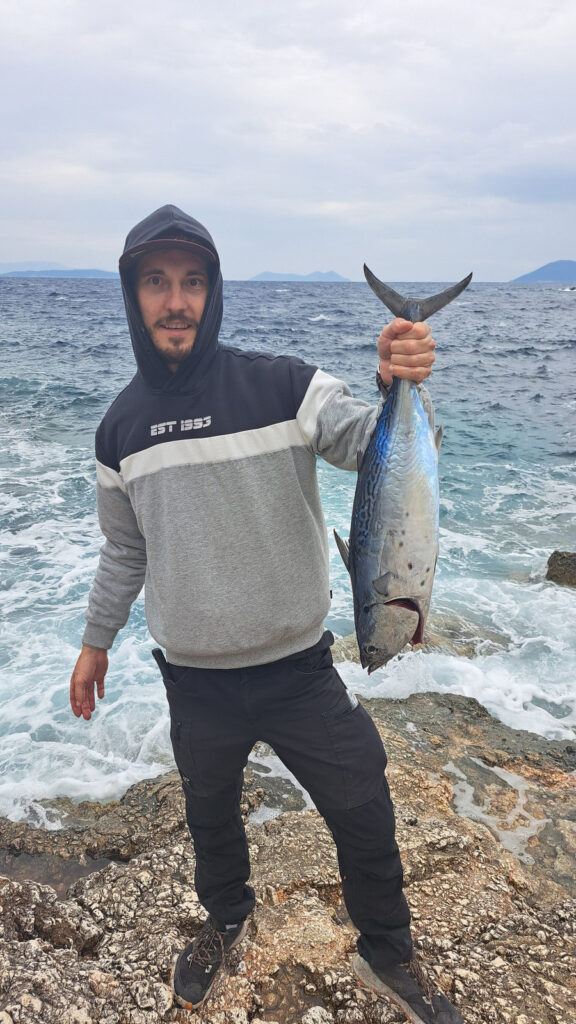
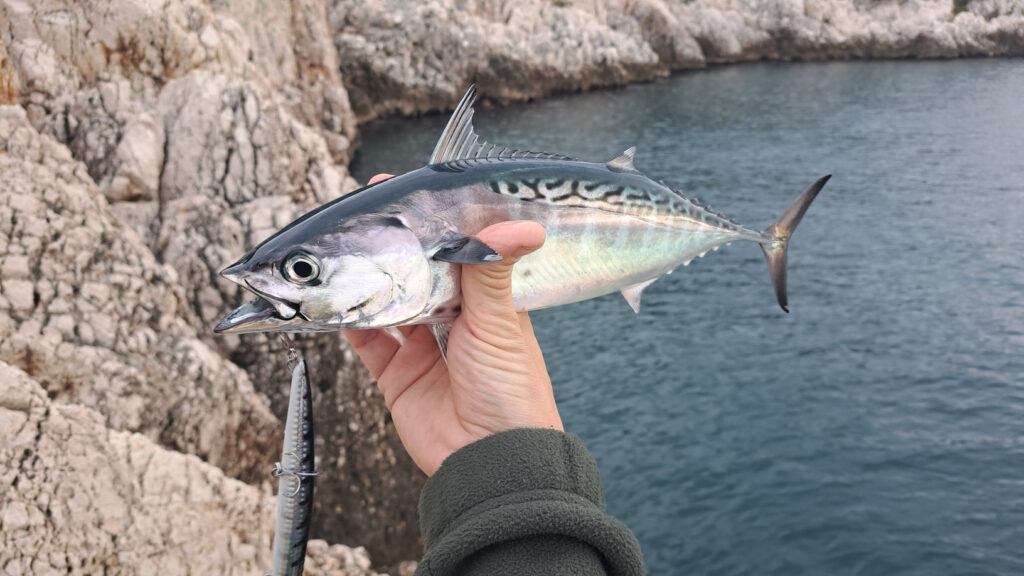
The Little Tunny (Euthynnus alletteratus) belongs to the mackerel and tuna family. Its body is thick, muscular, and built for sustained speed rather than short bursts. The back is dark blue to black, fading into silvery sides and a pale belly. One of its most distinctive traits is the pattern of broken, dark stripes or spots between the pectoral fin and the belly, which helps distinguish it from true tunas.
In European waters, most individuals range between 3 and 10 kg, with lengths commonly between 50 and 80 cm. Larger specimens exceeding 15 kg are uncommon near shore but do occur offshore. Globally, the species can exceed 20 kg, though such fish are rare. Little Tunnies grow quickly, reaching sexual maturity within two to three years, and their lifespan is relatively short, usually under 10 years. Juveniles often form dense schools and stay closer to the surface, while adults range wider and dive deeper when conditions allow.
European Distribution: Where You Encounter This Species the Most
The Little Tunny is widely distributed across southern and western Europe. It is common along the Atlantic coasts of Portugal and Spain, extends north into the Bay of Biscay and western France, and appears seasonally around the UK and Ireland during warmer years. Stable populations exist throughout the Mediterranean, including Italy, Croatia, Greece, Turkey, and the western Mediterranean basin.
Atlantic populations tend to range farther and appear more sporadically near shore, often linked to strong bait movements and temperature shifts. In the Mediterranean, the species is more predictable and closely tied to seasonal warming cycles. The northern limit is largely controlled by water temperature, with sustained presence usually above 18 °C. Southern waters support longer seasonal windows and occasional year-round sightings.
The Little Tunny is primarily a surface to mid-water species, commonly occupying depths from the surface down to about 100 meters. While considered pelagic, it regularly moves inshore when prey concentrates near land, particularly along current lines, headlands, and coastal drop-offs.
Habitat & Behavior
Little Tunnies are open-water hunters that rely on speed and coordination. They favor areas where pelagic baitfish gather, such as anchovies, sardines, and small mackerel. Rather than holding structure, they patrol along edges created by current, temperature breaks, or underwater contours.
They are highly responsive to light and water clarity. Clear water allows visual hunting, while moderate surface disturbance can help concentrate prey. In calm conditions, their presence is often betrayed by surface disturbance, nervous baitfish, or sudden eruptions of white water. During low-light periods, they may push closer to shore, following bait that uses darkness as cover.
Seasonally, behavior shifts from feeding-focused movements to spawning-driven migrations. During spawning periods, schools become more dispersed, and encounters may feel inconsistent even in areas where the species is known to occur.
Angler Relevance & Shore Encounters
Shore anglers encounter Little Tunnies not because the fish prefers shallow water, but because prey sometimes does. When baitfish are forced against land by current, wind, or predators, Little Tunnies follow. This explains why sightings can cluster around headlands, harbor entrances, and exposed coastlines.
Man-made structures play a role by altering current flow and creating artificial edges. Harbors, breakwaters, and long piers can unintentionally funnel bait into tight zones. When this happens, Little Tunnies may pass within casting distance without lingering. Many anglers assume absence when, in reality, the fish is simply moving through quickly and efficiently.
Seasonal Presence & Environmental Patterns
Across Europe, the Little Tunny is most consistently present from late spring through autumn. In the Mediterranean, peak presence often aligns with water temperatures between 20 and 26 °C. In Atlantic waters, the window is shorter and more variable, strongly influenced by warm currents and bait availability.
Spawning typically occurs in warmer months, often offshore, which can reduce nearshore encounters temporarily. Outside spawning periods, feeding intensity increases, and movements become more predictable. Swell and current do not deter the species, but prolonged cold water or strong freshwater input can push schools farther offshore.
Culinary & Cultural Importance
Culturally, the Little Tunny holds mixed status. In some Mediterranean regions, it is valued as a strong-flavored, affordable tuna relative. In others, it is considered coarse compared to larger tuna species. Smaller individuals are generally regarded as better table fish, while larger ones are often avoided due to darker, firmer flesh. Its importance is greater in local markets than in export fisheries.
When handled properly and bled immediately, however, little tunny can be excellent on the plate. I’ve shared two simple ways I prepare it in detail: pan-seared false albacore steaks for a clean, meat-focused approach, and a Mediterranean-style little tunny pasta that works especially well with fresher, smaller fish.
Regulations, Size Limits & Sustainability
Regulations for Little Tunny vary significantly by country and region. Some areas impose minimum sizes, seasonal closures, or bag limits, while others treat it as an unregulated species. Because it is a fast-growing but short-lived fish, local overpressure can have quick effects. Checking current local regulations is essential, especially during spawning periods, when ethical restraint matters most.
Safety Considerations
Encounters with Little Tunny often happen in exposed coastal zones. These areas can involve swell, sharp rock platforms, and rapidly changing conditions. The fish’s tendency to appear during active water movement means anglers are sometimes focused offshore while standing on unstable ground. Calm decision-making and awareness of exit routes are more important than staying “one more cast.”
Common Misconceptions About This Species
Many anglers believe Little Tunnies are strictly offshore fish, when in reality they frequently pass close to land. Another common assumption is that they are rare, when the issue is more often timing than population density.
Some think they only appear in hot summer months, ignoring the influence of bait and current. Others mistake them for small bluefin tuna, leading to confusion about size and behavior. Finally, inconsistent encounters are often blamed on pressure, when the real cause is the species’ fast, transient movement patterns.
Common Mistakes & How to Avoid Them
- Using Wire Traces: Little tunny have excellent vision and no teeth to cut your line. Using a wire leader will result in zero bites. Use a high-quality fluorocarbon leader between 0.35 mm and 0.45 mm.
- Too Much Drag: Anglers often try to stop the fish instantly. This usually results in a snapped line or a straightened hook. The initial run is unstoppable on light gear. Trust your line capacity and let the fish tire itself out against the water drag.
- Matching the Wrong Bait Size: If the fish are feeding on 5 cm anchovies and you are throwing a 15 cm stickbait, they will likely ignore it. If you see fish splashing but not biting, downsize your lure to the smallest heavy metal jig you have (e.g., a tungsten jig).
- Confusing Species: Misidentifying a juvenile bluefin tuna as a little tunny can lead to serious legal trouble. Always look for the belly spots. No spots? Put it back.
- Not Bleeding The Fish Immediately: Little tunny flesh deteriorates quickly if not handled properly. If you plan to eat the fish, bleed it right after landing and cool it down as fast as possible. I’ve explained the exact steps in my guide on how to properly bleed little tunny for the best eating quality.
Little Tunny (Euthynnus alletteratus): Final Thoughts
The Little Tunny is defined by speed, strength, and mobility rather than by attachment to place. It is most commonly encountered along warm, bait-rich European coastlines where current and structure intersect. Understanding its seasonal movement and pelagic nature explains both the sudden appearances and long absences.
When it shows up, it reminds me that some fish don’t belong to spots, only to moments.
Gear I Personally Use for Little Tunny from Shore
If you want to go a bit deeper into the tackle side, these guides explain how to choose the right gear for little tunny from open beaches, headlands, and exposed breakwaters.
Little tunny are relentless. They travel fast, hit hard, and don’t slow down after the first run. Your setup needs to maximize casting distance and handle sustained pressure without overheating your drag:
- Best saltwater fishing rods for casting metals and controlling hard runs
- Best saltwater spinning reels for long casts and hard runs
- Best saltwater lures for bluefish (fast metals, topwater, and minnow plugs)
This is not finesse fishing. You don’t need oversized gear, but you absolutely need tackle that stays stable when a fish takes off at full speed 60 meters out and keeps going.