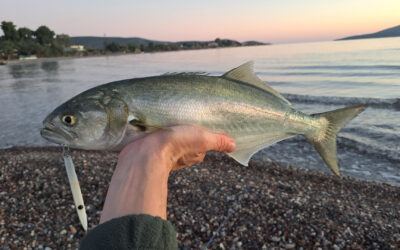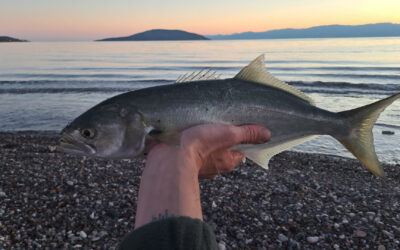
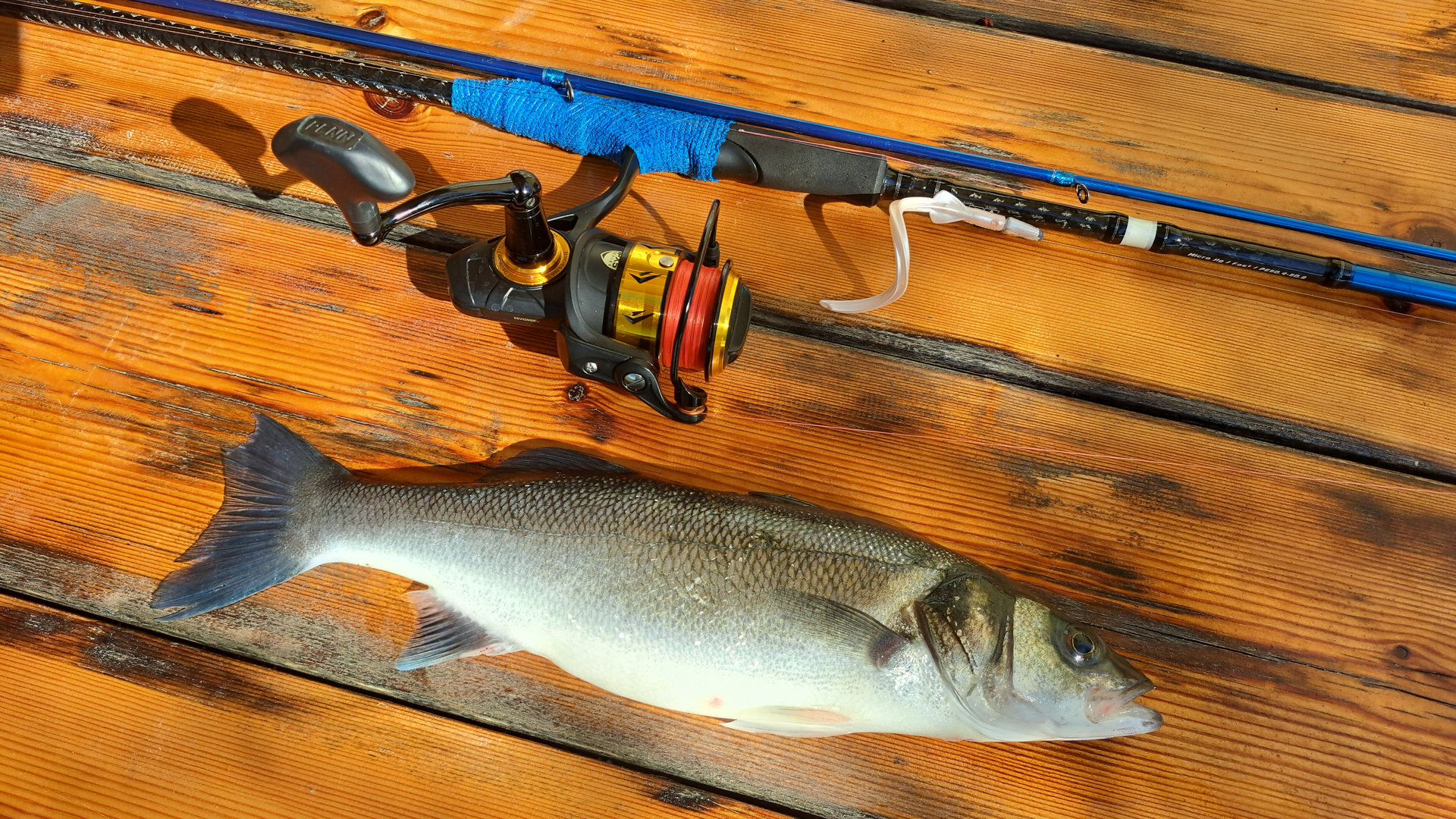
I still remember one quiet evening on a Mediterranean beach in Greece. The wind had dropped after sunset, the water looked flat, and I was still settling into the session. I kept casting into water that felt almost lifeless. For half an hour nothing happened, no taps, no follows. I didn’t catch a fish that evening, but it changed how I think about how to catch sea bass from shore.
Back then I was doing what many shore anglers do. Long casts, fast retrieves, constant lure changes. I believed sea bass were somewhere out there, far beyond the wash. What I slowly learned over years of sea bass fishing across Europe is that most of the time, they are much closer, much calmer, and much more selective than we think.
This guide is my honest, field-tested take on fishing for sea bass from shore. It’s based on real sessions, missed chances, wet clothes, lost lures, and the moments where things finally started to work.
Understanding Sea Bass Behavior from Shore
Sea bass fishing becomes much easier once you stop treating seabass like aggressive pelagic predators. From shore, they behave more like careful hunters. They use structure, broken water, and low light to feed while staying hidden. They don’t like to chase far, and they don’t waste energy unless the conditions are in their favour.
For a long time, I retrieved too fast. I covered water, but I didn’t stay in the strike zone. Once I slowed down and started fishing shallow water properly, things changed. Some of my best fish came in less than 1.5 meters of water, often right under the rod tip.
Sea bass also see extremely well. That’s something I underestimated for years. Footsteps on rocks, headlamps, heavy leaders, all of it matters, especially during daytime and in clear water. If you want a deeper species-level breakdown, I’ve written a full profile on the European seabass, but here I’ll stay focused on what helps you catch fish from shore.
Where to Catch Sea Bass from Shore
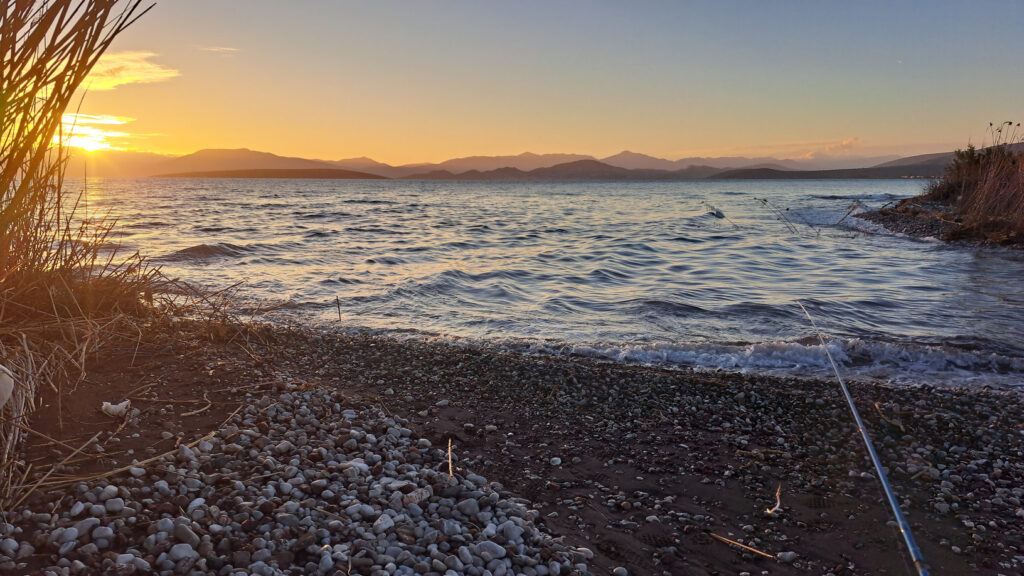
When people ask where to catch sea bass, they often expect a list of famous spots. In reality, it’s much more about reading water than knowing names. Sea bass hold where structure, depth change, and current come together, especially where food gets pushed naturally.
Over time, I stopped fishing “beautiful” places and started fishing useful ones. Ugly rocks, awkward access, uneven ground. Places where walking feels annoying and parking isn’t perfect. Those spots often hold fish longer simply because fewer people bother fishing them.
Rocky points with broken water, shallow reefs topping out at around 0.5–1 meter, and beaches with a clear gutter or drop-off are all classic sea bass water. On open beaches, I rarely wade deeper than knee height. Many takes happen in the wash, often closer than 10–15 meters from shore.

One type of spot that deserves special mention is river mouths. I’ve caught many seabass fishing from shore right where freshwater meets the sea. These areas attract baitfish, create temperature and salinity changes, and almost always have some form of current. Even small rivers can hold fish, especially at dawn, dusk, or after rain. I often focus on the edges, not the main flow, but the calmer seams where dirty and clear water mix.
Harbor mouths can work too, but only when water is moving and traffic is low. Early morning or late night sessions are best there. Safety always comes first. If swell starts pushing water over the rocks every few sets, I leave. Slippery algae, strong currents near river mouths, and rising water can end sessions fast, sometimes badly.
Timing That Really Makes a Difference
Timing in sea bass fishing is about stacking simple advantages, not chasing perfect tide charts. Low light and moving water beat almost everything else, but I don’t wait for complete darkness.
Most of my sea bass from shore came in the window about one hour before sunset and up to one hour after. That’s when fish start moving, but there’s still enough light to read the water properly. In summer, that usually means fishing between 21:00 and 23:30, depending on the coast and conditions.
Once it turns completely dark with no remaining light at all, I usually stop fishing. I lose too much awareness of footing, water movement, and lure depth. An exception is when there’s strong residual light, for example, during a full moon. That can be a very good time too, but even then I prefer sessions where some natural light is still present.
Tide direction matters more than tide height. I’ve caught sea bass on both rising and falling tides, but rarely during slack water. Even a weak side current helps. If the sea is completely flat and the water static, I don’t stay long.
Wind direction matters more than strength. A light onshore wind that breaks the surface is ideal. Strong offshore wind often ruins lure control and usually kills the bite..
Sea Bass Bait That Actually Worked for Me
Over time, one thing became very clear: my most consistent sea bass bait wasn’t expensive or complicated. It was simple, slim, and natural.
I’ve caught the majority of my sea bass on an 85 mm Raglu in blue-white. That lure alone has produced fish for me in Portugal, France, Italy, Greece, and further north. When fish were cautious, it still worked. When conditions were rough, it still worked.
The second bait that really stood out was a 120 mm white, snake-like sand eel imitation. I fished it either on a light jig setup or behind a sinking spirolino when I needed distance. Especially on open beaches, that combination was deadly. The slow, natural movement in the wash zone triggered bites when other lures failed.
Hardbaits absolutely have their place too. Seabass minnows between 10 and 16 cm work very well, especially when fish hunt baitfish close to the surface. Topwater hardbaits can be incredible during calm summer evenings, but only when conditions are right. I don’t force them.
What mattered more than the lure itself was how I fished it. Slower retrieves, longer pauses, and letting the bait drift naturally with the current made the difference. Many takes came during the pause, not the movement.
Gear That Works for Real Shore Sessions
Living in a van forces me to keep things simple. I don’t carry specialized setups for every scenario. My sea bass fishing gear needs to work on rocks, beaches, and breakwaters.
I usually fish spinning rods between 2.40 and 2.70 meters, but when I specifically target larger fish or need better line control over rocks, I go longer. A longer rod gives more reach, better steering, and helps keep line off sharp edges.
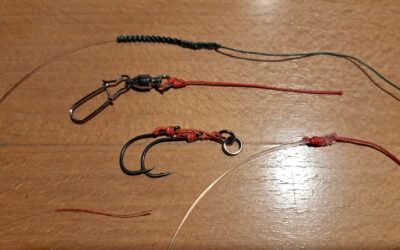
For reels, size 3000 to 4000 is plenty. Smooth drag matters more than gear ratio. I fish braided line around 0.14–0.16 mm (PE 0.8–1.0), but the leader is where I adapt most.
Fluorocarbon thickness depends entirely on conditions. On open beaches with clear water, I go as thin as 0.25 mm. Sea bass see extremely well, and during daytime or calm nights, thinner leaders clearly get more bites. The rockier the ground, the thicker I go, up to 0.39 mm if needed.
Leader length matters more than many think. I fish at least 2 meters of fluorocarbon. Short leaders cost me fish in clear water. Longer leaders gave me more confidence and more bites.
How to Catch Sea Bass from Shore Step by Step
When I arrive at a spot, I don’t rush. I watch the water first. Foam lines, current seams, darker patches, all of that tells me where fish might move.
Then I start fishing methodically. I begin with short casts and work outward slowly. I retrieve just fast enough to keep contact with the lure. I pause often. If I touch bottom too much, I lift the rod instead of speeding up.
If nothing happens after 20 or 30 minutes, I move. Sometimes only 50 meters make the difference. Standing still rarely improves things.
Why This Approach Works for Catching Seabass
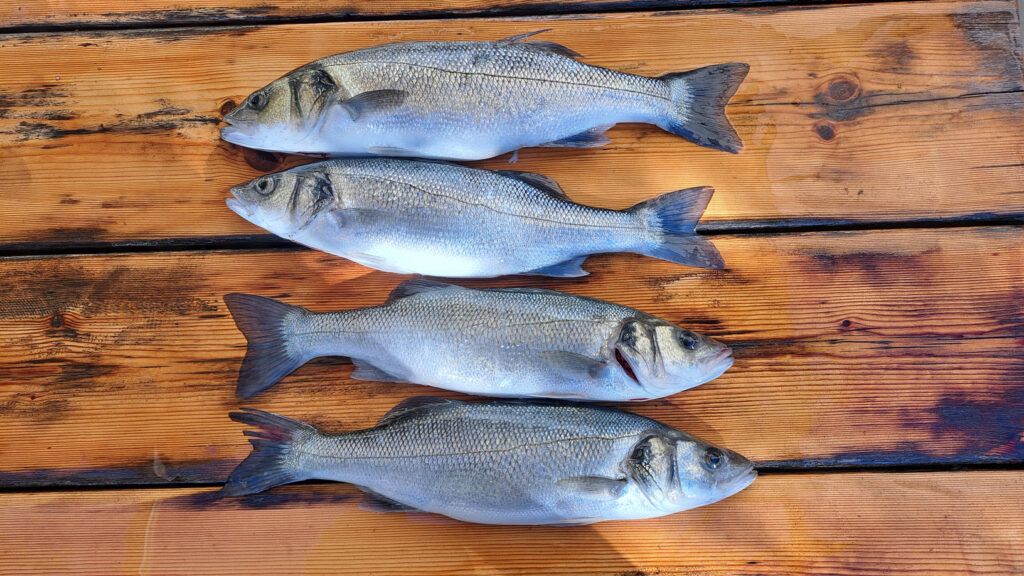
Sea bass use low light and turbulence to hunt safely. Slow, natural presentations match injured baitfish and give predators time to commit. Fishing closer and calmer keeps the lure in the strike zone longer.
From shore, you already fish with limitations. Accepting that and fishing smarter instead of harder changed everything for me. I still blank. Often. That’s normal. Sea bass fishing rewards patience more than confidence.
Final Takeaways From Years on the Rocks
What finally helped me catch sea bass more consistently wasn’t secret gear or perfect tides. It was slowing down, fishing closer, and trusting simple baits that move naturally. Understanding how well sea bass see made me rethink leaders, noise, and how I approach a spot.
Walking away when conditions feel wrong saved me from dangerous situations and frustration. Everything here comes from real sessions, not theory. If we were standing next to each other on the rocks, this is exactly how I’d explain how to catch sea bass, quietly, honestly, and without pretending it’s ever easy.