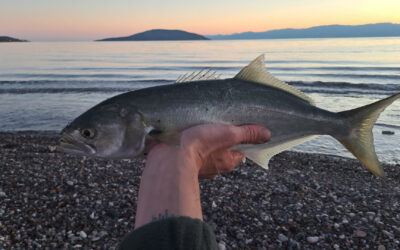
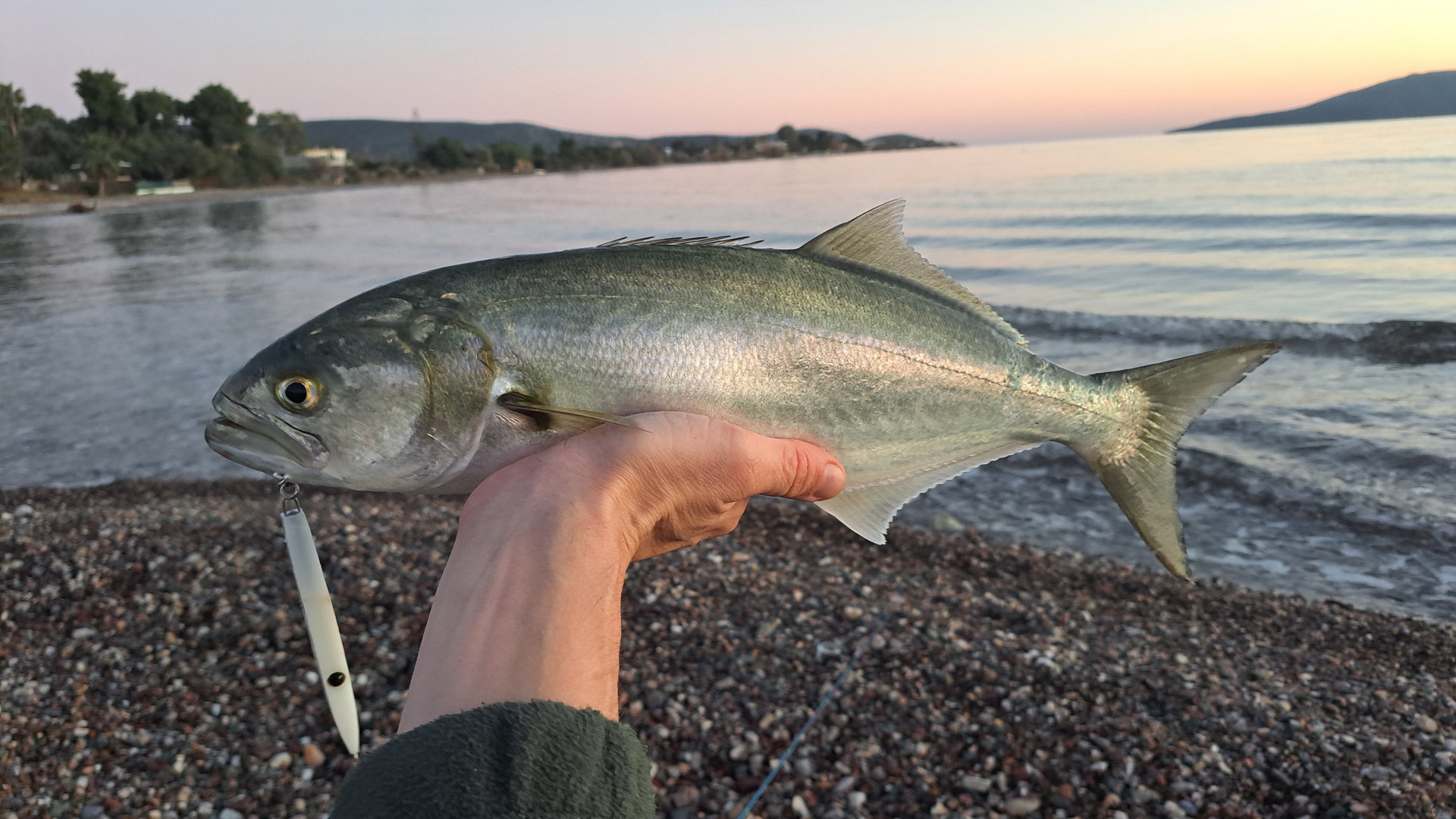
The first bluefish I ever caught came as a surprise. I was in Greece on a beach where rough stones slowly turned into clean sand. I was fishing for seabass and watching the light fade when I suddenly saw fish crashing on the surface far outside my normal casting range. White flashes. Fast turns. Real aggression.
I walked straight into the water with shoes and trousers on, step by step, until the water reached my waist. The first cast landed just behind the surface chaos, and the lure barely moved before it was hit hard. A Greek guy fishing nearby walked into the water to me. We laughed, shouted, and caught fish after fish for maybe fifteen minutes. Then it stopped as fast as it started.
That moment shaped how I think about bluefish. They are simple when they show themselves and almost invisible when they do not. This guide is about recognizing those moments and being ready to act instead of overthinking gear or theory.
What Makes Bluefish Different From Other Predators
Bluefish are direct and aggressive feeders. When they are around, you often know it before you ever hook one. They chase in packs, push bait to the surface, and feed with speed and confidence that feels almost reckless.
What took me time to learn is that bluefish do not behave like Seabass. I used to fish for them the same way and wondered why I only caught them by accident. Bluefish want movement, flash, and presence. They react to chaos, not finesse.
They also come and go quickly. A feeding window can last ten minutes or half an hour. I have had sessions where everything happened in a single short burst at sunset and then nothing again for days. Accepting that rhythm helped me stay patient instead of forcing long empty sessions.
Another thing I respect is their mouth. I treat their teeth carefully because a careless move can cut you badly. I never put fingers near their jaws and I always carry pliers, even when fishing light from the beach.
Bluefish Season and When I Actually Fish for Them
Bluefish season depends on where you are, but around the Mediterranean, I see them most from late spring into autumn. On the Peloponnese, I lived near the beach for three months and saw surface feeding bluefish every second day during calm weather.
The best fishing times for me are early morning and the hour around sunset. That low light seems to trigger surface feeding, especially when the sea is flat and quiet. Some of my most visual fishing happened in full calm conditions where I could see bluefish following the lure just under the surface.
I rarely stay once it is fully dark. I stop when there is no remaining light unless there is clear moonlight. I prefer to see what is happening around me, especially when wading into the water.
Tide matters less to me during bluefish sessions. What really decides the spot is bait. If I see small fish flicking, birds hovering, or sudden surface explosions, I stop everything and focus on that exact area.
Reading The Beach and Finding Bluefish From Shore
Most of my bluefish came from beaches, not rocks or harbors. I look for transitions where stones turn into sand or where shallow flats drop into slightly deeper water. Those edges seem to hold bait and give bluefish room to trap it.
When I see surface feeding far out, I do not rush. First I watch for a minute. Are the fish moving left or right? Are they staying in one pocket or pushing forward? That tells me where to position myself.
Wading is often the key. With a simple pair of shoes and trousers or a light wading setup, I gain ten or fifteen extra meters of casting distance. That difference often decides whether I reach the fish or not.
I stay aware of footing and swell. Even on calm days, unexpected waves can knock you off balance. If the water feels pushy or the bottom uneven, I stop. No fish is worth a fall with gear and hooks involved.
How I Fish for Bluefish in Real Sessions
When bluefish are active, I simplify everything. I stop changing lures and focus on covering water fast. First I cast beyond the activity. Then I retrieve straight through it.
If nothing happens, I speed up. Bluefish often respond better to fast retrieves than to slow teasing. When I see follows without strikes, I add sharper rod movement or brief pauses, a tip a Greek angler once gave me, and it works extremely well in practice.
One small detail that makes a big difference: I always wear polarized sunglasses. Not for style, but because they let me see through the surface glare. With good sunglasses, I can spot baitfish, see the edge of the school, and sometimes even watch bluefish tracking the lure. It also helps me react earlier when fish are slashing just under the surface instead of fully breaking it. And on bright Mediterranean days, they simply protect my eyes when I cast for hours into open water.
If surface feeding stops, I switch to casting blind along the same line. Bluefish often stay close even after the visible chaos disappears. Sometimes I got more strikes a few minutes after everything went quiet.
I stay mentally ready for chaos. Double strikes, crossed lines, and sudden runs are common. I loosen my drag slightly and let the fish burn energy instead of forcing it.
Bluefish Bait and Lures I Trust
I do not overcomplicate bluefish bait. I use lures that are easy to cast far and survive teeth. Surface lures are my favorite when conditions allow because the visual aspect is unmatched.
When the sea is calm and clear, surface lures bring insane moments. Watching a bluefish track the lure from below and explode on it never gets old. In rougher water, I switch to metal lures that cut wind and stay stable.
This is the simple setup I return to again and again:
• Surface lures around 8 to 15 centimeters with strong hooks
• Metal casting lures between 20 and 40 grams for distance
• Hard plastic minnows when fish hesitate on top
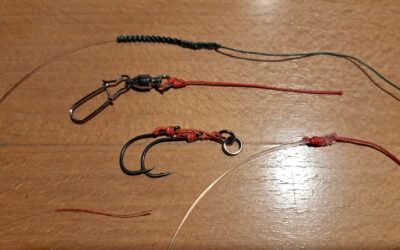
• Fluorocarbon leader around 0.40 millimeter for abrasion
• Long pliers for safe unhooking
After years of trial and error, what matters most is confidence. If I trust the lure, I fish it better. Bluefish react to commitment, not hesitation.
After losing a few lures to bitten leaders early on, I stopped going too thin. I would rather lose a bit of finesse than lose fish and gear every session.
Gear That Makes Sense From The Beach
I keep my gear simple because I live and travel in a van. I fish rods between 2.40 and 3 meters with a casting weight up to 60 grams. That gives me reach and control without being exhausting.
My reels are usually size 3000 with smooth drag. Bluefish fight fast and short. A sticky drag causes problems. Line wise, I fish braided line around 0.16 to 0.18 mm (PE 1.0) and a fluorocarbon leader long enough to keep knots away from the fish.
I always carry a small backpack with water, pliers, spare leader, and a headlamp even if I plan to stop before dark. Plans change fast when fish show up. Everything I carry has a reason. If something does not help me land fish safely, it stays in the van.
Safety Around Bluefish and Wading

Bluefish demand respect. Their teeth are sharp and their movement unpredictable. I never lip them. I never rush unhooking. If the fish thrashes, I step back and wait.
Wading adds another layer of risk. Slippery stones, hidden holes, and sudden waves can end a session badly. I move slowly and stop when things feel off.
If other anglers are nearby, I keep distance. Casting long with aggressive fish and sharp hooks is not the moment for crowding.
I also stay aware of local rules. Some areas restrict fishing during certain periods. I do not argue with locals. I listen and adapt.
Eating Bluefish and Why I Keep Them
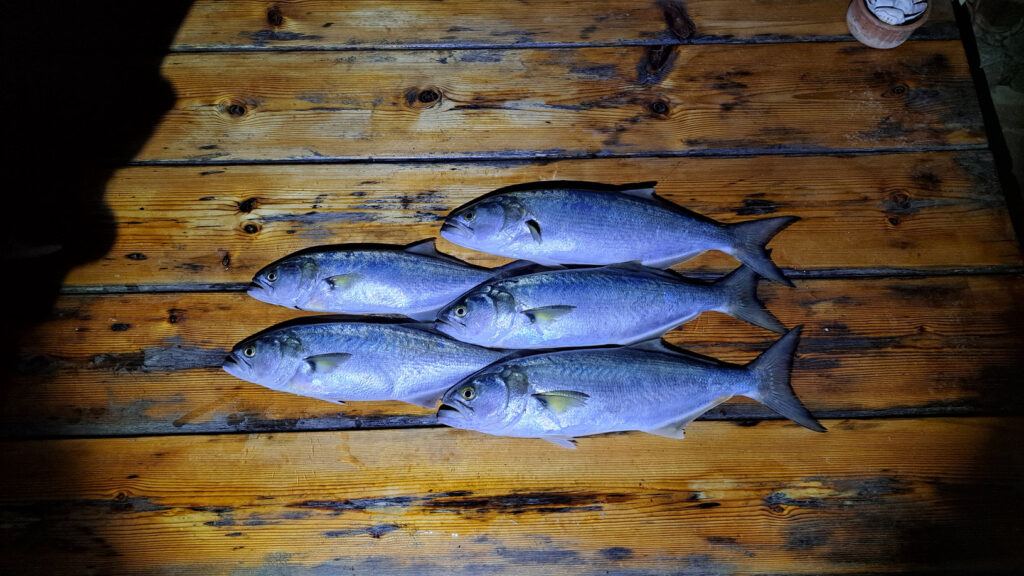
Bluefish is one of my favorite eating fish. The meat is firm, flavorful, and perfect for simple cooking. My wife and I love it grilled or pan fried with little more than salt, olive oil, and lemon.
I bleed the fish right away and cool it quickly. That makes a huge difference in taste. Fresh bluefish handled well beats many more famous species in my opinion.
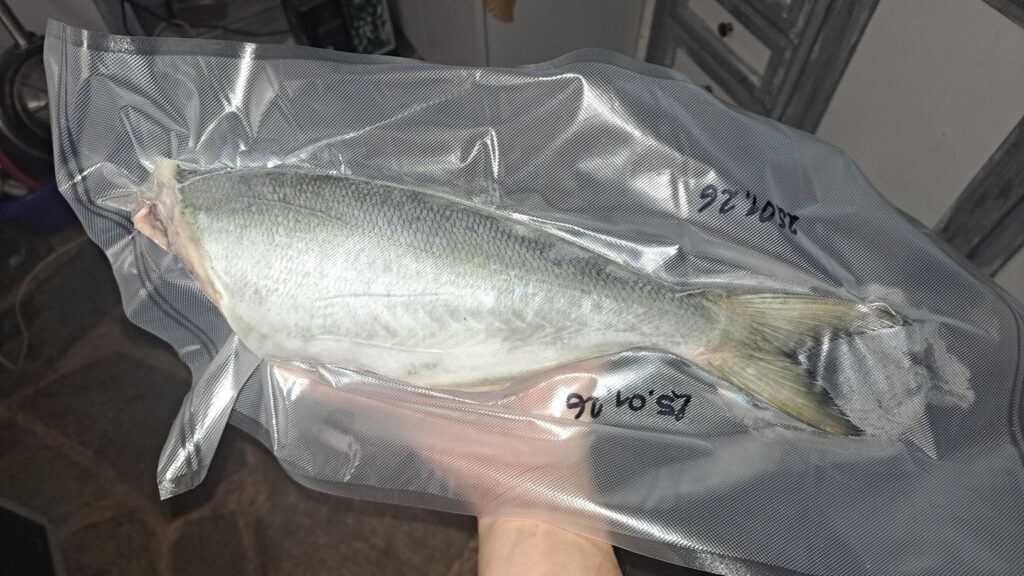
If I catch enough and there is plenty of fish around, I sometimes keep one or two extra fish and vacuum seal them for times when I am not fishing or when I catch nothing. I prefer that over buying farmed fish from the supermarket.
Lessons From Greece That Still Guide Me
Living near the beach on the Peloponnese taught me patience. I learned to watch instead of forcing sessions. I learned that bluefish appear when conditions align, not when I want them.
Some days I saw them every second day for weeks. Other days nothing happened. Accepting that rhythm made fishing more enjoyable.
Those moments of standing in calm water at sunset, watching fish follow a surface lure, are what I chase. Not numbers. Not trophies. Just honest fishing moments that stay with you.
Final Takeaways From Real Shore Sessions
Bluefish are not complicated, but they demand attention. Watch the water more than your lure. Move when fish show themselves. Fish with confidence and protect your hands.
They reward decisiveness. When you see them, act. When they are gone, accept it and come back another day.
That mindset has given me some of my most fun sessions on the road, standing wet and smiling as the light fades.