Mullet fish are among the most visible and widespread coastal fish in Europe, yet they are also some of the most misunderstood. Shore anglers see them constantly in harbors, estuaries, and along beaches, often assuming they are either uncatchable or irrelevant. In reality, mullet play a major ecological role and follow clear environmental patterns once you stop looking at them as predators.
This profile explains mullet fish from a European perspective, focusing on distribution, habitat, behavior, and seasonal presence. I’ve spent countless quiet minutes watching mullet cruise past my feet in ports and lagoons, teaching me patience more than any other species.
Species Overview (Identification & Key Facts)
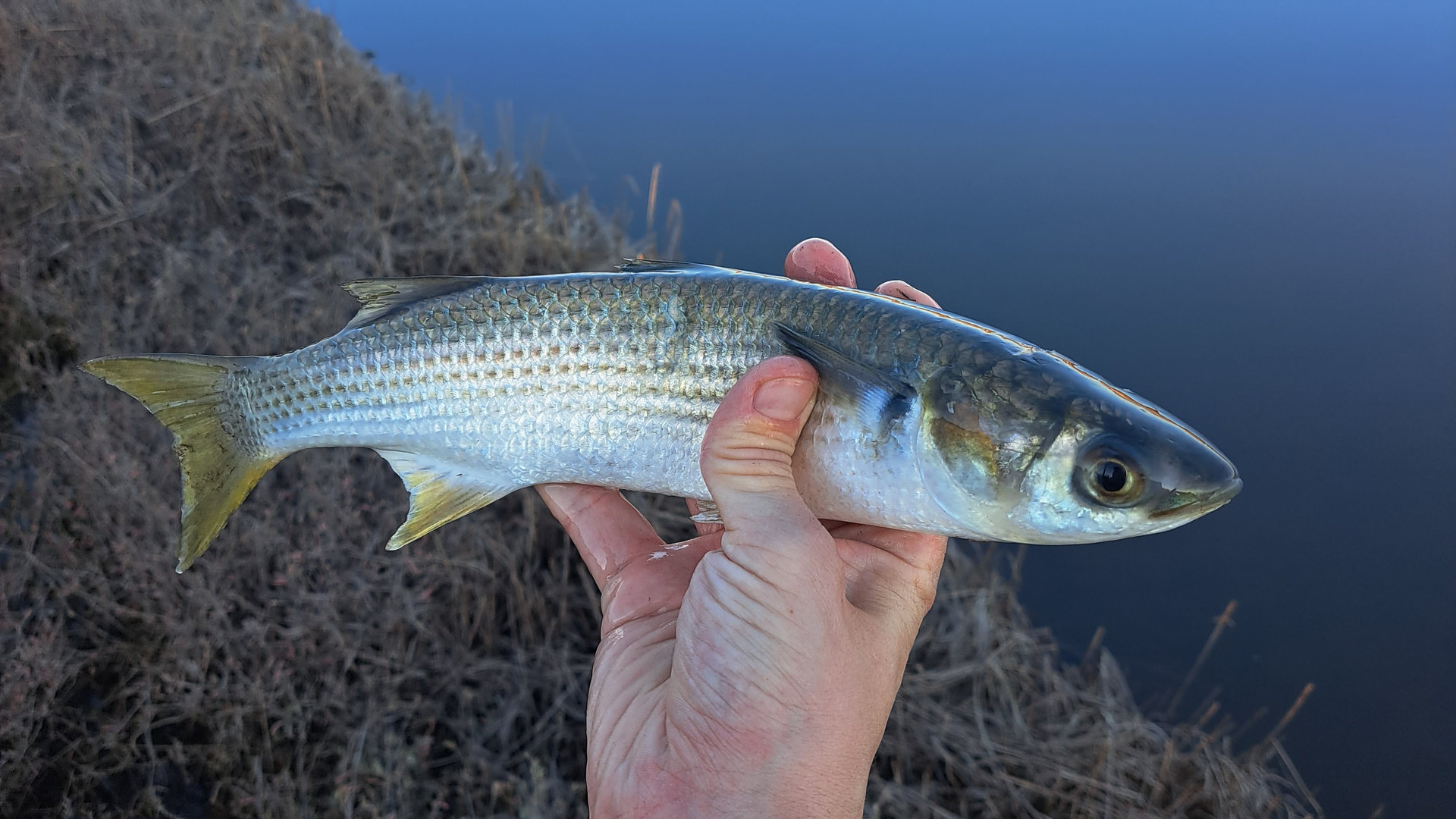
The term mullet fish in Europe usually refers to several closely related species, most commonly thick-lipped grey mullet (Chelon labrosus), thin-lipped grey mullet (Chelon ramada), and golden grey mullet (Chelon auratus). All share a cylindrical body shape, blunt head, small mouth, and large, easily visible scales. Coloration ranges from silver-grey to olive, often with faint horizontal striping.
Most European mullet measure between 30 and 60 cm, with weights commonly below 3 kg. Larger individuals exceeding 80 cm are rare but possible, particularly in southern waters. Mullet are relatively slow-growing and long-lived for coastal fish, with lifespans exceeding 15 years in some species. Juveniles often show more pronounced striping and tighter schooling behavior, while adults are bulkier and move in looser groups.
European Distribution: Where You Encounter This Species the Most
Mullet fish are distributed across nearly all European coastal waters. They are common along the Atlantic coasts of Portugal, Spain, France, the UK, and Ireland, and occur seasonally as far north as Norway and Denmark. In the Mediterranean, mullet are abundant throughout Italy, Croatia, Greece, Turkey, and the western basin.
Atlantic mullet populations show strong seasonal movement, often retreating from exposed coasts during colder months and concentrating in estuaries and sheltered waters. Mediterranean populations are more stable year-round due to milder winter temperatures. Mullet tolerate a wide range of salinity, from full seawater to almost freshwater, which allows them to occupy rivers, lagoons, and harbors. They are primarily shallow-water fish, most commonly found from the surface down to about 10 meters, although they may move deeper during winter.
Habitat & Behavior
Mullet favor shallow, sheltered habitats where fine sediment and organic matter accumulate. Sandy flats, muddy estuaries, seagrass beds, and calm harbor basins all suit their feeding style. Unlike predatory fish, mullet spend much of their time grazing rather than chasing prey.
Their diet consists mainly of algae, detritus, and microscopic organisms filtered from sediment and surfaces. This feeding behavior explains their constant surface activity and slow, deliberate movement. Mullet are highly sensitive to disturbance and react quickly to sudden noise or pressure waves, even in turbid water.
Light and water clarity influence behavior, but not in the same way as for predators. Mullet are active during daylight and often reduce visible movement at night. Seasonal changes affect schooling density, with colder water leading to tighter groups and reduced activity.
Angler Relevance & Shore Encounters
Shore anglers encounter mullet fish because they thrive exactly where people build infrastructure. Harbors, marinas, and river mouths concentrate nutrients, creating ideal feeding grounds. Mullet move confidently in very shallow water, often within a meter of the shoreline.
Environmental stability matters more than structure. Calm water, steady temperatures, and low wave energy encourage prolonged presence. Many anglers believe mullet are absent when they stop showing at the surface, but the fish often remain nearby, simply feeding deeper or becoming inactive due to disturbance or temperature shifts.
Seasonal Presence & Environmental Patterns
Across Europe, mullet presence near shore peaks from late spring through autumn. In Atlantic regions, activity declines sharply as water temperatures drop below about 10 °C, pushing fish into deeper or more sheltered areas. In the Mediterranean, mullet can be present year-round, though winter activity is reduced.
Spawning typically occurs offshore in late autumn or winter, depending on species and region. During this time, coastal sightings may decrease temporarily. Temperature stability, low swell, and consistent salinity act as biological triggers that keep mullet close to land rather than any fixed calendar period.
Culinary & Cultural Importance
Mullet fish have long cultural importance in Mediterranean and Atlantic coastal communities. They are sold fresh in local markets and valued differently depending on species and size. Smaller mullet are generally considered better eating, while very large individuals can have stronger flavor. Historically, mullet roe has been highly prized in parts of southern Europe.
Regulations, Size Limits & Sustainability
Regulations for mullet fish vary widely across Europe. Some countries apply minimum sizes or local restrictions, while others have few formal rules. Because mullet often gather in predictable inshore areas, local overharvest can occur quickly. Checking local regulations and avoiding pressure during spawning migrations is an important part of sustainable practice.
Safety Considerations
Mullet are most often encountered in shallow, enclosed areas such as harbors and estuaries. These environments come with their own risks, including slippery surfaces, boat traffic, and poor water quality. Night activity around ports increases hazards related to visibility and footing. Awareness of surroundings matters more than proximity to the fish.
Common Misconceptions About This Species
A common misconception is that mullet are unintelligent or inactive, when they are actually highly responsive to disturbance. Another is that they only live in dirty water, despite their presence in clear lagoons and open beaches.
Many anglers assume mullet are absent in winter, ignoring their shift into deeper or more sheltered zones. Others believe all mullet are the same species, overlooking important behavioral differences. Finally, surface absence is often mistaken for true absence, when it usually reflects a change in feeding depth.
The Mullet Fish (Grey Mullet): Final Thoughts
Mullet fish are defined by adaptability, longevity, and a feeding style unlike most coastal fish. They are most commonly encountered in shallow, nutrient-rich European shorelines where conditions remain stable. Seasonal movement and sensitivity to disturbance explain much of their behavior. Watching mullet move calmly through water that looks lifeless reminds me how much is happening below the surface.
If you want to go a step deeper beyond the species itself, I’ve put together a few shore-based tackle overviews. They give you solid background on the reels, rods, and lures many people rely on from rocks, beaches, breakwaters, and harbor walls: best saltwater spinning reels, best saltwater fishing rods, and best saltwater lures.