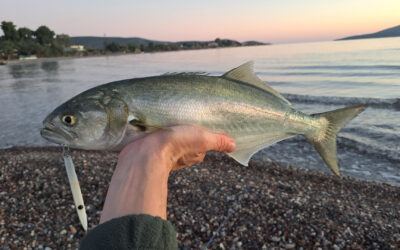
The fish hit the board with that dull, heavy sound that only solid tuna makes. I remember standing there with the knife in my hand, already knowing how easy it is to ruin this meat if you treat it the wrong way. False albacore looks forgiving, but it isn’t. The first few times I cooked it, I pushed it too far and ended up with dry, chalky steaks that needed sauce to be edible.
This recipe came out of that frustration. High heat, very short cooking time, good olive oil, and lemon added at the end—not before. Once I stopped trying to “improve” the fish, it started tasting the way it should.
Why High Heat Is the Only Way I Grill False Albacore
False albacore is dense and lean, closer to fresh tuna than to any white fish. That means it reacts badly to slow cooking. Medium heat dries it out before the center is warm. What finally worked for me was committing to proper heat and accepting that the inside should stay slightly pink.
I also learned to stop marinating it. Acid before cooking tightens the meat, and oil-heavy marinades just drip into the fire. Brushing the steaks with oil right before they hit the grill gives better contact, better browning, and more control.
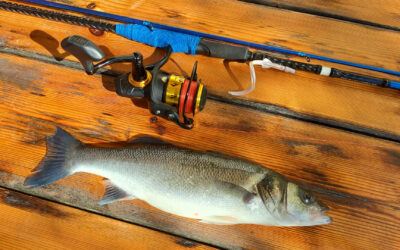
If you like this kind of simple, deliberate approach on the water as well, the same thinking applies to how I choose and fish the best saltwater lures. Nothing fancy, just tools that do one job well.
Cutting the Steaks and Preparing the Fish
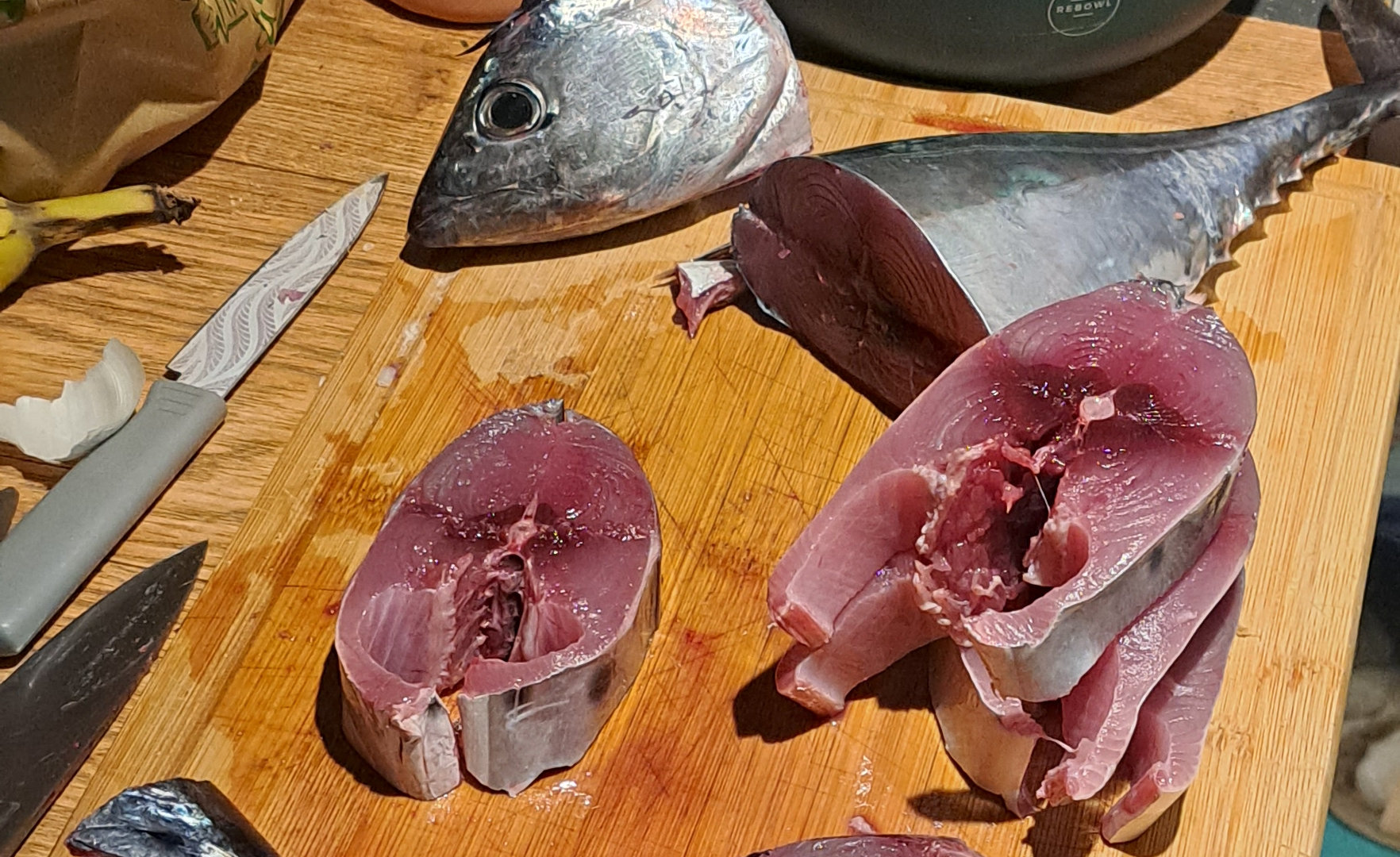
Before any heat is involved, the knife work matters more than seasoning. I cut steaks that are thick enough to survive the grill without turning into leather.
I usually work with a false albacore in the 3–6 kg range. From that size fish, I cut steaks like this:
- Remove all dark meat completely
- Cut steaks 2.5–3 cm thick
- Leave the skin off; it doesn’t help on a hot grill
- Pat the surface dry with paper towel
- Lightly salt both sides 5–10 minutes before grilling
Keeping the steaks thick gives me a buffer. Thin slices over high heat go from raw to overdone in seconds, and there’s no recovery from that.
How I Grill False Albacore Steaks Step by Step
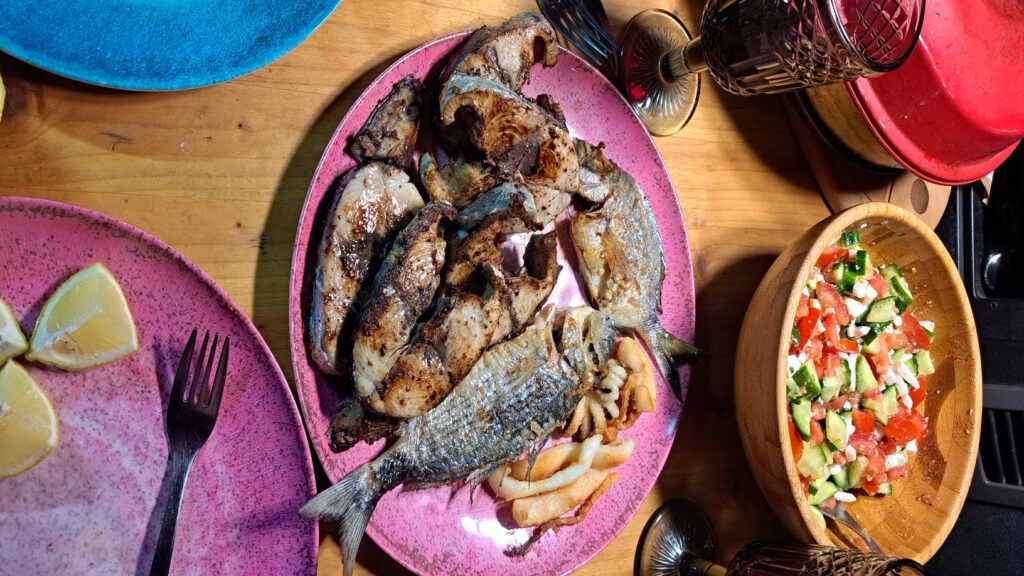
When I grill false albacore, I’m not following a recipe in my head. I’m watching heat, color, and timing. The steps themselves are simple, but each one only works if you understand why it’s there. That’s what I was missing in the beginning.
- Preheat the grill or pan until it is properly hot: I don’t start cooking until the grill is genuinely hot. If I can hold my hand more than 3 seconds at about 10 cm above the surface, it’s not ready. False albacore needs immediate searing. Medium heat gives you the worst result: pale outside, dry inside. Proper heat seals the surface quickly and buys you time in the center.
- Brush both sides lightly with olive oil: I use about 1–2 teaspoons per steak, no more. The oil isn’t there to flavor the fish, it’s there to improve contact and prevent sticking. Too much oil just drips off and causes flare-ups or uneven heat. I never oil the grill itself—oil goes on the fish, right before it hits the heat.
- Place the steaks on the grill and leave them alone: This is where I used to fail. I’d lift, slide, or press the fish out of impatience. Now I place the steak down and don’t touch it for 60–75 seconds. During this time, the surface sets and releases naturally. If I try to move it earlier, it sticks and tears, which ruins both texture and confidence.
- Flip once, and only once: False albacore doesn’t benefit from turning back and forth. After the first side has proper color, I flip and cook the second side for 45–60 seconds. The second side always cooks faster because the fish is already hot inside. Multiple flips just push heat deeper and dry the center.
- Use the side of the steak as your main indicator: I ignore the top and watch the side. When roughly two-thirds of the thickness has turned opaque and the center still looks slightly translucent, the fish is ready to come off. Waiting until the center looks “fully cooked” on the grill guarantees dryness on the plate.
- Rest briefly and finish simply: I let the steaks rest for about 2 minutes off the heat. This isn’t about juices like with meat—it’s about letting the temperature settle. Only after resting do I add lemon juice, black pepper, and sometimes a final small drizzle of olive oil. Lemon goes on last so it brightens the fish without tightening it.
What changed my results wasn’t a trick or secret ingredient. It was committing to heat, trusting my eyes more than the clock, and stopping myself from over-handling the fish. Once I did that, false albacore stopped being a risky fish and became a reliable one.
Why Lemon Comes After, Not Before
This was one of my biggest early mistakes. Lemon juice before cooking sounds logical, but it works against you here. Acid starts cooking the surface and tightens the muscle fibers before heat even touches the fish.
Adding lemon after resting does three things at once. It lifts the flavor, balances the oil, and freshens the fish without changing the texture. I usually use about ½ a lemon per two steaks, squeezed lightly—not drowned.
Food Safety and Storage Notes
I treat false albacore with the same respect I would give any tuna species, because the risks and the spoilage curve are similar. If the fish was not bled properly right after the catch, I already know the meat will suffer in both taste and keeping quality. Blood left in the flesh darkens the meat, adds a metallic note, and shortens the safe window fast.
Cooling matters just as much. I want the fish on ice as soon as possible, ideally within 30 to 60 minutes after landing it. From there on, it stays cold, dry, and protected from meltwater. If the flesh feels soft or the surface looks dull before cooking, I do not try to talk myself into using it anyway. That kind of hesitation usually ends in disappointment.
From catch to grill, my personal limit is under 24 hours. That does not mean the fish suddenly becomes dangerous at hour 25, but quality drops quickly after that point. With false albacore, freshness is what makes simple cooking work. If the fish is not truly fresh, no amount of lemon or olive oil will save it.
Once the steaks are cooked, I treat them as a one meal product. I do not reheat them because reheating pushes the center from just right to dry in seconds. If there are leftovers, they go straight into the fridge, uncovered until cooled, then sealed. I eat them cold within 12 to 18 hours, sliced thin, with a little olive oil and maybe a pinch of salt.
Smell is my final check. Fresh false albacore smells clean and neutral, sometimes with a mild sweetness. If it smells sharp, metallic, or sour, I stop there. I have learned that trying to use it up is never worth the risk or the ruined meal.
My Takeaways After Cooking This Fish Many Times
False albacore taught me restraint more than any other fish I cook. It does not reward creativity or constant adjustment. The more I interfered, the worse the result became. What it really wants is clear decisions and then leaving it alone.
High heat is non negotiable. Thick cuts buy you control. Short cooking times protect the texture. Seasoning should support the fish, not announce itself. Once I accepted those rules instead of fighting them, the fish became predictable and enjoyable instead of stressful.
When I get it right, the center stays warm and juicy, the outside has just enough color, and the flavor is clean and direct. There is nothing to hide behind, and nothing needs hiding. Sitting down with a plate like that feels earned and simple, and that is exactly the kind of food I want after a day on the water.