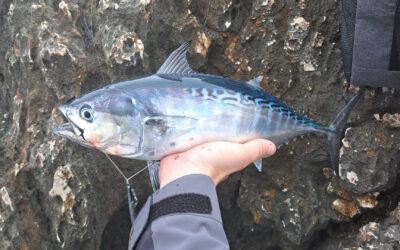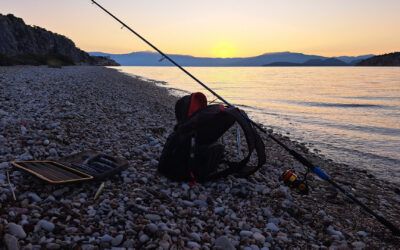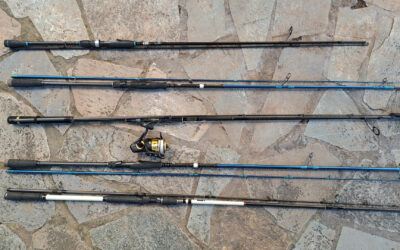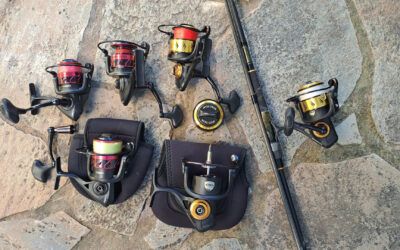
If there is one species that defines saltwater spinning in Europe, it is the European Seabass (Dicentrarchus labrax). For many of us anglers fishing the coasts from Ireland to Greece, this fish is the primary target. It is not just about the fight; it is about the hunt. The seabass is intelligent, wary, and capable of living in everything from crashing Atlantic surf to quiet, brackish estuaries.
Catching a large bass from the shore is rarely an accident. It requires understanding the water, reading the waves, and presenting your lure with precision. Unlike schooling mackerel that attack anything that moves, a bass will often follow a lure right to your feet, inspect it, and turn away at the last second. This mix of aggression and caution is what makes the pursuit so addictive for shore anglers.
Species Overview: Identification and Seabass Fish Size
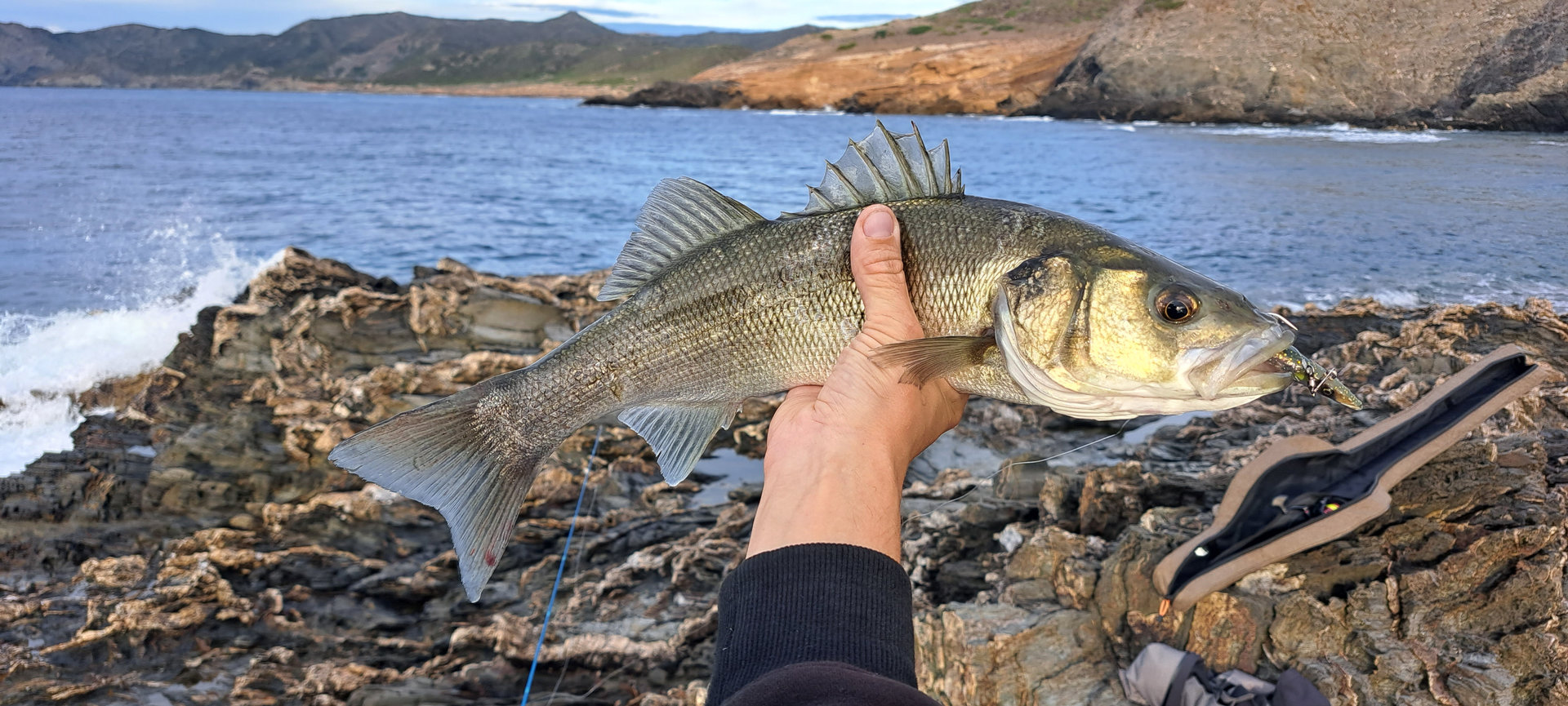
The European Seabass is a predator built for acceleration and stealth. It features a streamlined, silver body that can appear almost black on the back and pure white on the belly. The most defining physical characteristics are the two dorsal fins—the first being spiny and rigid, the second soft—and the sharp, razor-like gill covers (operculum) which demand careful handling.
When discussing seabass fish size, patience is key. These are slow-growing fish. A standard “schoolie” or juvenile bass caught from the shore usually measures between 30 cm and 40 cm. A fish of 42 cm to 50 cm is generally considered a “keeper” or decent sport fish, often weighing around 1 kg to 1.5 kg.
True trophy fish, often referred to as “slunkers” or “lunkers” in the UK and Ireland, can reach lengths of over 80 cm and weights exceeding 5 kg or even 8 kg. These large females are often decades old, making them a rare and precious resource for the angler.
European Distribution: Where You Catch This Fish the Most
The distribution of fish seabass populations is vast, covering the entire coastline from Norway down to North Africa and throughout the Mediterranean and Black Seas. However, their habits differ significantly depending on the region.
In the Atlantic, specifically along the coasts of France, the UK, Ireland, and Portugal, the fishery is often seasonal. In summer and autumn, bass move inshore to feed aggressively in the surf and shallow reefs. As winter approaches, many move offshore to deeper water to spawn, though resident populations remain in estuaries and warmer pockets. The Atlantic coast of France (Brittany) and the rocky headlands of Southwest Ireland are legendary for holding large numbers of fish in the turbulent whitewash.
In the Mediterranean, the seabass is less migratory and more of a resident. You will find them everywhere from the port of Valencia in Spain to the rocky islands of the Aegean in Greece. I have found that Mediterranean bass are often more pressured and “line shy” than their Atlantic cousins due to clearer water and heavier fishing traffic, which is where saltwater spinning reels with clean line lay and smooth drag really help.
Habitat & Behavior
Seabass are structure-oriented hunters. They love “white water”—the oxygenated, turbulent foam created where waves hit rocks or sandbars. This turbulence provides them with cover to ambush baitfish, crabs, and shrimp that are disoriented by the swell. If you are looking at a beach, do not cast into the calm deep water; cast into the white foam where the wave has just broken.
They are also highly tolerant of low salinity. It is common to find them kilometers upriver in estuaries, hunting in water that is barely salty. In harbors, they patrol shadow lines at night, using the artificial light to spot prey while remaining hidden in the darkness.
Their feeding behavior changes with the conditions. In rough weather, they are aggressive smash-and-grab hunters. In calm, clear water, they become investigative browsers. I once watched a large bass in a Greek harbor gently suck a lure into its mouth and spit it out in a fraction of a second, without me ever feeling a bump on the rod.
How to Catch Seabass from Shore in Europe
To consistently catch seabass, you need to match your approach to the conditions and use saltwater fishing rods that allow precise lure control in shallow, turbulent water. The days of throwing a heavy spoon and hoping for the best are largely over.
General Approach
Stealth is your best weapon. Bass often feed in water less than 1 meter deep, right at your feet. If you stomp your boots on the rocks or shine a headlamp into the water, they will leave before you make your first cast. Approach the water’s edge slowly and keep a low profile.
Lure Techniques
The three main lure categories for shore spinning are soft plastics, hard minnows, and topwater lures.
Soft Plastics: These are the most versatile. A shad or paddle-tail lure in the 9 cm to 12 cm range, rigged on a 10 g to 25 g jig head, accounts for the majority of catches. In weedy or rocky areas, rigging them “weedless” (Texas rig style) allows you to bounce the lure over the structure where the fish are hiding without snagging.
Hard Minnows: Shallow-diving hardbaits (110 mm to 140 mm) are essential for rough surf conditions. They cast well into the wind and hold their depth in the swell. I prefer “suspending” models that sit motionless when you pause the retrieve, as this is often when the bass strikes.
Topwater: In calm conditions or at dawn, a “walk-the-dog” surface lure is deadly. The visual explosion of a bass hitting a lure on the surface is the highlight of saltwater spinning.
Location-Specific Tactics
On surf beaches, look for “gutters” or channels where the water retreats after a wave breaks. The bass sit in these troughs waiting for food to be washed out. Cast up-current and retrieve your lure slowly as it sweeps through the channel.
On rocky coasts, target the wash. Cast your lure behind a submerged rock and pull it through the turbulent white water. Be ready to strike immediately, as the fish will hit hard before trying to dive back into the kelp.
Best Seasons, Conditions & Tides
In the Atlantic, the prime season is generally from May to November, with late autumn (September/October) offering the biggest fish as they fatten up for winter. In the Mediterranean, spring and autumn are excellent, but winter nights can also be productive around harbor mouths.
Tide is the heartbeat of bass fishing. In tidal oceans, bass activity usually peaks during the moving water—the middle two hours of the rising tide and the middle two hours of the dropping tide. “Slack water” (dead high or low) is often dead for fishing.
Ideal conditions often involve a bit of discomfort for the angler. An onshore wind, overcast skies, and a bit of swell usually produce better fishing than a sunny, flat-calm day. The low light and turbulence give the bass the tactical advantage over their prey.
Regulations, Size Limits & Sustainability
Because seabass are slow-growing and subject to commercial pressure, regulations are strict and change frequently. In the EU and UK, there are often distinct bag limits (e.g., 2 fish per day) and minimum size limits (typically 42 cm). There are also closed seasons in some regions where keeping bass is illegal to protect spawning stocks.
It is your responsibility to check the local rules for the specific country and region you are visiting. Beyond the law, many recreational anglers practice “catch and release” for any fish over 60 cm. These large fish are almost always females and are the most important breeders for the future of the stock.
Safety Considerations
Bass fishing often puts you in dangerous territory. The best fishing is frequently in rough weather on slippery rocks.
Swell: Never turn your back on the ocean. Rogue waves can sweep you off a ledge instantly. I always spend 5 minutes watching the waves before I step onto a rock to see how high the water is really coming.
Handling: The dorsal fins and gill covers are extremely sharp. When landing a bass, use a landing net. If you must hand-land it, grip the lower lip firmly with your thumb (the teeth are like sandpaper, not razors) or grip the belly, but watch out for the spikes.
Common Mistakes & How to Avoid Them
Fishing Too Deep A classic mistake is thinking the fish are far out in deep water. Bass are edge predators. They are often hunting in knee-deep water right in front of you. Fish the margins before you blast a cast to the horizon.
Retrieving Too Fast Unlike the high-speed chase of a bonito, bass often prefer a controlled, medium-paced retrieve. If you are using soft plastics, “over-working” the lure can look unnatural. Sometimes a straight, slow retrieve with the current is all that is needed.
Using Wire Leaders Bass have excellent eyesight. Using a wire trace (intended for pike or barracuda) will drastically reduce your bite rate. Use a fluorocarbon leader between 0.25 mm and 0.35 mm for invisibility and abrasion resistance.
Ignoring the Night If the water is crystal clear and the sun is bright, fishing can be impossible. Coming back to the same spot at night can change everything. Bass are highly effective nocturnal hunters and feel safer in the dark.
The European Seabass: Final Thoughts
The European Seabass is the species that teaches you how to be a better angler. It forces you to learn to read the water, to be stealthy, and to refine your gear. It is not a fish you simply “luck into” consistently.
Whether you are walking a mist-covered beach in Ireland or casting off a jetty in Greece, the moment that silver flank flashes in the water makes all the effort worthwhile. Treat them with respect, watch the tides, and remember that sometimes the best fishing is just where the waves are breaking at your feet.