The blue fish, better known as bluefish, is one of the most aggressive and mobile coastal predators found in European waters. For shore anglers, it stands out because it appears suddenly, feeds openly, and can vanish just as fast, which makes it both exciting and confusing.
It is common along many Atlantic coasts and parts of the Mediterranean, where I personally encounter it frequently, yet often misunderstood because its presence changes strongly with season and temperature.
In this species profile, I focus on where bluefish occur in Europe, how they behave, and why they move the way they do. Understanding the fish itself explains most of the “good days and empty days” people experience along the shore.
Species Overview: Identification & Key Facts

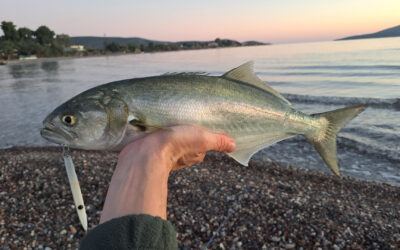
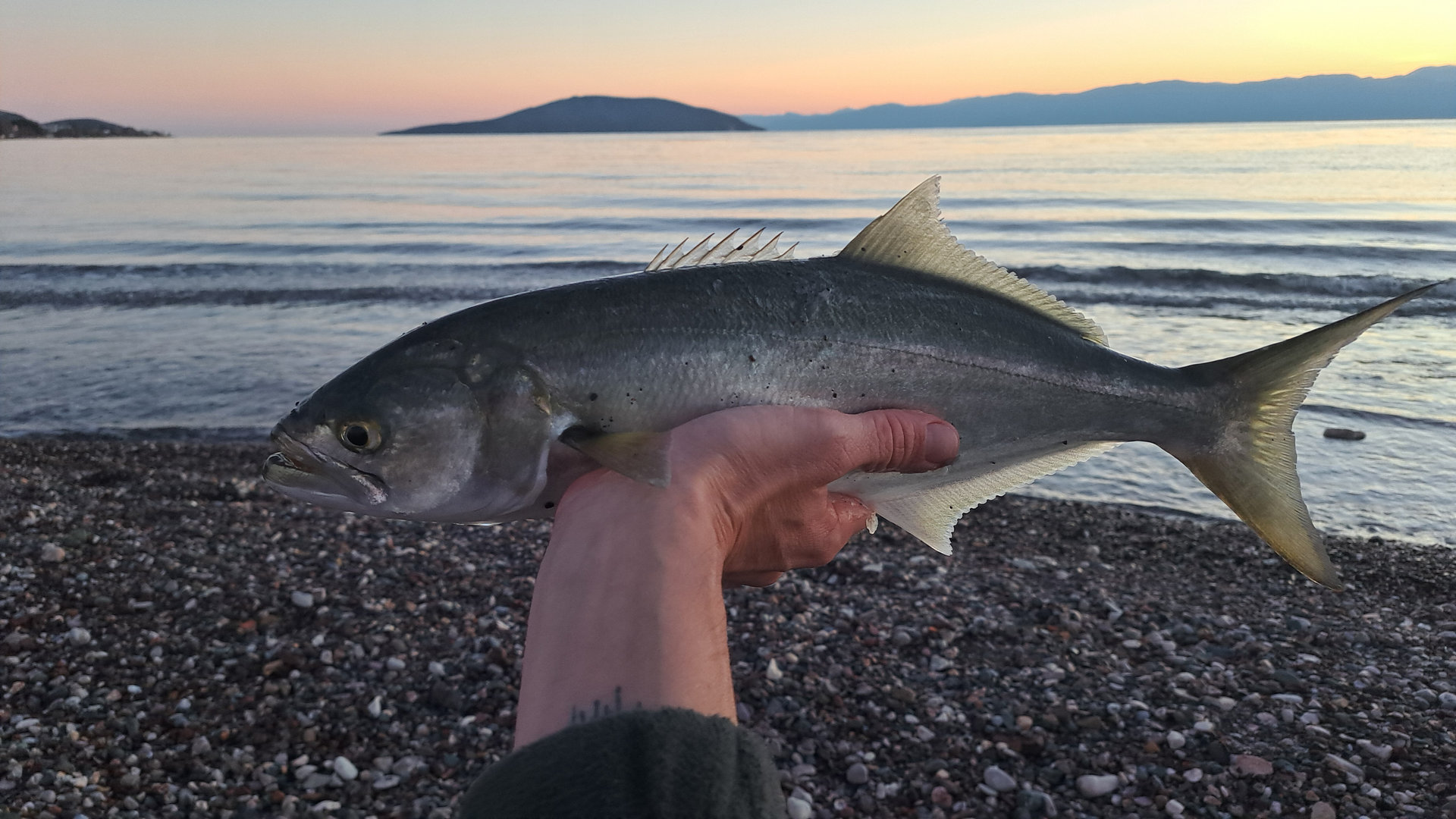
The bluefish has a long, muscular body with a steel-blue to greenish back and bright silver sides. Its most distinctive feature is the powerful jaw filled with sharp, triangular teeth, which are clearly visible even in smaller individuals. The tail is deeply forked, built for speed rather than endurance cruising.
In European waters, bluefish commonly range between 40 and 70 cm in length, with weights of 1 to 4 kg being typical. Larger individuals exist, especially in the Atlantic, where fish over 1 meter have been recorded. The official world record bluefish exceeds 14 kg, taken outside Europe, showing how large this species can grow globally.
Bluefish grow fast and usually live between 9 and 12 years. Juveniles form tight schools and stay closer to sheltered coastal zones, while adults become more nomadic and aggressive. Younger fish often show darker vertical shading, while adults appear cleaner and more metallic in color.
European Distribution: Where You Encounter This Species the Most
Bluefish are widely distributed along the eastern Atlantic, from southern Scandinavia down to West Africa. In Europe, the highest encounter rates are along the Portuguese, Spanish, and French Atlantic coasts, as well as parts of the UK and Ireland during warmer months. They are also present in the Mediterranean, especially in Italy, Greece, Turkey, and the eastern Adriatic.
Atlantic bluefish tend to grow larger and migrate more strongly with the seasons. In the Mediterranean, populations are often more localized but still highly mobile. The northern limit in Europe usually depends on water temperature, with sustained presence becoming rare below about 14 °C.
Bluefish move between offshore and inshore zones depending on prey availability. They are often found from the surface down to roughly 60 meters, but most coastal encounters happen in the upper water layers. Salinity plays a minor role compared to temperature and food density, which is why they regularly enter open bays and coastal current lines.
Habitat & Behaviour of the Blue Fish
Bluefish prefer open coastal environments rather than complex reef systems. They patrol beaches, headlands, harbour mouths, and offshore shoals where baitfish concentrate. Unlike many ambush predators, they rely on speed and group hunting rather than cover.
Their feeding behavior is direct and violent. Bluefish attack schooling prey such as sardines, anchovies, mackerel, and juvenile mullet, often injuring more fish than they consume. This surplus killing is one reason they are easy to identify when active, as wounded baitfish and surface disturbances give them away.
Light and water movement strongly influence activity. Clear water with moderate current often concentrates prey, while heavy swell can push them either closer to shore or scatter them entirely. They are primarily daytime feeders, but low-light periods around dawn and dusk often trigger increased movement.
If you want to translate this behaviour into actual shore tactics, casting angles and lure choice, I’ve broken it down step by step in my detailed guide on how to catch bluefish from shore.
Angler Relevance & Shore Encounters of the Bluefish Species
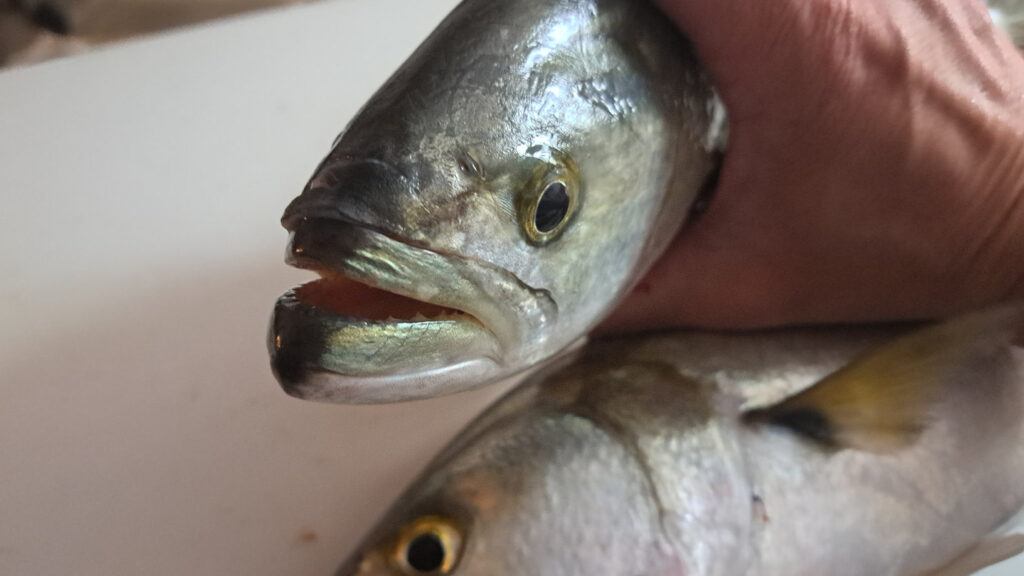
Bluefish regularly come within shore distance because their prey does. When baitfish are forced against beaches, cliffs, or harbour walls, bluefish follow without hesitation. Man-made structures matter mainly because they alter current flow and create predictable prey movement.
Many anglers believe bluefish are absent when they are not catching or seeing surface action. In reality, the fish may simply be moving deeper or traveling parallel to the coast. Their fast, roaming nature means presence does not always equal visibility.
From my own time along Atlantic beaches, I noticed that long quiet stretches are often followed by very short but intense windows of activity. This pattern reflects their hunting style rather than population size.
Seasonal Presence & Environmental Patterns
Seasonality is one of the defining traits of bluefish in Europe. Along Atlantic coasts, they usually appear in late spring as water temperatures rise and remain present through early autumn. Peak presence often aligns with large baitfish migrations.
In the Mediterranean, bluefish can be present almost year-round in southern and eastern regions. However, activity levels still rise noticeably during warmer months. Spawning typically occurs offshore in warmer water, which influences coastal presence before and after these periods.
Environmental triggers such as increasing daylight, stable temperatures, and predictable current patterns matter more than calendar dates. Sudden temperature drops or prolonged storms often push fish away from the immediate shoreline.
Culinary & Cultural Importance of the blue fish
Bluefish has long been valued as a food fish, especially in Mediterranean countries. Its flesh is oily, dark, and strongly flavored, which makes it popular in some regions and less appreciated in others. Smaller blue fish are generally considered better eating, while larger individuals can have very firm, intense meat.
In local markets, bluefish often appears seasonally rather than year-round. Its cultural importance is strongest where coastal communities have a long tradition of using fast-moving pelagic fish as staple protein.
Bluefish Regulations, Size Limits & Sustainability
Regulations for bluefish vary widely across Europe. Some countries apply minimum size limits, while others focus on general coastal fishing rules without species-specific restrictions. Closed seasons may exist in certain regions, particularly to protect spawning periods.
Because bluefish grow fast but rely heavily on schooling prey, local pressure can have noticeable short-term effects. Checking local regulations before targeting or retaining any fish is essential, especially when traveling across borders.
Common Misconceptions About This Species
- Many people believe bluefish are rare in Europe, when in fact they are widespread but highly seasonal.
- Another common assumption is that they only appear at the surface, even though they frequently move deeper without obvious signs.
- Some think bluefish prefer rocky ground, while prey concentration is usually the real driver, regardless of bottom type.
- There is also a belief that small blue fish are a different species, when they are simply juveniles of the same fish.
- Finally, inconsistent encounters are often blamed on population decline, while short-term movement patterns are usually the reason.
Takeaways about the blue colored fish
The blue fish is defined by speed, aggression, and constant movement. It is most commonly encountered along Atlantic coasts and warmer Mediterranean regions when water temperatures support baitfish concentrations. Seasonality, prey migration, and environmental stability matter far more than specific locations. For me, bluefish remains a reminder that coastal fishing is often about timing and understanding behavior, not just being in the right place.
Gear I Personally Use for Bluefish From Shore
If you want to go a bit deeper into the tackle side, these guides explain how to choose the best gear for bluefish from rocks, beaches, and open breakwaters.
Bluefish are fast, aggressive, and often hit in rougher conditions, so your setup needs to handle speed, distance, and serious pressure:
- Best saltwater fishing rods for casting metals and controlling hard runs
- Best saltwater spinning reels for long casts and hard runs
- Best saltwater lures for bluefish (fast metals, topwater, and minnow plugs)
It’s not about buying the most expensive gear, but with bluefish, slightly underpowered tackle becomes obvious very quickly.