I still remember the sound my first “saltwater-ready” reel made after three weeks of fishing in Portugal. It sounded like a coffee grinder chewing on gravel. I had bought it because it was shiny and the box promised durability, but it lacked the internal sealing required to survive the fine sand and salt spray of the Atlantic coast. That trip taught me an expensive lesson: the ocean finds every weak point in your gear.
Finding the best saltwater spinning reels is not about buying the flagship model with the highest price tag. It is about matching mechanical reliability with the specific demands of the coast. Whether you are wading the flats or casting heavy jigs from a granite cliff, the right reel acts as a seamless extension of your arm, while the wrong one becomes a rusty liability. This guide will help you navigate the technical specs—drag systems, sealing, and gear ratios—so you can make a choice that lasts more than one season.
Understanding Saltwater Spinning Reels
The primary difference between a standard freshwater reel and one built for the salt is protection. Saltwater is highly corrosive and conductive; it eats magnesium and untreated aluminum quickly. When we talk about saltwater spinning reels, we are looking for engineering that specifically keeps water out of the gearbox and drag system.
In my early days living in the van, I assumed I could just use my pike gear for seabass. I quickly found that the tolerances were too loose. Salt crystals formed inside the bearings, seizing them up within weeks. Today, I look for reels specifically designed with sealed bodies and corrosion-resistant bearings (CRBB).
For most European shore anglers, the spinning reel is the most versatile tool. It handles light soft plastics and heavy metal jigs equally well. The fixed spool design allows for long casting distances with braided lines, which is critical when you are standing on a breakwater trying to reach fish feeding 60 to 80 meters away.
Key Types of Saltwater Reels: From Inshore Finesse to Surf Power
To choose the best spinning reel for saltwater, you first need to define your terrain. Saltwater reels generally fall into three main categories based on size and body rigidity.
Light Inshore Reels (Sizes 2500–3000)
These are designed for protected waters, harbors, and estuaries. They are lightweight, usually weighing between 200g and 250g, to prevent fatigue during sessions where you might cast hundreds of times. The same lighter reel sizes also work well for controlled presentations during squid fishing, where smooth line lay and precise drag adjustment matter more than raw stopping power. However, they generally have lower drag pressure capabilities and smaller line capacities.
General Shore and Surf Reels (Sizes 4000–5000)
This is the workhorse category for the traveling angler. A 4000 or 5000 size reel balances well on saltwater fishing rods ranging from 2.7m to 3.0m. They offer a larger spool diameter, which reduces line friction during the cast, helping you gain extra distance. They also feature larger internal gears, providing the torque needed to turn the head of a fish in strong currents.
Heavy Duty and Offshore (Sizes 6000+)
Once you step up to targeting large pelagics or fishing from a boat, you need substantial stopping power. These reels are heavy, often 400g to 600g+, and are built with rigid metal bodies to prevent flexing under extreme loads. Unless you are targeting tuna or large amberjacks, these are usually overkill for standard shore spinning.
Important Features Saltwater Anglers Should Look At
When analyzing specs for the best saltwater fishing reels, three main factors determine if a reel will survive the coast: sealing, drag material, and gear ratio.
The Sealing and IP Ratings of the Saltwater Reel
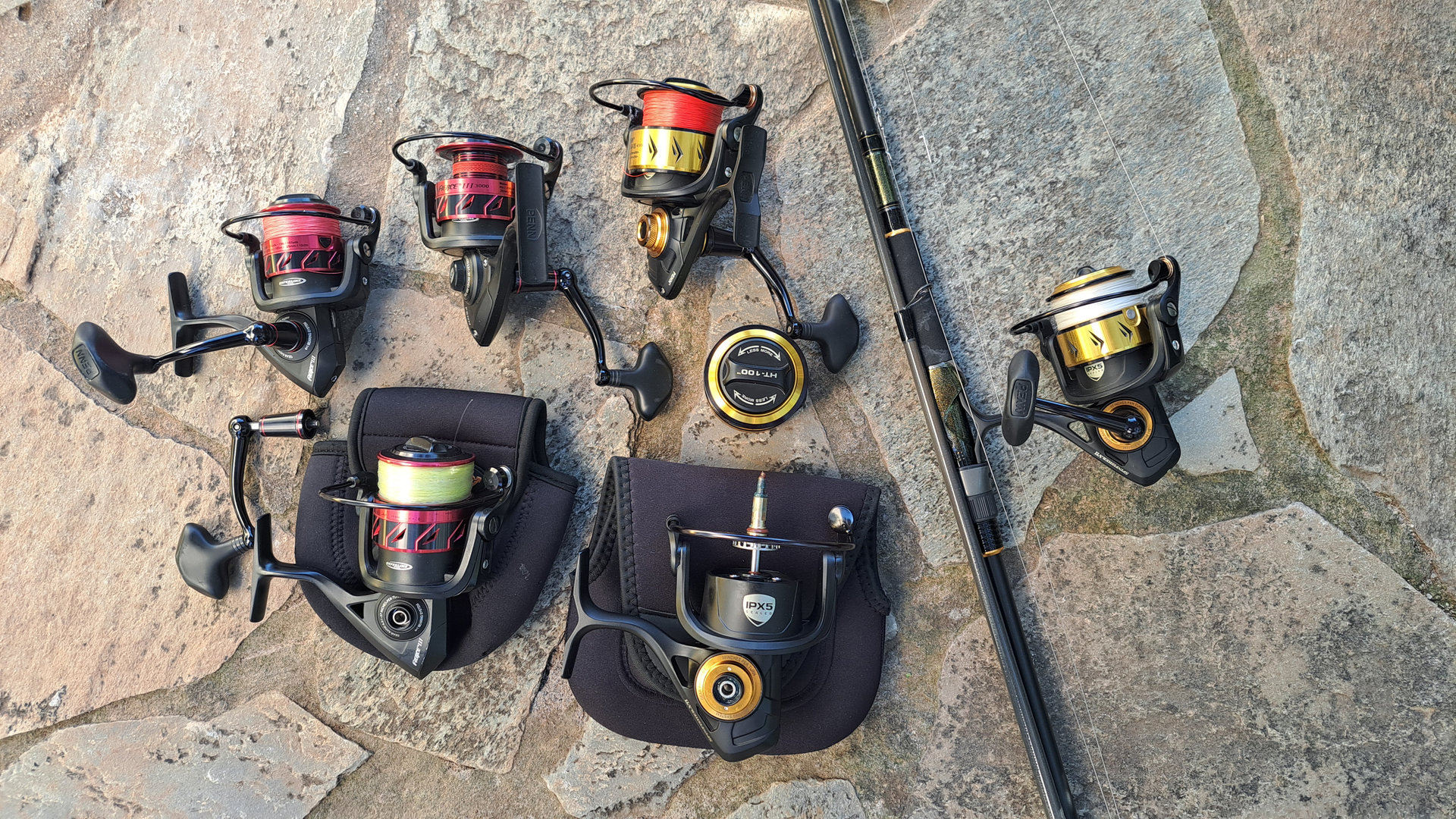
This is the non-negotiable factor. Look for reels that feature rubber gaskets or hydrophobic coatings at key entry points: the main shaft, the handle entry, and the drag knob. Some manufacturers use “IP” (Ingress Protection) ratings. A rating of IPX5 or higher means the reel can withstand low-pressure water jets from any angle, which is generally sufficient for surf spray and rain.
The Drag System of the Spinning Reel
The drag is your brake. In saltwater, fish make long, blistering runs. A jerky drag will snap your line instantly. The best saltwater spinning reel setups use carbon fiber drag washers rather than felt. Carbon washers dissipate heat efficiently and provide smooth, consistent pressure even when wet. For most shore applications, a max drag of 9kg to 11kg is sufficient, though in practice, you will rarely use more than 3kg of pressure during a fight.
Saltwater Reels Gear Ratio and Retrieval Speed
The gear ratio defines how many times the rotor spins around the spool with one full turn of the handle.
- High Gear (6.2:1 or higher): Retrieves 90cm to 110cm of line per turn. This is essential for working fast lures like metal jigs or topwater plugs where speed triggers the bite.
- Low Gear (4.8:1 to 5.2:1): Offers more torque but less speed. This is better for slow-rolling soft plastics or fighting very heavy fish vertically from a boat.
How to Choose the Best Saltwater Spinning Reel for Your Situation
Choosing the right size is just as important as the technology inside. Here is how I break it down based on typical scenarios.
Selecting the Best Inshore Spinning Reels
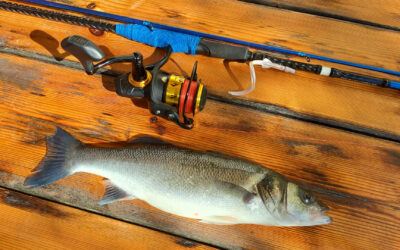
If you are walking harbor walls or wading shallow estuaries targeting seabass, you want a light setup. I explain the typical reel size and drag settings I use in detail in my guide on how to catch sea bass from shore. A 3000 size reel is ideal here. You typically only need it to hold 150 meters of PE 0.8 to PE 1.0 (roughly 0.10mm to 0.14mm braid). The focus here is on sensitivity. A composite body is often better here than metal because it saves weight and is completely rust-proof.
Surfing and Heavy Rock Saltwater Spinning
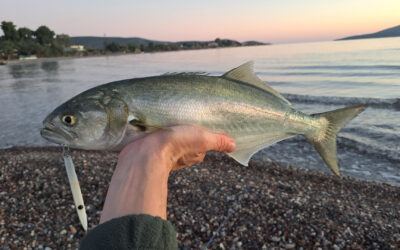
For open beaches or rough rocky outcrops, you need distance and power. Here, a 4000 or 5000 size reel is the standard. I usually spool these with 0.18mm–0.22mm braid (PE 1.2–1.5). The larger body houses larger gears, which provide the cranking power needed to turn fast, aggressive fish away from sharp structures. This is especially important when targeting species like bluefish, where long casts and sustained pressure are the norm. I explain that setup in more detail in my guide on how to catch bluefish.
The Truth About the Best Budget Spinning Reels
Can you fish saltwater on a budget? Yes, but you have to manage expectations. The best budget spinning reels often sacrifice sealing for price. They might have a good drag and a solid spool, but if you dunk them, they are likely finished. If you are buying in the lower price bracket, look for reels with simple designs and fewer bearings. Fewer bearings mean fewer parts to seize up. You will need to be religious about maintenance, but they can catch fish just as well as the high-end models.
Best Spinning Reel for Saltwater: Real-World Use Tips
- The longevity of your gear depends entirely on how you treat it after the session. I have reels that are five years old and still smooth because I follow a strict routine.
- Do not dunk your reel in a bucket of freshwater. This forces salt deeper into the body. Instead, tighten the drag knob fully (to seal the washers) and rinse the reel with a gentle spray of cold fresh water for about 30 seconds. Rotate the handle while rinsing to clear the line roller. Shake off the excess water and—this is crucial—loosen the drag knob before storing it. This prevents the drag washers from being compressed and deformed over storage.
- Safety is also a factor. A reel with a failing anti-reverse clutch can spin backward violently when under load, leading to bruised knuckles. Always check your anti-reverse before hiking down a cliff.
Common Mistakes and How Saltwater Anglers Can Avoid Them
Even with the right gear, user error can lead to failure.
- Overtightening the drag: Many anglers lock their drag down tight. If a big fish hits hard near the rocks, something will break. Set your drag so you can pull line out with a firm tug of your hand.
- Ignoring the line roller: This is the small bearing on the bail arm that the line passes over. It takes the most abuse from salt spray. If it seizes, your braid will wear through and snap. I drop a tiny bit of oil on this bearing every three or four sessions.
- Winching fish: Never try to winch a heavy fish up a cliff using the reel handle. This destroys the gears. Use the rod to pump the fish up, or better yet, hand-line it carefully if you don’t have a net.
- Heat damage: Leaving a reel on a dashboard in the sun can cause the internal grease to liquefy and run out of the gears. Keep your tackle in the shade.
Best Saltwater Spinning Reels 2026: Final Thoughts
There is no single “magic” reel that does everything perfectly. However, if you prioritize a sealed body, carbon drag washers, and the correct size for your rod, you are 90% of the way there.
- For light inshore work: Go for a 2500–3000 size focused on lightness.
- For general coast and surf: A 4000–5000 size with a high gear ratio is the sweet spot.
- For budget buyers: Focus on simple, robust construction and rinse it religiously.
Saltwater fishing is tough on equipment, but the right tool makes the challenge enjoyable rather than frustrating. If you get these basics right, your gear will stop being the weak point in your saltwater sessions.