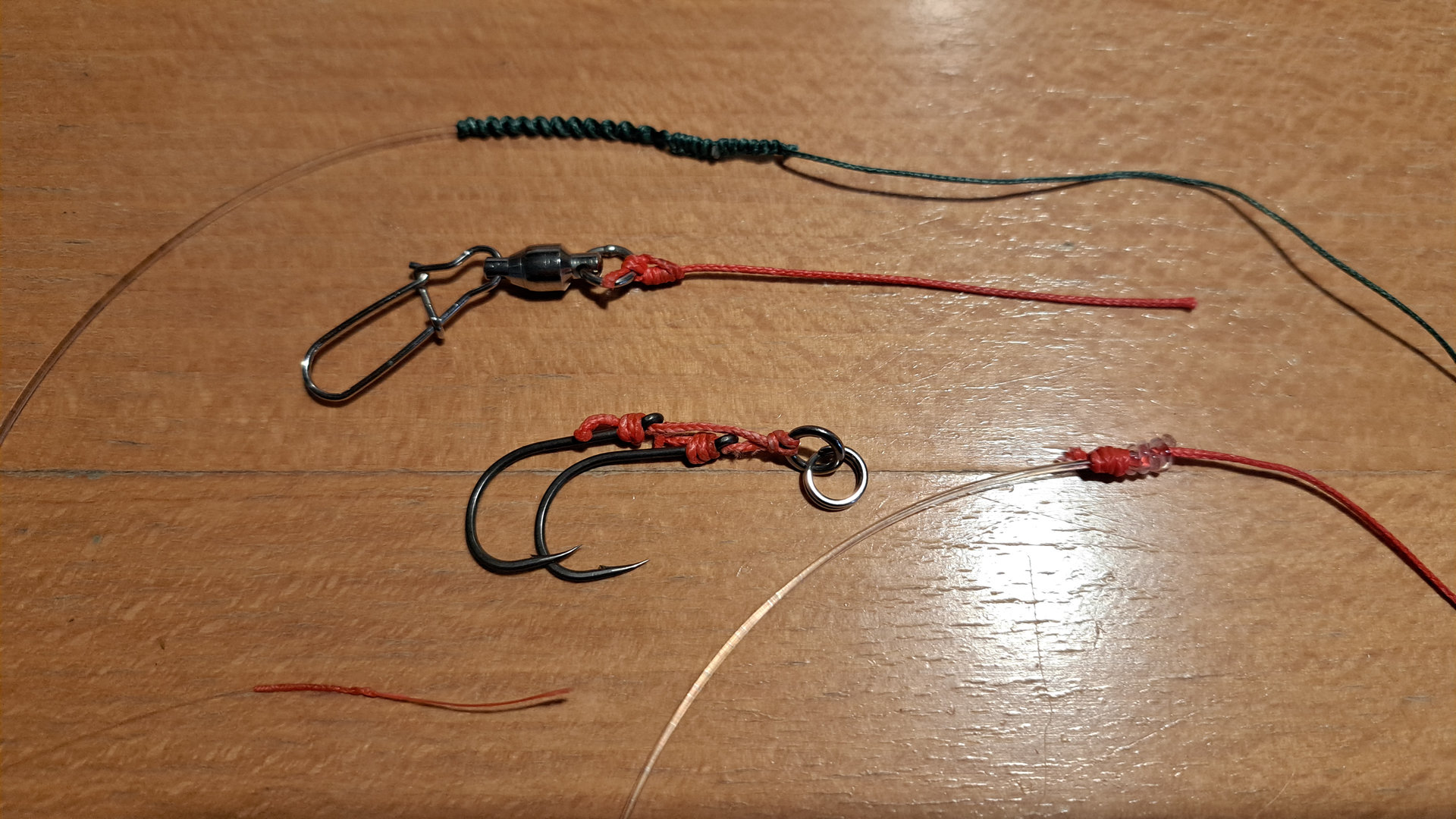
Some evenings on the coast look harmless until you actually try to tie a knot. I remember sitting on a low rock shelf at the Atlantic coast in Portugal. The wind had died just enough to make a session possible, but the light was fading fast.
My fingers were cold, the swell was licking at my boots, and the knot I had just tied looked… questionable. Moments like that taught me more about saltwater fishing knots than any book. On the rocks you don’t have a windless spot or perfect light. You tie knots on stones, in the wind, sometimes even half-blind under a headlamp.
Because of that, I slowly learned to rely on a handful of different saltwater fishing knots that work for spinning, bottom fishing, bait fishing, float setups or simple hook rigs. The sea doesn’t care how expensive your rod is if your knot gives up.
The Knots I Keep Coming Back To
These are not the only types of saltwater fishing knots, but they are the ones I can tie in real conditions like wind, spray, sand, darkness, and that I’ve used for spinning, bottom rigs, surf casting, live bait and even squid fishing.
FG Knot for Braided Fishing Line to Leader
Slim, strong, reliable. When I’m casting far or fishing mixed ground, this knot keeps everything clean and smooth in the guides. It’s my workhorse for thin braid around 0.11 to 0.15 mm to 0.35 to 0.40 mm mono or fluoro.
This short video below explains this knot step by step for those who prefer a visual explanation.
>> EASIEST Way to Tie the FG Knot by Salt Strong
Double Uni Knot: My Simple Travel Friendly Alternative
If I’m tired, cold, or the sand is blowing sideways, this knot saves the day. It is not as slim as the FG, but much easier to tie on a rocking breakwater, and good enough for most saltwater fishing knot situations with medium leaders.
This short video below explains this knot step by step for those who prefer a visual explanation.
>> How to tie a Uni-to-Uni Knot by PENNfishing
Improved Clinch Knot for Hooks Swivels and Snaps
Still one of the best saltwater fishing knots for hooks when using mono or fluoro. With bottom rigs, size 1 to 4 hooks and 0.40 to 0.50 mm leader, this knot has never let me down if I tie five to seven neat wraps and seat it slowly.
This short video below explains this knot step by step for those who prefer a visual explanation.
>> Best Fluorocarbon Knot Improved Clinch Knot by OutOfWork Outdoors
Palomar Knot for Thicker Fishing Line and Bigger Hooks
A great knot when I’m setting up a simple bait rig or tying on something with a big eyelet. Strong, clean, and extremely easy when fingers are cold or stiff. It works perfectly with heavier mono on surf or pier rods.
This short video below explains this knot step by step for those who prefer a visual explanation.
>> How to Tie the Palomar Knot by Wired2Fish
Dropper Loop for Multi Hook Bottom Rigs
When bait fishing from piers or sandy beaches, a clean dropper loop keeps the hooks away from the main line. I space them roughly 20 to 25 cm apart when I want two baits at slightly different heights over sand or light reef.
This short video below explains this knot step by step for those who prefer a visual explanation.
>> Learn How To Tie The Dropper Loop Fishing Knot by WhyKnot
Surgeons Loop for Quick Sinker Changes
On rough ground, I sometimes switch from a 40 g sinker to a 60 g one within minutes as the swell builds. A simple surgeons loop at the end of the rig makes that change easy and strong enough for hard casts.
This short video below explains this knot step by step for those who prefer a visual explanation.
>> Fishing Knot: How To Tie A Surgeon’s Loop Knot by WhyKnot
Rapala Loop Knot When Lures Need Freedom
I use this knot not only for spinning but also for small baitfish imitations on floats or casting bubbles. It gives the lure a more natural movement, especially in calm and clear water when fish inspect things closely.
This short video below explains this knot step by step for those who prefer a visual explanation.
These knots cover everything I realistically do: surf casting with 100 g sinkers, float fishing for bream, simple bottom rigs, bait fishing on piers, jigging from rocks, squid fishing at night — all of it with a small set of salt water fishing knots I actually remember.
How I Tie Knots When Conditions Aren’t Perfect
Knots always look clean in diagrams, but the coast doesn’t care about diagrams. In reality the wind shakes your leader, spray sticks to the braid, and your fingers are never as warm and dry as in those little drawings.
These days I try to make the situation as stable as possible. I keep the rod tucked under my arm or between my knees so the line stays steady, and I work with short, controlled lengths of leader instead of waving two meters of line in the air. Before tightening, I always wet the knot because dry mono or fluoro bites badly and loses strength. With most knots, I take my time and do five to seven clean wraps, not three rushed ones.
If a knot “jumps” or looks uneven while I pull it down, I don’t try to convince myself it’s fine. I cut it off and start again, then give every new connection a real pull before I fish it. If something is going to fail, I prefer it to happen in my hands rather than halfway through a cast or on a good fish.
Good knots also depend on the rest of the setup. A reel with smooth drag and clean line lay makes everything easier, especially with thin braid. I wrote more about that in my guide on the best saltwater spinning reels, because I’ve learned the hard way that bad line management turns even a good knot into a weak link.
In the van I make it as comfortable as possible: soft light on, rod across the table, everything dry and within reach. On the rocks I crouch low, turn my back a bit to the wind and use a flat spot or my knee as a small workbench. It doesn’t look glamorous, but that’s exactly what keeps the rigs intact and the session calm.
Fishing Knots: Knot-Tying Takeaways
If we were standing together on a windy breakwater somewhere along the Atlantic, I wouldn’t give you a lecture, just a few simple things that kept me fishing and saved a lot of swearing.
First, pick four to six saltwater fishing knots and really learn them instead of collecting twenty you can only tie on your couch. You will retie more often than you want to, especially after scraping the leader on rocks or throwing heavy sinkers, and that’s normal. The more automatic a knot feels in your hands, the less annoying that becomes, especially with thin braid and mono.
I’d also say: practice your braid-to-leader knots in calm conditions, not under a headlamp with waves slapping at your boots. For hooks, an Improved Clinch or a Palomar is usually enough. For lures, floats or casting bubbles, a loop knot often gives the bait or lure that little bit of extra life, and for simple bottom rigs, neat dropper loops keep everything tidy and reduce tangles.
When I’m targeting seabass from shore, those small details matter even more. In my guide on how to catch sea bass, I explain why clean connections and reliable knots are such a big part of staying confident when the bite window is short and the fish hit hard.
The rest is practice and patience. A good knot won’t magically land every fish, but a bad knot will reliably lose the ones you remember.