Squid are one of the most important and widespread invertebrates in European coastal waters. For shore anglers, they matter because they regularly move into shallow zones and sit right at the intersection between structure, light, and baitfish. Despite how often they are seen, squid are still widely misunderstood and often described as random or purely nocturnal.
This species profile explains squid in a European context, focusing on distribution, habitat, behavior, and seasonal presence rather than fishing techniques. I started paying attention to squid properly once I realized how often they were already there, just quietly suspended in water I used to ignore.
Species Overview (Identification & Key Facts)
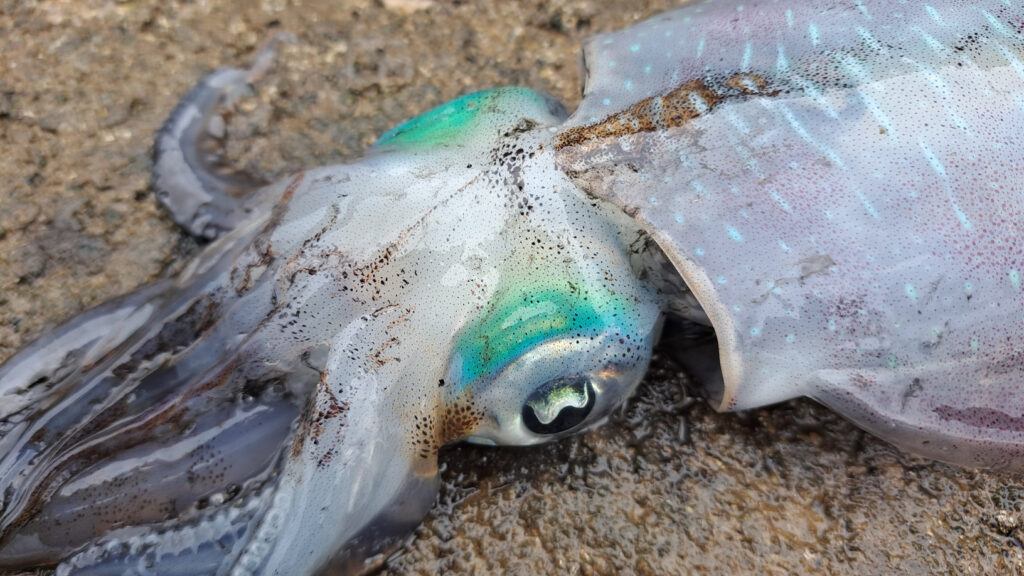
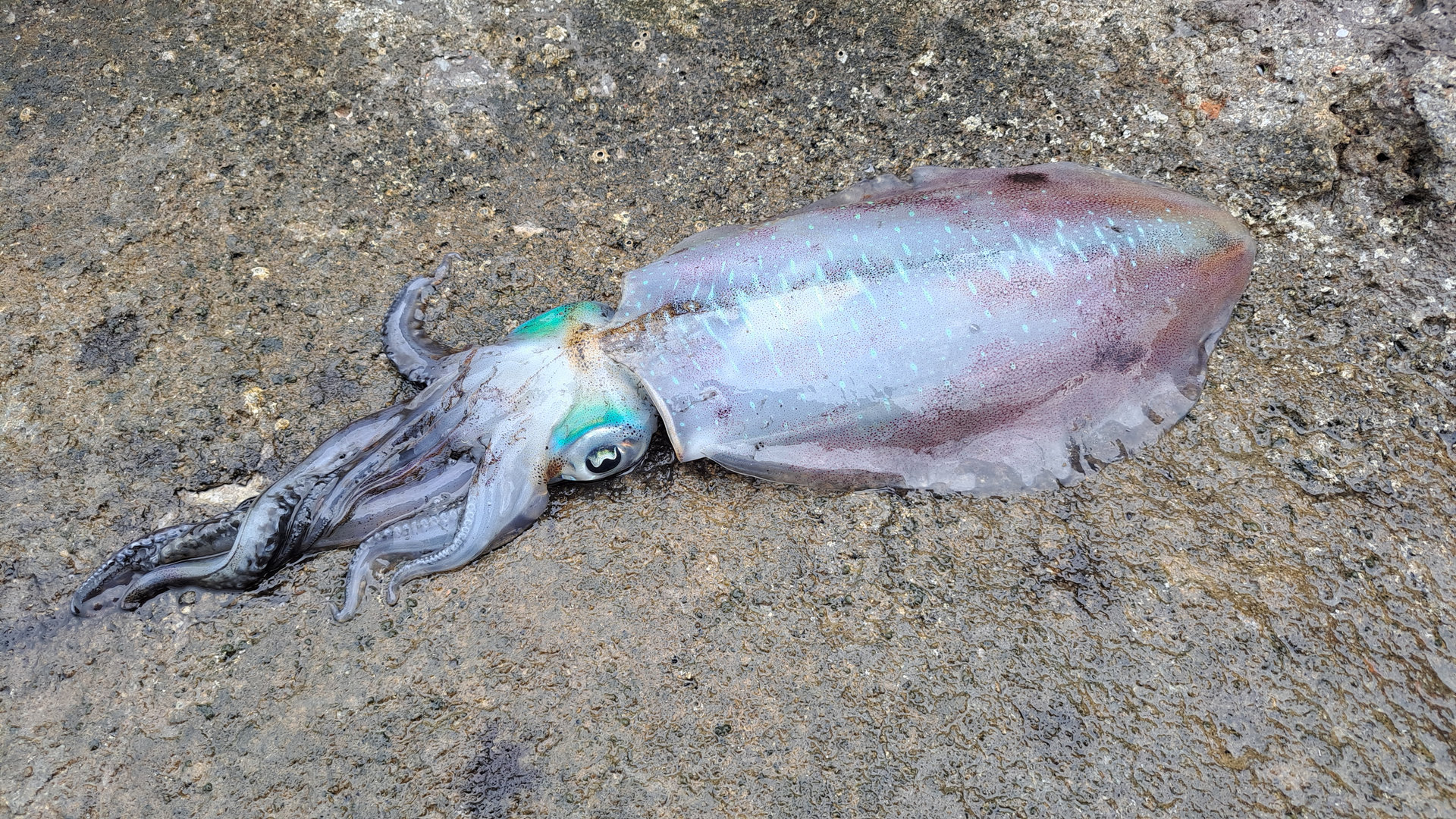
In Europe, the name squid usually refers to several closely related species, most commonly the European squid (Loligo vulgaris) and the veined squid (Loligo forbesii). These squid have elongated, streamlined bodies with a flexible mantle, large lateral fins, and ten arms, including two longer feeding tentacles. Their skin is covered in chromatophores, allowing rapid color changes from pale translucent tones to dark mottled patterns. Moreover, they share many behavioral traits with other coastal cephalopods such as cuttlefish, although their body shape and movement patterns are quite different.
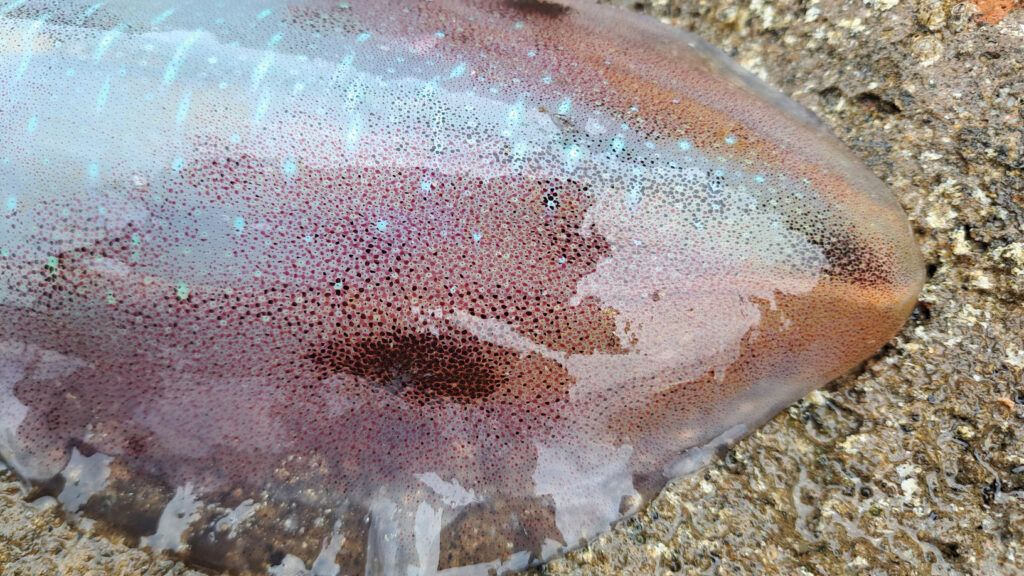
Typical European squid reach total lengths of 20 to 40 cm, with mantle lengths usually under 25 cm. Larger individuals exceeding 50 cm exist but are uncommon near shore. Squid grow extremely fast and have short lifespans, usually between one and two years. Juveniles are smaller, more transparent, and tend to stay in calmer, shallower water, while adults range more widely and tolerate deeper, darker conditions.
European Distribution: Where You Encounter This Species the Most
Squid are widely distributed across European waters. They are common along the Atlantic coasts of Portugal, Spain, France, the UK, and Ireland, and extend north into Norway and Denmark during warmer periods. In the Mediterranean, squid are present throughout Italy, Croatia, Greece, Turkey, and the western basin.
Atlantic squid populations show pronounced seasonal movement, often shifting offshore during colder months and returning closer to land as waters warm. In the Mediterranean, squid presence is more stable year-round but still influenced by temperature and spawning cycles. Squid are typically found from very shallow coastal water down to depths of 200 meters, though most shore encounters occur within the upper 5 to 30 meters. Sustained activity usually increases once water temperatures rise above roughly 12–14 °C.
Habitat & Behavior
Squid favor coastal habitats that combine open water with nearby structure. Sandy bottoms, seagrass beds, rocky edges, and harbor walls all provide suitable environments, especially where clear depth changes occur. During daylight, squid often hold slightly deeper and remain relatively still.
Their feeding behavior is visual and opportunistic, reacting strongly to movement and contrast in the water column. Because of this, many artificial Egi-jigs and other top saltwater lures designed for coastal fishing imitate small baitfish or shrimp.
European squid feed mainly on small fish, crustaceans, and other cephalopods. Light plays a key role, with squid often positioning themselves at the edge of illuminated areas rather than directly in bright light. Calm water and good clarity allow more dispersed behavior, while current and turbidity encourage tighter grouping.
Seasonally, squid shift between feeding-driven movement and spawning-driven migration. During spawning periods, adults gather over suitable substrate in relatively shallow water before dispersing again.
Angler Relevance & Shore Encounters
Shore anglers encounter squid because the species deliberately uses coastal edges as hunting and resting zones. Squid move close to land when prey concentrates there, particularly around artificial light, harbor infrastructure, and gentle drop-offs. These predictable conditions are exactly why shore anglers often target them intentionally through specialized squid fishing techniques. These areas create predictable biological conditions without squid needing to commit to very shallow water.
Human-made structures play a strong role by altering light and current patterns. Harbors and marinas unintentionally replicate natural reef edges and seagrass margins. Squid are often present but overlooked, especially during daylight, leading to the assumption that they are absent when they are simply inactive or holding deeper. When targeting them intentionally, anglers usually rely on sensitive setups and lighter best saltwater fishing rods that allow precise lure control in calm harbor water.
Seasonal Presence & Environmental Patterns
Across Europe, squid presence near shore typically increases from late summer through winter. In Atlantic waters, this pattern is closely linked to cooling surface temperatures and spawning migrations. In the Mediterranean, squid can be present year-round, but inshore density often peaks from autumn into early spring.
Spawning usually takes place in cooler months, with eggs attached to stable substrate such as seagrass or artificial structures. Light levels, gentle swell, and stable currents act as biological triggers rather than fixed calendar dates. Sudden temperature drops or heavy freshwater input can temporarily push squid offshore.
Culinary & Cultural Importance
Squid, commonly sold as calamari, are deeply rooted in European coastal cuisine. They are valued for their firm texture and mild flavor and appear regularly in local markets across southern and western Europe. Smaller and medium-sized squid are generally preferred for eating, while very large individuals are often tougher. In many Mediterranean regions, squid fishing and cooking are tied closely to seasonal traditions.
Regulations, Size Limits & Sustainability
Regulations for squid vary widely across Europe. Some regions apply seasonal closures or local restrictions, while others treat squid as largely unregulated. Because squid grow fast but reproduce only once, intense pressure during spawning periods can affect local populations quickly. Checking local regulations and avoiding disturbance during egg-laying periods is an important part of sustainable practice.
Safety Considerations
Squid are often encountered in low-light conditions and around man-made structures. Wet harbor edges, ladders, and algae-covered surfaces increase slip risk, especially at night. Calm conditions can change quickly, and focusing down into the water can reduce awareness of swell and boat traffic. Situational awareness matters more than proximity.
Common Misconceptions About This Species
A common misconception is that squid are strictly nocturnal, when they can be active at any time depending on light and prey. Another is that they only live in deep water, despite frequent use of shallow coastal zones.
Many anglers believe squid appear randomly, ignoring the role of temperature and spawning cycles. Others assume squid avoid clear water, even though they often prefer it. Finally, surface stillness is often mistaken for absence, when it usually means squid are holding motionless.
Squid (Calamari): Final Thoughts
Squid are defined by adaptability, short life cycles, and a strong relationship with light and structure. They are most commonly encountered along European coastlines where prey, depth changes, and illumination overlap. Seasonal movement and spawning behavior explain much of their apparent unpredictability. Watching squid hang perfectly still in clear water reminds me how much coastal life happens without obvious movement.