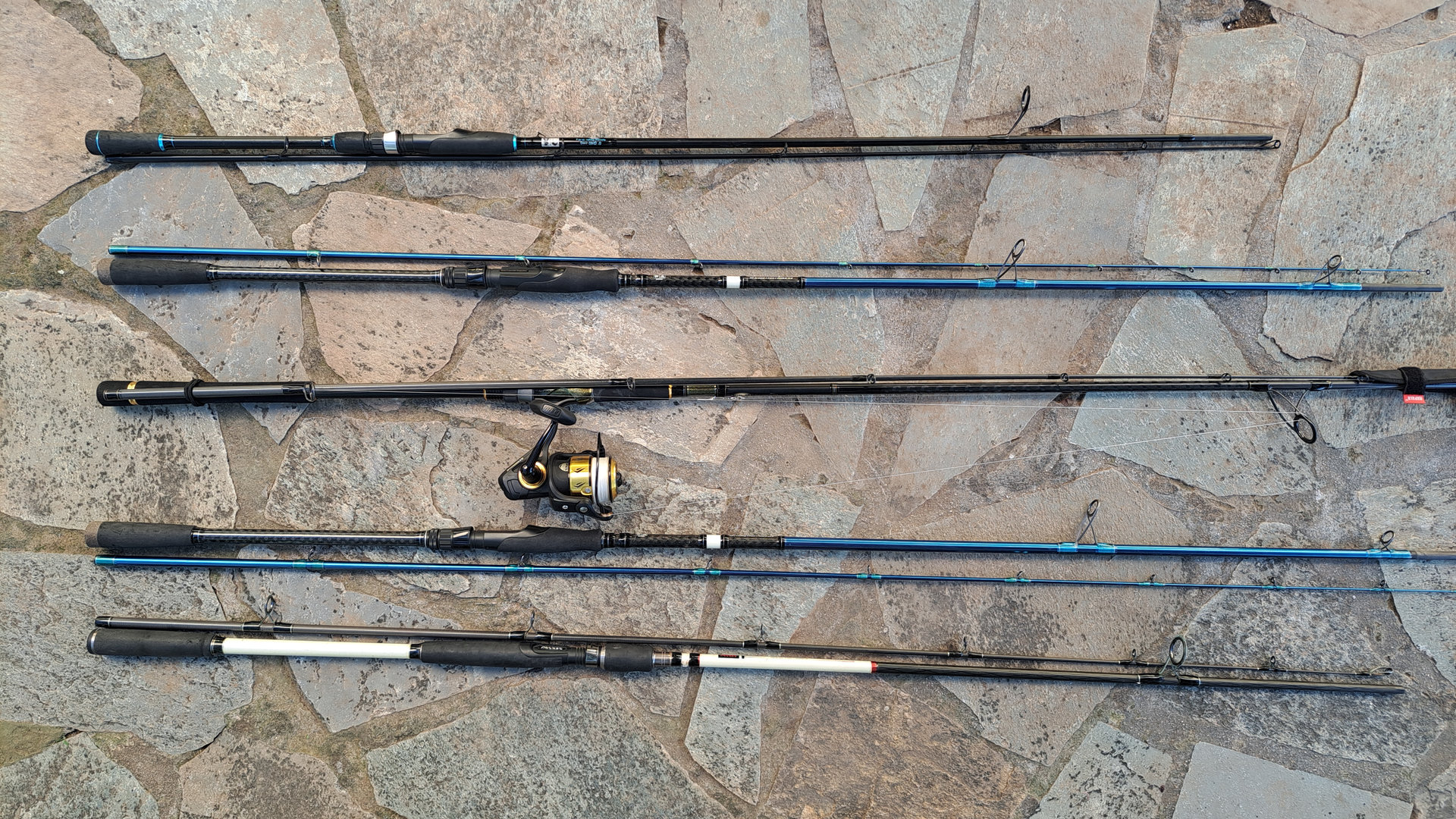
There is a specific helplessness I learned on a cliff in Portugal. With the wind howling at 25 knots, my freshwater rod suddenly felt like a toy. While my lure was rejected by the gale and tossed into the kelp at my feet, the locals were sending their jigs flying like bullets into the horizon. I wasn’t just out-fished; I was out-gunned. That day taught me that on the coast, reach isn’t a luxury—it’s the only way to play the game.
Finding the best saltwater fishing rods isn’t about buying the most expensive carbon blank on the rack. It is about leverage, reach, and resilience. Whether you are targeting seabass in a calm estuary or fighting bonito from a breakwater, the rod is the engine of your cast and your primary connection to the fish. This guide will help you navigate the confusing world of actions, powers, and materials to find a tool that actually works on the coast.
Understanding Saltwater Rod Dynamics
Saltwater environments are hostile to equipment. The pressure on your tackle is significantly higher than in freshwater scenarios. Tides, currents, and waves add drag to every fight, and the fish themselves are generally more powerful pound-for-pound.
The best fishing rods for saltwater distinguish themselves through component durability and blank taper. In my first year of vanlife, I ruined a perfectly good rod simply because the guide frames weren’t rated for salt. They developed green corrosion (verdigris) under the epoxy within weeks, eventually snapping the ceramic inserts. Now, I only use rods with stainless steel or titanium guide frames.
Beyond durability, the main difference is the “backbone.” A shore rod needs a sensitive tip to work a lure but a stiff lower section to stop a fish from diving into sharp rocks. This “fast action” is crucial. It allows you to impart life into a hardbait with small wrist movements while retaining the power to lift a 2kg fish onto a ledge if the swell makes netting impossible.
Key Types of Saltwater Fishing Rods and When to Use Them
To make the right choice, you need to categorize your fishing style. Most shore anglers in Europe fall into one of two main camps: light inshore or heavy distance.
The Best Inshore Fishing Rods
If your focus is harbors, estuaries, or shallow beaches, you are looking for the best inshore spinning rod. These rods typically range from 2.10m to 2.40m (7 to 8 feet) in length. They are designed to cast lighter lures, usually between 7g and 28g.
The shorter length offers accuracy. When I am fishing around bridge pilings or docked boats, I need to place a soft plastic lure within centimeters of the structure. A long surf rod would be clumsy here. The same lighter rod class is also ideal for controlled presentations during squid fishing, where sensitivity and smooth tip recovery matter more than raw casting power.
Saltwater Fishing Rods for Distance (Casting Rods)
When you step out onto open surf beaches or rocky headlands, the game changes. Here, you need reach. A rod between 2.70m and 3.00m (9 to 10 feet) is standard. The extra length does two things: it increases casting distance significantly due to the wider arc, and it helps keep your line high above the crashing waves and sharp barnacles.
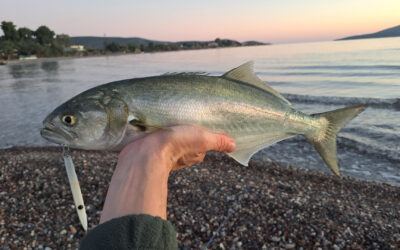
These rods generally handle casting weights from 20g up to 60g or even 80g. This power is necessary not just for the fish, but to punch aerodynamic metal jigs through coastal winds. For fast, aggressive species that demand distance and immediate pressure, this setup becomes essential. I explain that dynamic in more practical terms in my guide on how to catch bluefish. If you try to use a light rod here, the wind will collapse the rod tip during the cast, killing your distance.
Travel and Combo Options
For mobile anglers or those living in small spaces like my van, multi-piece rods are a lifesaver. Modern 4-piece travel rods have improved immensely and often feel indistinguishable from 2-piece models.
You might also consider looking for a matched setup where saltwater spinning reels balance correctly with the rod, which makes a huge difference during long shore sessions. While often seen as beginner gear, high-quality combos ensure that the reel balance point is perfect for the rod length, which is a detail many anglers overlook until their wrist hurts after an hour.
Important Features and Specs to Look At
When analyzing specs, ignore the marketing buzzwords and look at the numbers and materials.
Length and Casting Weight For general shore spinning, a 2.70m rod rated for 15-42g is the most versatile “do-it-all” spec I have found. It covers 80% of situations. If you go shorter (2.10m), you lose line control over waves. If you go longer (3.30m+), the rod becomes heavy and tiring to work aggressively.
Rod Action vs. Power These are often confused. “Power” is how much weight it takes to bend the rod (Light, Medium, Heavy). “Action” is where the rod bends (Fast means only the top third bends; Slow means it bends to the handle). For lures, you almost always want a Fast or Extra-Fast action. This gives you immediate hook-setting power and better sensitivity to feel bites through the line.
Guide Material This is non-negotiable for the best inshore fishing rods. Look for guides labeled as having “SiC” (Silicon Carbide) or “Alconite” rings with stainless steel frames. Cheaper inserts will groove over time from the friction of braided lines, and standard steel frames will rust quickly.
How to Choose the Best Option for Your Situation
To pick the right tool, look at where you will stand most of the time.
If you are fishing rocky coasts with deep water, you need leverage. A 2.90m or 3.00m rod with a casting weight of 20-60g allows you to steer fish away from snags. The extra length helps you land fish safely without getting too close to the dangerous swell line.
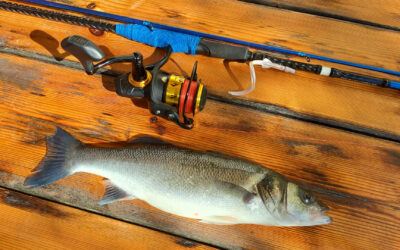
If you are fishing calm bays or inside ports, a 2.30m or 2.40m rod with a 5-25g rating is superior. It offers better feedback when working small lures close to structure and subtle current lines. This is exactly the kind of setup I prefer when targeting seabass in sheltered water. I go deeper into how rod length and action influence lure control in my guide on how to catch sea bass from shore.
If you are traveling and unsure, stick to the middle ground. A 2.70m (9ft) rod rated Medium-Heavy (10-40g approx) will handle a small seabass fun, but still has enough power to bring in a barracuda or a decent bluefish.
Best Fishing Rods for Saltwater: Real-World Use Tips
Saltwater kills gear, but neglect kills it faster. I have rods that have traveled 20,000 kilometers in the van and still look new because of simple habits.
Rinsing is mandatory. After every session, even if I didn’t splash the rod, I rinse the guides and the reel seat with fresh water. Salt spray dries into crystals that act like sandpaper on your reel’s foot and the rod’s finish. I pay special attention to the guide feet where they meet the blank; this is where corrosion starts.
Be careful with rod joints (ferrules). In hot weather, carbon expands. If you jam the sections together too hard, they can get stuck. I use a tiny bit of ferrule wax or even simple candle wax on the male joint. It prevents sticking and reduces wear over time.
Transport is another risk. In a van or car, rods break when things fall on them. I never travel with rods rigged and exposed unless they are in a dedicated roof carrier. A broken tip usually happens in the car door, not on a fish.
Common Mistakes When Choosing the Best Salt Water Fishing Rod
The most frequent mistake I see is “high-sticking.” This happens when landing a fish. An angler lifts the rod straight up to 12 o’clock or even further back to grab the line. This puts an acute angle on the tip section, which is the weakest part of the carbon. Snap. Always keep the rod angle below 60 degrees when the fish is close, and use the waves or a net to land the catch.
Another error is mismatching the lure weight. Rod ratings are real limits. If a rod is rated 10-30g, casting a 50g jig with full force will eventually shatter the blank. Conversely, trying to cast a 5g lure on that same rod will result in zero distance because the lure isn’t heavy enough to “load” the rod spring.
Best Saltwater Fishing Rods 2026: Final Thoughts
There is no single magic wand that covers every ocean scenario. However, by understanding your primary terrain, you can find a rod that feels like an extension of your arm.
- For Harbors: Stick to shorter (2.10-2.40m), sensitive rods.
- For Open Coast: Go longer (2.70-3.00m) for line control and safety.
- For Durability: Insist on saltwater-rated guides and rinse them every time.
Choosing the best saltwater fishing rods is about respecting the environment. If you match your rod to the wind, the waves, and the rocks, you stop fighting your gear and start fighting the fish.