The European Barracuda is one of those fish that feels familiar and mysterious at the same time. It is widespread, visually unmistakable, and often present close to shore, yet many coastal anglers only notice it in short, intense windows. Its sharp silhouette and sudden appearances have earned it a reputation that is larger than its actual size in European waters.
This profile looks at where the European Barracuda lives, how it behaves, and why it so often slips in and out of view along European coastlines. I also touch on the patterns I’ve observed from the shore, without turning this into a fishing guide.
Species Overview (Identification & Key Facts)
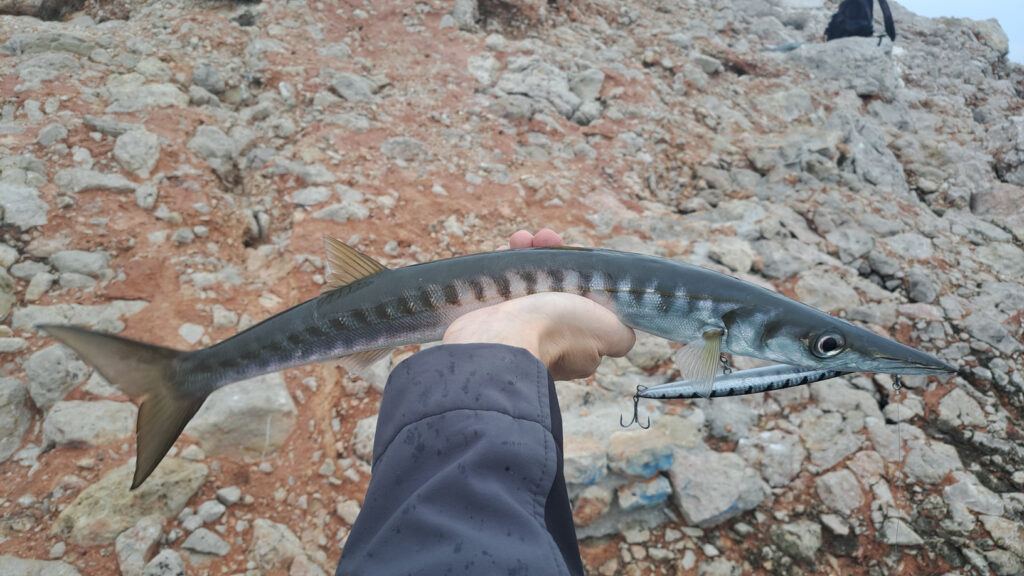
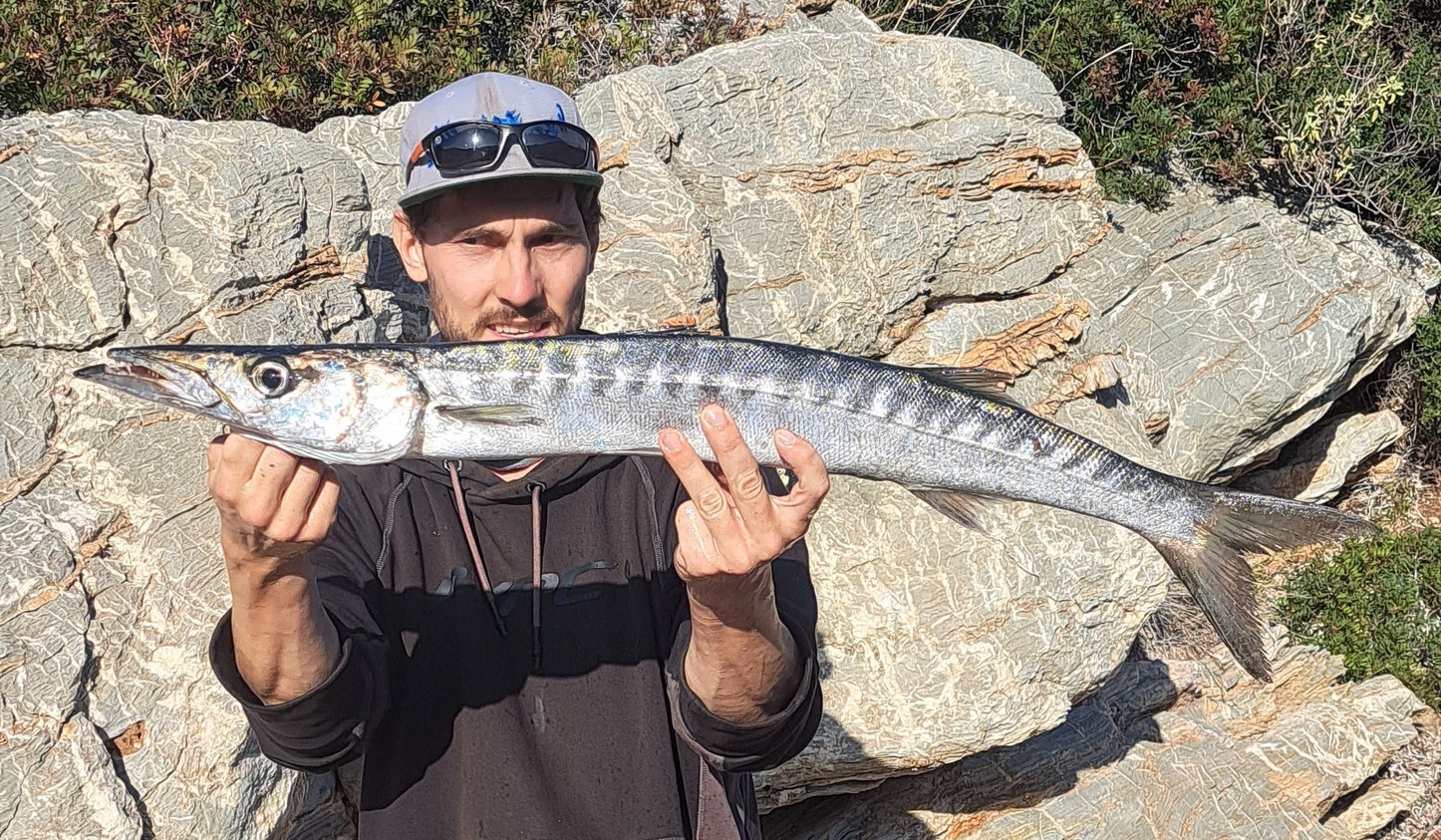
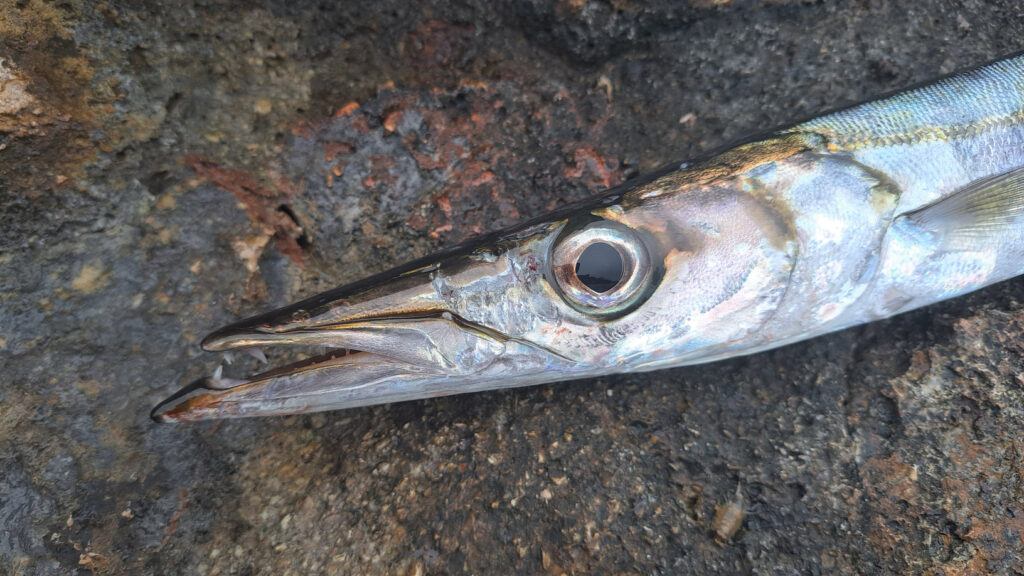
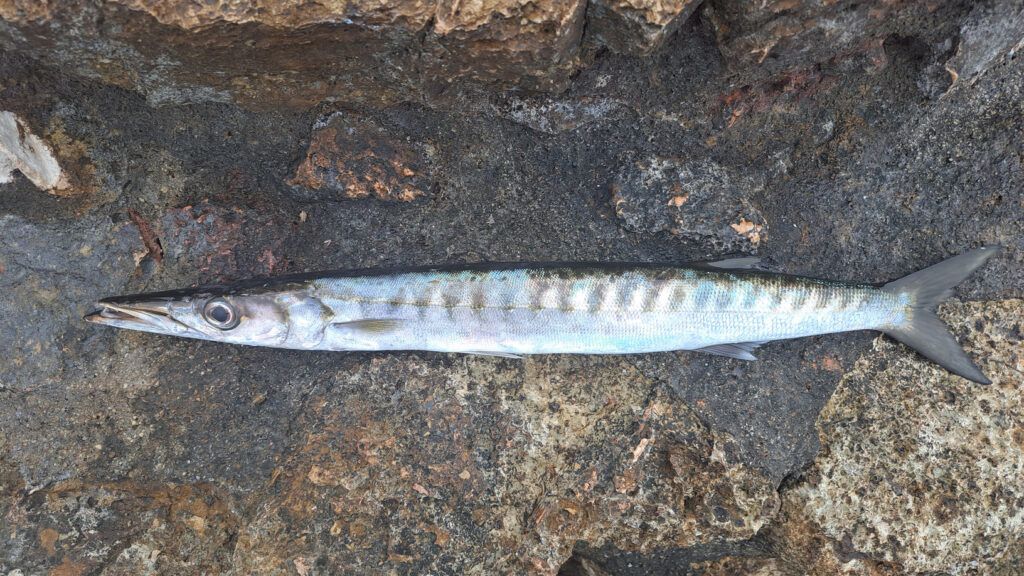
The European Barracuda (Sphyraena sphyraena) is a long, slim-bodied predator with a cylindrical shape and a pointed head. Its large mouth is filled with visible, uneven teeth, which is one of the easiest identification features, even from a distance. The body color ranges from silver to bluish-grey, often with a darker back and a lighter belly that blends into open water.
In European waters, most individuals measure between 50 and 90 cm. Larger fish exist, and specimens over 120 cm have been recorded, though these are uncommon near shore. The species grows relatively fast in its first years and can reach sexual maturity within two to three seasons. Lifespan is estimated at around 10 to 15 years.
Juveniles often form tight schools and show faint vertical markings along the flanks. Adults are more solitary or move in loose groups, relying less on camouflage and more on speed and surprise.
Two European Barracuda Species: How to Tell Them Apart
In Europe, barracuda sightings usually involve either the European Barracuda (Sphyraena sphyraena) or the Yellowmouth Barracuda (Sphyraena viridensis). At a glance they look very similar, but a few traits often help with identification.
The European Barracuda is typically slimmer and shows more pronounced dark vertical bars or shadowy striping along the flanks, especially when the fish is fresh or calm. The Yellowmouth Barracuda often appears more uniformly silvery-grey and slightly heavier-bodied, with a noticeably larger head profile in bigger specimens.
As the name suggests, the Yellowmouth Barracuda can show a yellowish tint inside the mouth and around the jawline, though this is not always obvious in the water or in low light. The European Barracuda’s mouth is usually paler. Size can also hint at the species in some regions, as S. viridensis is more commonly encountered as a larger fish in the Atlantic and warmer Mediterranean areas.
None of these traits are perfect on their own, and color changes with stress, light, and water clarity. The most reliable approach is to combine overall body shape, flank patterning, and mouth coloration rather than relying on a single detail.
European Distribution: Where You Encounter This Species the Most
In European waters, the term barracuda usually refers to two closely related species: the European Barracuda (Sphyraena sphyraena) and the Yellowmouth Barracuda (Sphyraena viridensis). Both occur in similar regions but show slightly different distribution patterns and abundance.
The European Barracuda is widespread throughout the Mediterranean Sea, from Spain and southern France through Italy, Croatia, Greece, and Turkey. It is a regular coastal species in these areas and commonly encountered close to shore. The Yellowmouth Barracuda shares much of this range but tends to be more dominant in warmer southern and eastern parts of the Mediterranean.
In the eastern Atlantic, both species occur along the Iberian Peninsula, including Portugal and western Spain. The Yellowmouth Barracuda is generally more common here and extends farther north, with occasional sightings along the Atlantic coast of France and rare records in the southern UK during warm years. The European Barracuda becomes increasingly scarce north of the Bay of Biscay.
Both species favor warm, saline water. Sustained temperatures above roughly 18 °C increase activity and coastal presence, while colder conditions push them deeper or farther south. Most encounters happen in shallow to mid-depth zones, typically from the surface down to about 30 m, although deeper offshore records exist.
Seasonal movement is mostly local rather than truly migratory. Instead of long-distance travel, both barracuda species adjust depth and proximity to shore in response to temperature, light levels, and prey availability.
Habitat & Behavior of the European Barracuda
European Barracuda favor clear or moderately clear water where visibility supports their hunting style. They are commonly associated with rocky reefs, harbor entrances, breakwaters, and steep drop-offs where depth changes quickly. Open sandy areas are used mainly as transit zones rather than feeding grounds.
Their diet consists primarily of small to medium-sized fish, including sardines, anchovies, and juvenile pelagic species. Feeding behavior is based on short bursts of speed rather than long pursuits. They often hold position almost motionless before accelerating suddenly.
This stop-and-burst hunting style is different from the more chaotic, group-driven feeding patterns seen in species like bluefish. If you are interested in how that contrast affects lure choice and retrieve speed from shore, I’ve explained it in detail in my guide on how to catch bluefish.
Light plays an important role. The species is visually oriented and often becomes more active during low-light periods when prey contrast is higher. Calm seas and gentle current allow them to patrol closer to the surface, while heavy swell tends to push them deeper or slightly offshore.
Angler Relevance & Shore Encounters
From shore, European Barracuda are encountered because they naturally patrol the same edges anglers stand on. Steep shorelines, artificial structures, and areas where small fish gather all overlap with human access points.
They often come close to land when prey species move inshore, which can happen quietly and without surface signs. This is why anglers sometimes believe the fish has “disappeared,” when in reality it is present but holding deeper or just beyond visible range. Harbors and breakwaters concentrate both baitfish and light, which explains the regular sightings around these areas.
Seasonal Presence & Environmental Patterns
In the Mediterranean, European Barracuda are present year-round but most noticeable from late spring through early autumn. Rising water temperatures increase metabolic activity and feeding frequency, which leads to more visible coastal movement.
In Atlantic waters, their presence is more seasonal and closely tied to warm currents and mild summers. Cooler temperatures reduce nearshore activity rather than eliminating the species entirely.
Spawning typically occurs in warmer months, with eggs and larvae developing in open water. During this period, adults may shift slightly offshore or change daily movement patterns, which can affect how often they are observed from land.
Culinary & Cultural Importance
The European Barracuda has modest culinary value in Europe. Smaller specimens are occasionally sold in local markets, particularly in Mediterranean regions, while larger fish are less commonly eaten. The flesh is firm and lean, though handling quality varies with size and freshness. Culturally, the species is more often respected as a predator than sought after as a staple food fish.
Regulations, Size Limits & Sustainability
Regulations for European Barracuda vary by country and region. Some areas apply minimum size limits or seasonal restrictions, while others have no specific rules beyond general fisheries law. Because the species often gathers during warmer months, respecting local regulations during spawning periods is especially important. I always check regional rules before keeping any fish and treat larger breeding individuals with caution.
Safety Considerations
European Barracuda are not aggressive toward humans, but their habitat can create risk. Rocky shorelines, harbor walls, and night activity increase the chance of slips or misjudged footing. Clear awareness of swell, wet rock surfaces, and limited visibility is essential when observing or encountering this species close to shore.
Common Misconceptions About This Species
One common belief is that European Barracuda are rare or accidental visitors, when in fact they are often present but unnoticed. Another misconception is that they only appear at the surface, despite spending much of their time holding deeper in the water column.
Some anglers assume the species disappears completely in winter. In reality, it usually shifts depth and activity rather than leaving the area. There is also a tendency to confuse European Barracuda with tropical relatives, exaggerating size and aggression beyond what is typical in European waters.
Finally, inconsistent encounters often lead to the idea that the species is unpredictable. What usually changes is light, temperature, or prey behavior, not the presence of the fish itself.
The European Barracuda: Final Thoughts
The European Barracuda is defined by speed, patience, and a strong link to structure-rich coastal water. It is most commonly encountered in warm, clear conditions along Mediterranean and southern Atlantic shores.
Understanding its environmental triggers explains why it can feel suddenly present or absent. For me, it remains a reminder that many coastal predators are closer than they appear, moving quietly just beyond easy sight.
Gear I Personally Use for European Barracuda From Shore
If you want to go a bit deeper into the tackle side, these guides explain how to choose the right gear for European barracuda from rocky points, harbor walls, and open coastal stretches.
Barracuda are visual predators. They often follow lures before striking, and when they hit, it’s sudden and violent. Your setup needs casting distance, precise lure control, and enough backbone to handle explosive headshakes close to the surface:
- Best saltwater fishing rods for casting metals and controlling hard runs
- Best saltwater spinning reels for long casts and hard runs
- Best saltwater lures for bluefish (fast metals, topwater, and minnow plugs)
You don’t need overly heavy gear for barracuda, but you do need reliable tackle. When a fish commits right at the edge of the rocks, there’s no time to question your setup.