The European Seabass is one of the most iconic coastal fish in Europe and holds a special place for shore anglers across the continent. It is widespread, highly adaptable, and present in waters that range from cold Atlantic coasts to warm Mediterranean bays. Despite its popularity, it is often misunderstood, especially when it comes to where it actually spends its time and why encounters can feel inconsistent.
This profile explains the European Seabass in depth, focusing on its distribution, habitat preferences, behavior, and seasonal patterns. I’ve crossed paths with Seabass on quiet Atlantic beaches and under harbor lights in the Mediterranean, often learning more from blank sessions than successful ones.
Species Overview (Identification & Key Facts)
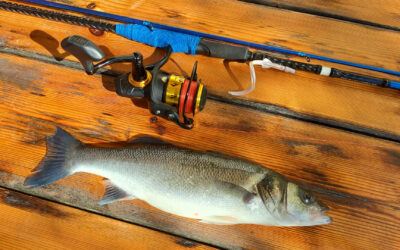
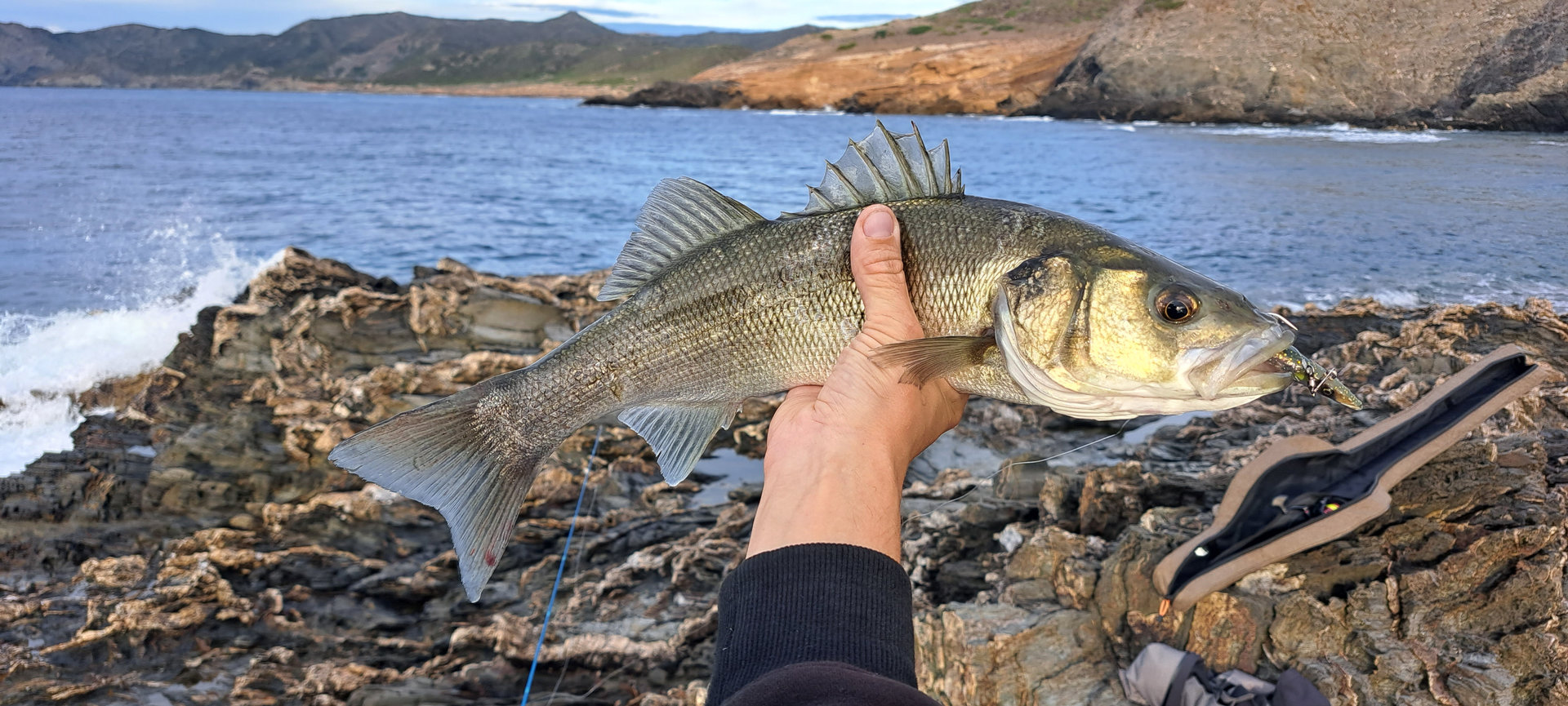
The European Seabass (Dicentrarchus labrax) has a streamlined, elongated body built for efficient swimming in coastal waters. Its back is grey to blue-grey, fading into bright silver flanks and a white belly. The mouth is large and slightly upturned, with a strong lower jaw that extends past the eye, giving the fish a predatory profile.
In European waters, most Seabass measure between 40 and 70 cm and weigh 1 to 4 kg. Larger individuals exceeding 80 cm and 8 kg exist but are uncommon, especially near shore. The maximum recorded length is just over 1 meter. Seabass grow relatively slowly compared to many pelagic species and can live more than 25 years. Juveniles often display darker vertical bars along their sides, which fade as they mature. Adults are more solitary, while juveniles tend to form loose groups in sheltered areas.
European Distribution: Where You Encounter This Species the Most
The European Seabass is widely distributed along the eastern Atlantic, from southern Norway and the British Isles down to Portugal and Morocco. It is especially common along the coasts of France, the UK, Ireland, and the Iberian Peninsula. In the Mediterranean, it occurs from Spain and Italy through Croatia, Greece, and Turkey, though population density varies by region.
Atlantic seabass populations tend to be larger and more numerous, supported by productive tidal systems and cooler, oxygen-rich water. In the Mediterranean, seabass are present but often more localized, closely tied to estuaries, lagoons, and river mouths. The northern distribution limit is governed by winter water temperatures, with sustained presence usually above 5–6 °C. Seabass are primarily coastal fish, most often found from the shoreline down to about 50 meters, although they can move deeper during spawning migrations.
Seasonal movements are strongly linked to reproduction. Adults migrate offshore in late winter to spawn, often forming large aggregations before returning inshore during spring.
Habitat & Behavior
European Seabass are highly adaptable and occupy a wide range of habitats. They are commonly associated with sandy beaches, rocky coastlines, reefs, seagrass beds, harbors, and estuaries. Juveniles prefer sheltered, shallow environments with reduced wave action, such as lagoons and river mouths, where food is abundant and predators are fewer.
Their diet in European waters consists mainly of small fish, crustaceans, and cephalopods. Seabass are visual hunters but readily take advantage of reduced visibility caused by swell or turbidity, which allows them to approach prey more closely. They react strongly to current, often positioning themselves where moving water concentrates food.
Behavior changes noticeably with light levels. Seabass often feed more confidently during low-light periods and may shift closer to shore at night. Seasonal changes also affect activity, with colder water slowing metabolism and warmer periods increasing feeding intensity.
Angler Relevance & Shore Encounters
Shore anglers encounter European Seabass because the species regularly patrols the boundary between land and open water. It moves close to shore to exploit food pushed in by waves, tides, or freshwater outflow. Beaches, headlands, and harbor entrances naturally funnel prey, making these areas biologically attractive to Seabass.
Human-made structures play a significant role by altering currents and creating shade and shelter. Harbors and breakwaters often mimic natural structure, concentrating baitfish and crustaceans. Many anglers believe seabass are absent when they are not visible, but the fish often remains present, simply inactive or holding slightly deeper until conditions change.
If you want to understand how to actually turn these shoreline encounters into hookups, I’ve broken the practical side down in detail in my guide on how to catch sea bass from shore, including lure choice, retrieve styles, and positioning in current.
Seasonal Presence & Environmental Patterns
Across Europe, European Seabass show strong seasonal rhythms. In Atlantic waters, inshore presence increases from spring through autumn as water temperatures rise above 10 °C. In the Mediterranean, seasonal variation is less extreme, but activity still increases during warmer months.
Spawning typically occurs in late winter and early spring, offshore, at depths of 20 to 70 meters. During this time, inshore encounters may decline. After spawning, adults gradually return to coastal habitats to feed. Environmental factors such as swell, current strength, and light levels act as biological triggers rather than strict schedules, influencing when and where seabass become active.
Culinary & Cultural Importance

The European Seabass is one of the most valued coastal fish in European cuisine. It is widely sold fresh and farmed, prized for its firm white flesh and mild flavor. Smaller to medium-sized fish are generally considered best for the table, while very large individuals are often regarded as less desirable due to coarser texture. Culturally, Seabass appears in traditional dishes across France, Italy, Greece, and Spain.
Regulations, Size Limits & Sustainability
Regulations surrounding European Seabass differ significantly across Europe. Many countries apply minimum sizes, seasonal closures, or catch limits, particularly in Atlantic waters where stocks have faced pressure. In the Mediterranean, rules can be less uniform but still apply locally. It is essential to check current regulations before fishing, especially during spawning periods, when restraint plays an important role in sustainability.
Common Mistakes & How to Avoid Them
- Fishing Too Deep: A classic mistake is thinking the fish are far out in deep water. Bass are edge predators. They are often hunting in knee-deep water right in front of you. Fish the margins before you blast a cast to the horizon.
- Retrieving Too Fast: Unlike the high-speed chase of a bonito, bass often prefer a controlled, medium-paced retrieve. If you are using soft plastics, “over-working” the lure can look unnatural. Sometimes a straight, slow retrieve with the current is all that is needed.
- Using Wire Leaders: Bass have excellent eyesight. Using a wire trace (intended for pike or barracuda) will drastically reduce your bite rate. Use a fluorocarbon leader between 0.25 mm and 0.35 mm for invisibility and abrasion resistance.
- Ignoring the Night: If the water is crystal clear and the sun is bright, fishing can be impossible. Coming back to the same spot at night can change everything. Bass are highly effective nocturnal hunters and feel safer in the dark.
Safety Considerations
European Seabass often inhabit dynamic coastal environments. Surf beaches, rocky headlands, and tidal estuaries can change quickly with weather and swell. Low-light activity means anglers may be present at night or during poor visibility, increasing risks related to footing and access. Awareness of sea state and exit routes matters more than staying longer.
Common Misconceptions About This Species
A common misconception is that Seabass are strictly shallow-water fish, when they regularly move between shallow and deeper zones. Another is that they disappear entirely in winter, rather than shifting offshore to spawn.
Many anglers assume seabass are always solitary, ignoring the fact that juveniles and spawning adults can form groups. Others believe clear water is essential, while seabass often thrive in slightly colored conditions. Finally, inconsistent encounters are frequently blamed on pressure, when seasonal movement and behavior usually provide the better explanation.
European Seabass (Dicentrarchus labrax): Final Thoughts
The European Seabass is defined by adaptability, longevity, and a strong connection to dynamic coastal environments. It is most commonly encountered along productive shorelines where structure, current, and food intersect. Seasonal movement and light-driven behavior explain much of its unpredictability. For me, seabass remains a reminder that understanding the water often matters more than expecting certainty.
Gear I Personally Use for European Seabass From Shore
If you want to go a bit deeper into the tackle side, these guides help you choose gear that actually fits seabass fishing along rocky coasts, beaches, and harbor walls.
Seabass are less about brute force and more about precision. Long casts, lure control in current, and sensitivity in rough water matter more than raw power:
- Best saltwater fishing rods for casting metals and controlling hard runs
- Best saltwater spinning reels for long casts and hard runs
- Best saltwater lures for bluefish (fast metals, topwater, and minnow plugs)
You don’t need heavy gear for sea bass. But you do need balanced tackle that lets you feel subtle takes and stay in control when a fish turns sideways in the surf.